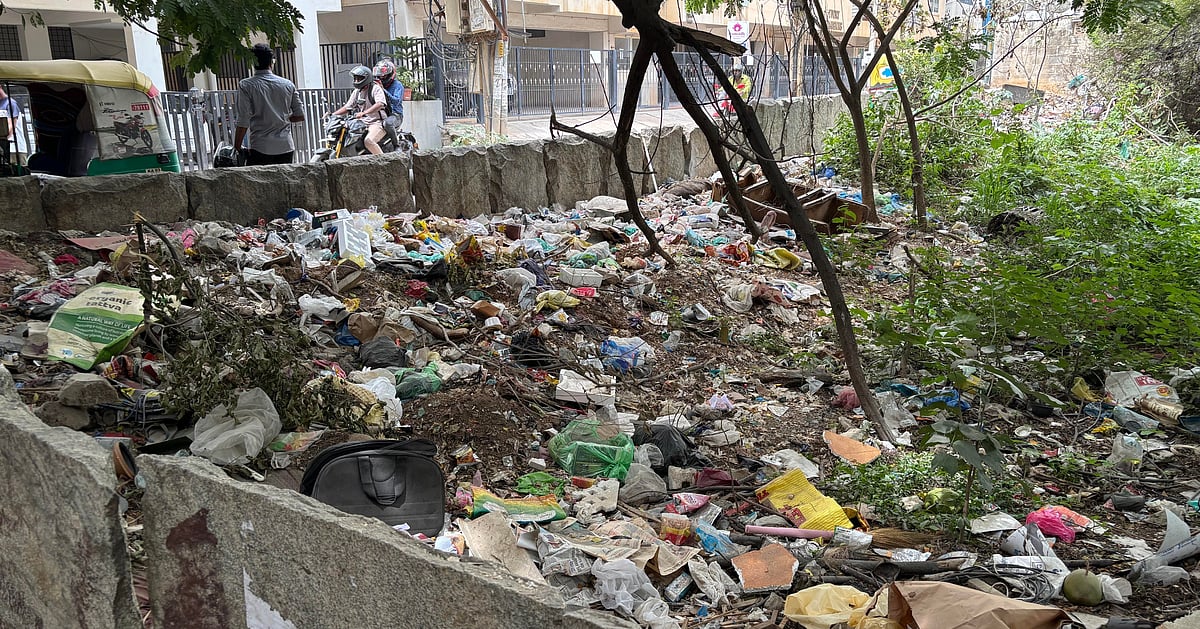
Bengaluru Vacant Plots Face Civic Cleanup From August
Bengaluru’s five city corporations are set to begin cleaning neglected vacant plots from August 27 after most owners failed to respond to an earlier civic deadline. The move shifts responsibility from individual property holders to the civic administration, with cleanup costs to be recovered through property tax.
It also puts the city’s wider waste-management system under scrutiny as authorities attempt to prevent private land from becoming informal dumping grounds.The Bengaluru vacant plots drive follows a directive from the Greater Bengaluru Authority (GBA) to identify sites containing garbage, construction debris, weeds and other accumulated waste. Owners were given an opportunity to clear their properties themselves, but officials have reported limited compliance. Under the latest plan, civic agencies will clean plots where owners have not acted and recover the expenditure through the property’s tax account. Geo-tagged before-and-after records have also been made mandatory, while a digital tracking system is intended to help monitor the work and allow residents to report unresolved sites. The intervention addresses a visible urban problem. Vacant land can become a collection point for construction and demolition waste, discarded household material and other refuse, particularly when there is inadequate fencing or regular surveillance. Such sites can deteriorate further during the monsoon as vegetation grows rapidly and waste becomes harder to remove. However, the Bengaluru vacant plots campaign also exposes a gap between land ownership and citywide waste management. Property owners have a responsibility to maintain private land, but repeated illegal dumping cannot be addressed through plot cleaning alone.
Without action against those depositing waste, cleaned sites risk becoming dumping points again. The scale of the wider waste challenge is substantial. More than 1 lakh tonnes of construction and demolition waste had reportedly been identified across 4,483 locations under the city’s August cleanup campaign, with over 43,000 tonnes cleared from 1,810 locations by August 19. This makes enforcement only one part of the solution. Bengaluru needs reliable collection systems, accessible disposal facilities for construction waste and stronger monitoring of known dumping locations. Civic agencies also need to ensure that waste removed from private plots is transported to authorised facilities rather than shifted elsewhere. There is a real-estate dimension as well. Vacant sites are increasingly valuable urban assets, yet poorly maintained plots can impose costs on surrounding neighbourhoods through litter, blocked drainage and degraded streetscapes. Clear maintenance responsibilities can therefore protect both public health and the quality of adjacent residential and commercial areas. For Bengaluru vacant plots, the August 27 operation should be judged by what happens after the first cleanup. If cleared sites remain clean, dumping is effectively deterred and owners receive predictable enforcement requirements, the programme could become a useful model for managing neglected private land.
The longer-term objective should be a system where vacant plots do not become recurring civic liabilities. That will require property-owner accountability alongside dependable waste services, transparent monitoring and consistent enforcement across Bengaluru.