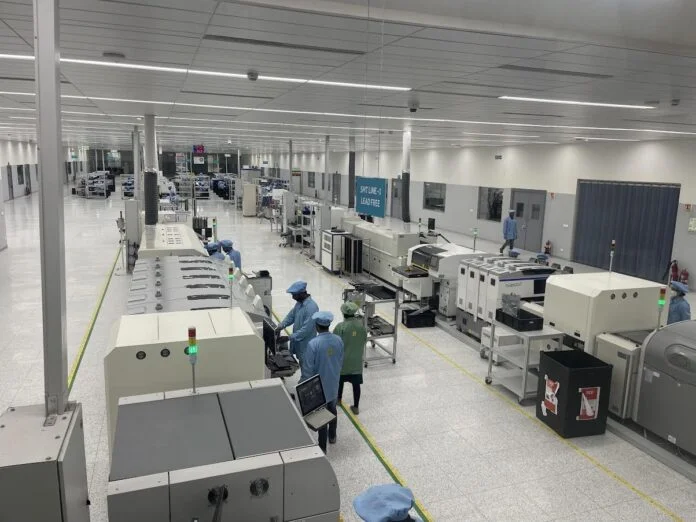
Hyderabad Aerospace Growth Creates New Industrial Opportunities
HYDERABAD: Hyderabad’s aerospace economy is moving into a broader industrial phase, combining decades of defence research with private manufacturing, space startups and specialised engineering. The shift is creating opportunities across rockets, satellites, drones, propulsion and mission infrastructure, while strengthening the city’s position as a high-value manufacturing and technology centre.
The foundation predates the current startup wave. Hyderabad has long hosted major defence and aerospace research institutions, including laboratories under the Defence Research and Development Organisation, alongside the National Remote Sensing Centre. Their presence has helped build specialised engineering capabilities and supplier networks that are now supporting private-sector activity. The emerging ecosystem is increasingly spread across the full aerospace value chain. Hyderabad-based space companies are working on launch vehicles, spacecraft platforms, satellite subsystems, mission operations and ground infrastructure. This is significant because a mature space economy depends on more than the ability to launch rockets; it requires a reliable network of manufacturers, testing facilities, component suppliers and skilled workers. Private investment is also pushing the manufacturing base towards greater scale. Rocket development companies are building dedicated production facilities, while satellite-focused businesses are expanding into spacecraft manufacturing and related infrastructure. The development of these capabilities could allow more components and systems to be designed, tested and manufactured within India, reducing dependence on overseas supply chains.
The city’s aerospace activity is also increasingly intersecting with defence technology. Drone manufacturers have begun supplying systems to the armed forces, while local engineering companies are working with government research organisations on propulsion technology. Such collaboration can create a pathway from publicly funded research to commercial manufacturing and, eventually, export-oriented production. Telangana’s aerospace and defence cluster around Adibatla adds another layer to this industrial network. Its location near the airport provides connectivity for specialised manufacturing and high-value supply chains, while its concentration of aerospace and defence activity can support supplier development and job creation. The economic opportunity extends beyond direct employment. Aerospace manufacturing typically requires specialised machining, electronics, software, materials engineering, testing and quality assurance. A growing local ecosystem can therefore create demand for smaller suppliers and technical service businesses, spreading the benefits across the wider industrial economy.
The biggest constraint may now be talent rather than infrastructure alone. Advanced aerospace work requires engineers with specialised experience in areas such as propulsion, avionics, thermal systems, flight software and systems integration. Developing that expertise takes time, making industry-academic partnerships and practical training increasingly important. For Hyderabad, the next stage will be about converting its research legacy and startup activity into a durable industrial ecosystem. If manufacturing capacity, skilled employment, research collaboration and infrastructure develop together, the city could gain a stronger role in India’s expanding space and aerospace supply chain while creating higher-value economic opportunities.