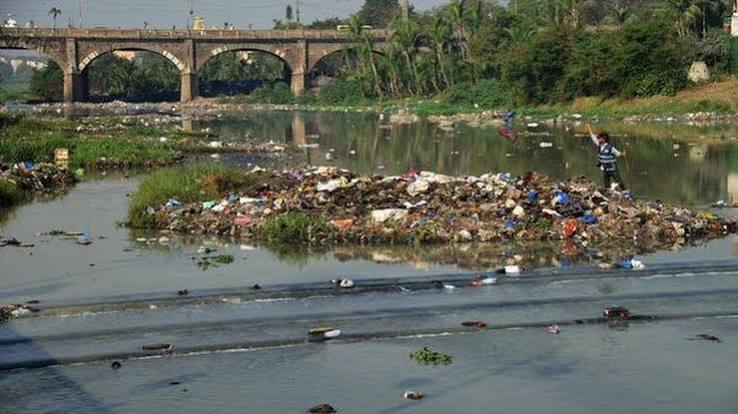
Hyderabad Musi Pollution Raises Fresh Sewage Concerns
A prolonged breakdown in sewage-treatment infrastructure in Vikarabad is putting pressure on the Musi at one of the river’s upper reaches, with untreated wastewater reportedly entering the river and affecting communities that depend on local water sources. The problem highlights a wider urban challenge: sewer networks and treatment plants can lose their environmental value when routine maintenance and reliable operations fall behind population and infrastructure needs.
The issue is particularly significant because the Musi originates in the Ananthagiri Hills and passes through a large urban and agricultural landscape before reaching Hyderabad. Pollution at the upstream end therefore has implications beyond Vikarabad, affecting downstream water quality, farming activity and the resilience of settlements along the river corridor. Public records also show that the town’s treatment infrastructure is smaller than the 18 MLD capacity cited in some recent reports. A national sewage-treatment inventory lists Vikarabad’s plant at Sakaliguda near Alampally as a 13 MLD facility commissioned in 2015. It recorded the plant as operational at the time of the inventory, with actual utilisation of 6 MLD. A 2026 municipal tender, meanwhile, seeks augmentation and rehabilitation of the 13 MLD plant under AMRUT 2.0, with treated-water reuse included in the scope. These records indicate that the infrastructure is now being revisited rather than treated as a completed, one-time investment.
The immediate concern is the gap between sewage generation and effective treatment. When pumping, mechanical systems or sewer connections fail, wastewater can bypass the treatment chain and reach natural water bodies. That shifts the cost from municipal operations to farmers, households and ecosystems, while also increasing the difficulty of restoring river quality later. For agricultural communities near the Musi, polluted water can create additional pressure on irrigation. Farmers may have to depend more heavily on borewells, increasing energy use and operating costs. Produce grown in the surrounding belt also enters regional markets, making water quality a public-interest issue rather than a problem confined to the riverbank. The episode also raises questions about the lifecycle management of urban infrastructure. Building sewerage capacity without funding predictable maintenance, monitoring and reuse systems can leave cities with expensive assets that deliver limited environmental benefits. Urban planners say treatment plants need continuous performance monitoring, timely equipment replacement and clear accountability for treated-water disposal.
The latest municipal procurement activity suggests rehabilitation is moving forward. The priority now is to restore dependable treatment, verify discharge quality through independent monitoring and expand safe reuse of treated wastewater. For Vikarabad and downstream settlements, that would make river protection part of everyday urban service delivery rather than a response after pollution has already occurred.