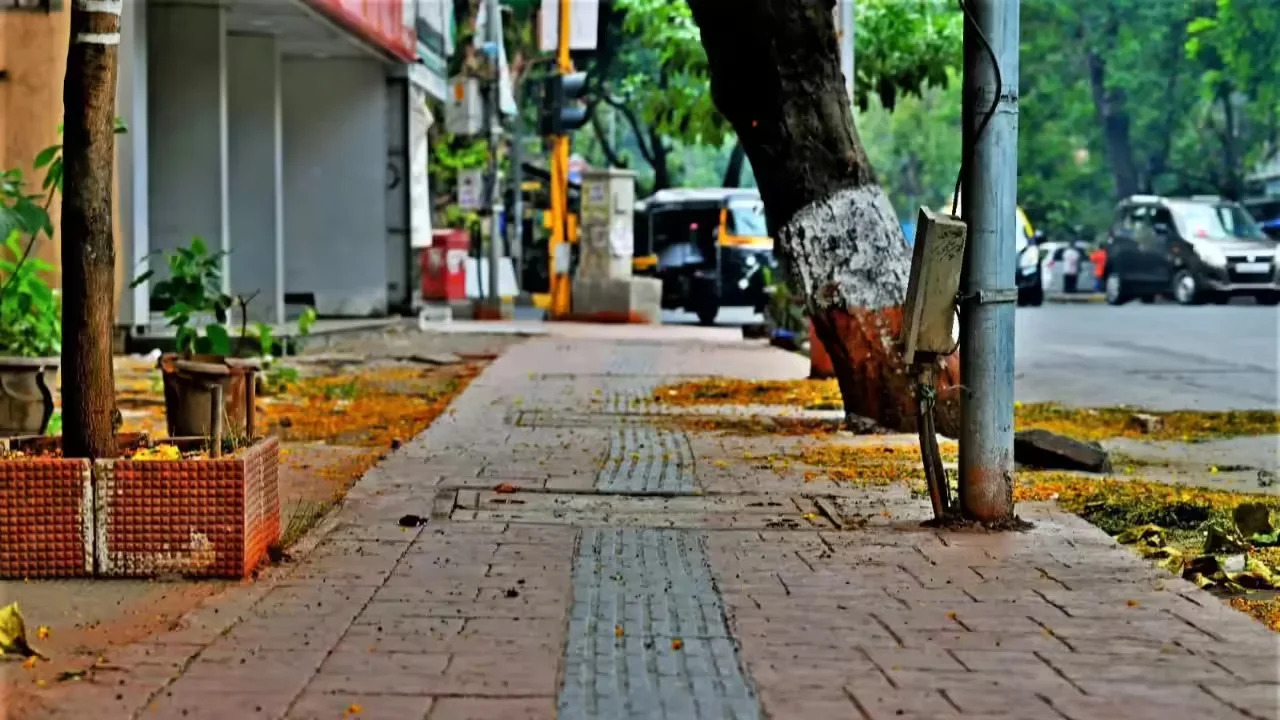
Mumbai has cleared about 68 km of footpaths across 81 stretches during the first 14 days of its latest pedestrian enforcement drive, putting renewed attention on the city’s basic walking infrastructure. The exercise has removed hundreds of physical and commercial obstructions, but its larger test will be whether cleared pavements remain usable, continuous and accessible after enforcement teams move on. The civic administration has identified 200 stretches for the first phase, with work under way on 81. Between August 1 and 14, officials conducted 337 eviction operations, removing unauthorised structures, hawking spaces, storage materials, advertising boards, banners and street furniture. Eight footpaths were repaired, while eight instances of parking on pedestrian space were also cleared.
The scale of the intervention highlights a structural problem rather than a simple encroachment issue. Mumbai’s footpaths frequently have to accommodate competing demands from pedestrians, vendors, adjoining properties, utilities, vehicles and street furniture. When those uses consume the walking corridor, people are pushed towards moving traffic, increasing exposure to road risks. The BMC’s own Universal Footpath Policy recognises the need for continuous pedestrian movement, accessible design and safer surfaces. Its framework also calls for a minimum uninterrupted walking width and attention to level changes, ramps and other barriers. That makes the current enforcement effort significant, but also raises questions about what happens after an obstruction is removed. A cleared pavement that remains broken, lacks drainage, has abrupt level changes or becomes occupied again offers only temporary improvement. For pedestrians, particularly older people, children and people with mobility limitations, continuity matters as much as clearance.
The BMC is prioritising locations with high pedestrian demand, including transport interchanges, healthcare facilities, educational institutions, markets and religious destinations. It has also proposed monthly inspections covering at least 90% of footpaths in each ward, supported by weekly reporting and higher-level reviews. The timing is important. Mumbai is also attempting to move towards a city-wide pedestrian network rather than isolated improvements. The civic body has told the Supreme Court that it is preparing a master pedestrian network plan using geospatial mapping to identify missing links and accessibility gaps.
For the Mumbai footpaths programme to deliver lasting value, enforcement will therefore need to be matched by maintenance, inclusive design, transparent vending management and reliable monitoring. The immediate clearance of 68 km is measurable progress; keeping those kilometres genuinely walkable will be the harder urban governance test.