Gurugram Garbage Crisis Puts Urban Liveability Under Strain
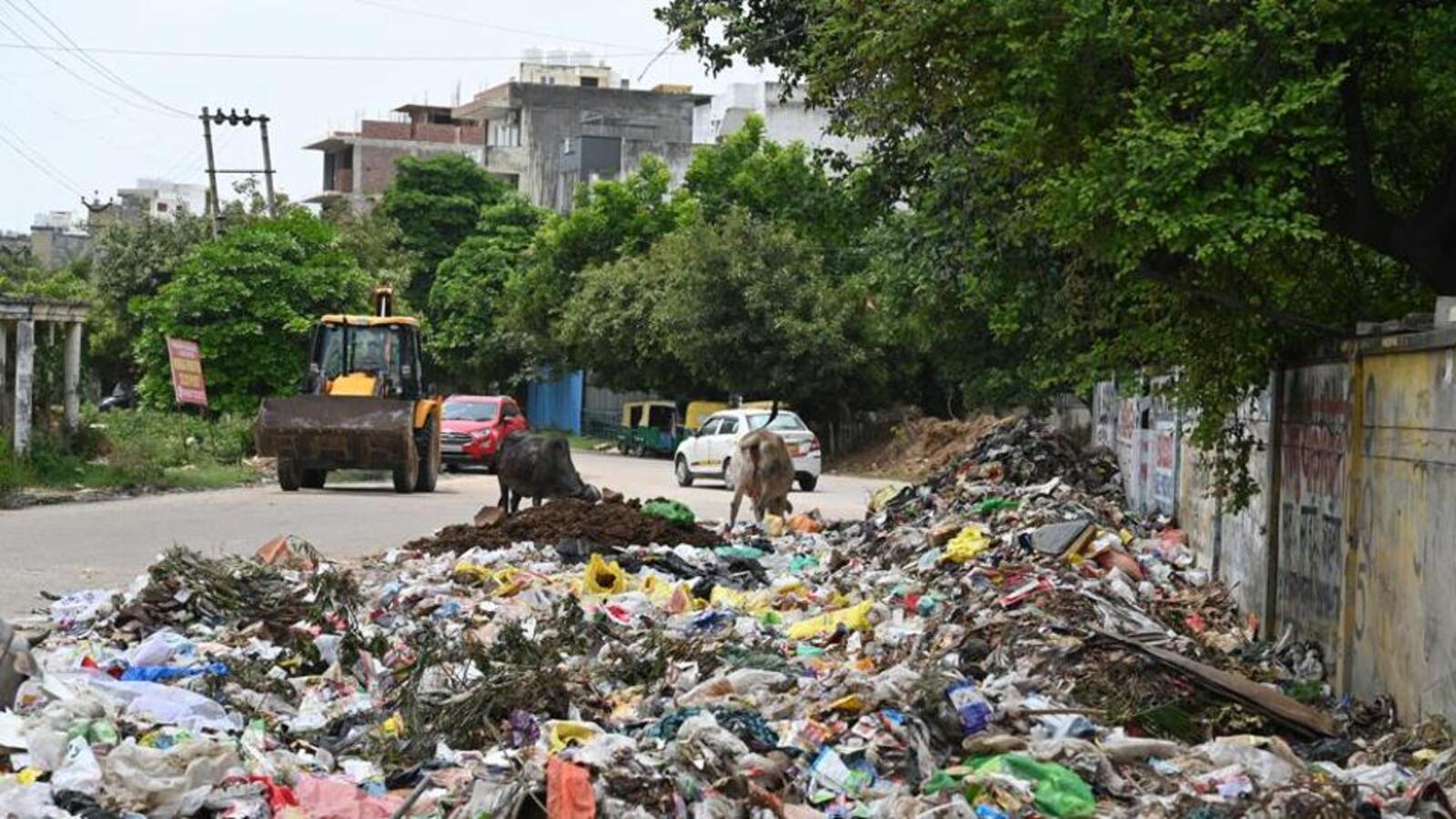
Gurugram’s sanitation system is under mounting pressure as a municipal workers’ strike stretches into its 10th day, leaving waste uncleared across several parts of the city. The disruption is becoming more than a cleanliness issue: during the monsoon, unmanaged waste can worsen odour, drainage problems and public-health risks while also affecting how residents and businesses experience the city.
The protesting workers, represented by the Haryana Sarv Karamchari Sangh, have extended their agitation until August 18 and warned that it could become indefinite if their demands remain unresolved. Their demands include the return of around 3,500 laid-off workers, regularisation of long-serving contractual staff, an end to outsourcing of sanitation and sewerage work, and recruitment against vacant positions. The immediate impact is visible in residential neighbourhoods and busy commercial areas. Residents have reported overflowing bins and waste remaining on roads for days, with Sadar Bazar among the badly affected locations. In Sector 23A, residents have previously raised concerns about prolonged waste accumulation, particularly during rainy conditions. For a rapidly expanding employment and residential centre, the Gurugram garbage crisis also exposes a wider question about the resilience of essential urban services.
Waste collection depends not only on manpower but also on vehicles, contractors, route planning and municipal oversight. Recent inspections have already highlighted resource shortages in contracted sanitation operations, including a July penalty of more than ₹5.3 lakh imposed after a contractor was found short of required workers and vehicles. The dispute also carries an economic dimension. Gurugram’s residential communities, offices, retail districts and construction activity rely on predictable civic services. Persistent sanitation failures can weaken neighbourhood liveability and add pressure on housing societies, businesses and public infrastructure. For a city competing for investment and high-value employment, basic service reliability is part of urban competitiveness. A senior municipal official said available sanitation personnel were being deployed across affected areas to maintain collection as far as possible.
However, the continuing Gurugram garbage crisis suggests that short-term deployment may not be enough if the underlying workforce and service-delivery questions remain unresolved. The next priority is therefore not simply clearing accumulated waste, but restoring a sanitation system capable of functioning during labour disruptions, heavy rainfall and rapid urban growth. A durable solution will require clearer workforce arrangements, stronger service monitoring and sufficient operational capacity to protect residents from recurring civic breakdowns.