


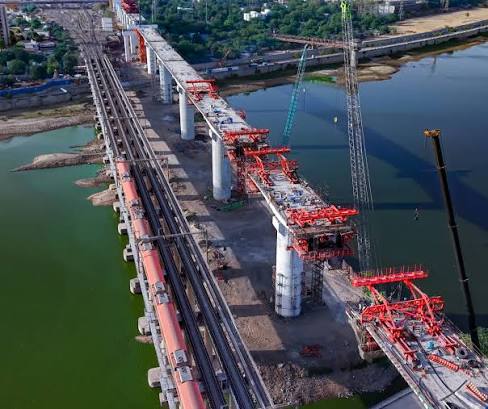
Ahmedabad’s Sabarmati area is emerging as a critical operations hub for India’s first high-speed rail network, with a specialised maintenance depot being developed for the Mumbai–Ahmedabad corridor. Designed to support inspection, repairs and train storage, the facility will be central to keeping future bullet train services reliable as operations expand across Gujarat and Maharashtra.
The Sabarmati depot is planned as the principal rolling-stock maintenance centre among three facilities proposed for the corridor, alongside depots at Surat and Thane. Its role will extend beyond routine servicing, with infrastructure planned for emergency repairs, wheel maintenance, body repairs, equipment work and bogie-related activities. The facility is being designed around 16-coach high-speed trainsets. It will initially include four inspection lines and 10 stabling lines, with the planned configuration eventually expanding to eight inspection lines and 29 stabling lines. Separate facilities for bogie exchange and general inspections are intended to allow different maintenance activities to take place without disrupting other operations. For Ahmedabad, the depot adds another layer to the city’s growing transport infrastructure. The city is already developing as a major interchange point for metro, conventional rail, road and aviation networks. The addition of high-speed rail maintenance capacity could strengthen Sabarmati’s role as a strategic transport and employment cluster.
The environmental infrastructure planned at the depot is also significant. Water storage and groundwater recharge reservoirs are proposed alongside effluent treatment, sewage treatment and waste-management systems. Such facilities are increasingly important for large transport installations, where workshop activity can generate substantial water use and operational waste. From an urban planning perspective, the depot’s impact will extend beyond the railway boundary. Maintenance facilities can generate skilled employment and supporting economic activity, but their long-term integration with surrounding neighbourhoods will depend on access roads, public transport, drainage and land-use planning.
The depot will also require high levels of technical expertise as India prepares to operate a new generation of high-speed trains. Specialised maintenance equipment and procedures will need to be supported by trained personnel, robust safety systems and consistent operational standards. As the Mumbai–Ahmedabad corridor moves towards passenger operations, the Sabarmati facility will become an important part of the system’s reliability. For Ahmedabad, its significance is not simply that of a railway workshop. It represents the supporting infrastructure needed to make high-speed connectivity dependable, resource-efficient and integrated with the city’s wider transport network.
Also Read: Bengaluru Mathikere Corridor To Combine Rail And Road
Ahmedabad Sabarmati Depot Builds High Speed Rail Capacity
