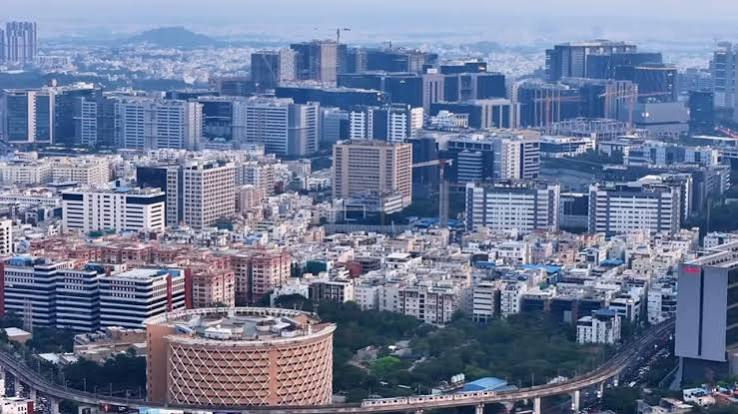
Hyderabad: Hyderabad has emerged as India’s second-largest market for Global Capability Centre leasing, recording more than 24 million sq ft of GCC office absorption between 2022 and the first half of 2026. The figure places the city behind Bengaluru and highlights its growing importance in India’s expanding global technology and services ecosystem.
The data, from a CBRE report, shows that Hyderabad accounted for about 20% of India’s total GCC leasing during the period. Bengaluru remained the dominant market with more than 51 million sq ft, representing roughly 42% of national GCC leasing. The growth reflects a broader shift in the role of GCCs in India. These centres increasingly handle engineering, technology development, analytics, financial services, research and other specialised functions rather than serving only as back-office operations. For Hyderabad, this transformation has direct implications for commercial real estate. Large GCC occupiers require substantial office space, creating sustained demand for Grade A buildings in established and emerging business districts. The Hyderabad GCC leasing market is also benefiting from the state’s policy approach towards building a stronger capability-centre ecosystem. Telangana has adopted a policy framework designed to encourage GCC development, while other states are also introducing incentives and faster approval mechanisms to compete for investment.
The national competition is becoming increasingly intense. States including Karnataka, Maharashtra, Haryana, Uttar Pradesh, Gujarat, Rajasthan, Madhya Pradesh and Andhra Pradesh have introduced dedicated GCC policies. Several others are developing similar frameworks. Across India, states with GCC-focused policies are targeting more than 1,300 new centres and over 1.1 million jobs by 2031. This could significantly increase demand for office space, housing, transport and supporting urban infrastructure. GCCs have already become an important source of office demand. According to CBRE, they leased more than 123 million sq ft across India’s top nine cities between 2022 and H1 2026. Their share of overall office leasing increased from 29% in 2022 to 43% in the first half of 2026. Technology accounted for 23% of GCC leasing, followed by banking, financial services and insurance at 22%. Engineering and manufacturing contributed another 16%, showing that the sector is becoming more diverse. For Hyderabad, this diversification could broaden the city’s economic base beyond traditional IT services. Engineering, financial services, life sciences and emerging technologies can generate demand for specialised talent and higher-value employment.
The impact is also visible across the city’s commercial corridors. Areas such as the Financial District, HITEC City and western Hyderabad have become major destinations for large corporate occupiers. Continued GCC expansion could encourage further office development and supporting retail and residential projects. However, office growth can place additional pressure on urban infrastructure. More employees mean greater demand for public transport, roads, housing and utilities. Ensuring that employment centres remain accessible without excessive dependence on private vehicles will be important for long-term urban resilience. The competition between Indian states is therefore shifting beyond financial incentives. Infrastructure readiness, skilled talent, approval processes and quality of life are increasingly important factors in corporate location decisions. For Hyderabad, retaining its second position will depend on its ability to convert its existing talent and office-market advantages into a broader, well-connected GCC ecosystem. The opportunity is substantial, but sustained growth will require infrastructure to expand alongside employment and commercial development.