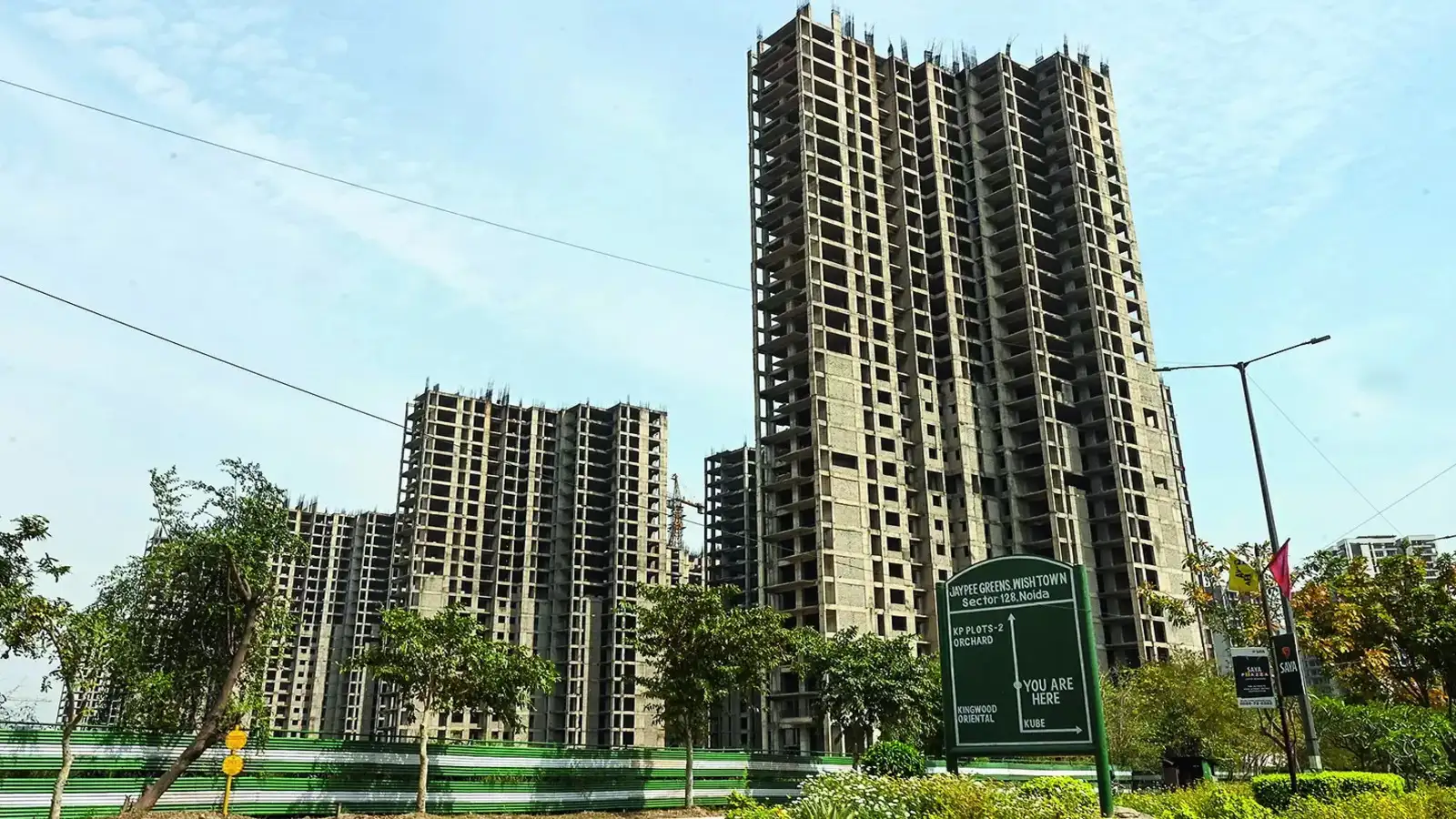
Noida: Thousands of homebuyers linked to stalled Jaypee housing projects in Noida and Greater Noida face another legal hurdle as the Enforcement Directorate (ED) alleges that a substantial share of money collected for construction was diverted elsewhere. The claims, presented before the Delhi High Court, bring renewed attention to the financial controls behind large residential projects and the long-running impact of stalled homes on urban households.
According to the agency’s submissions, Jaypee entities collected around Rs 32,825 crore from nearly 25,000 buyers. Of this, about Rs 13,833 crore was allegedly moved through transactions involving other group-linked businesses and projects. The alleged diversions included money connected with healthcare, a charitable organisation, sports infrastructure and the Yamuna Expressway. The figures are significant because they point to a potential mismatch between the purpose for which homebuyers paid and the eventual use of those funds. For families who committed savings to homes in projects such as Jaypee Wishtown, the consequences have extended well beyond financial uncertainty. Many buyers have faced prolonged delays in possession, financing costs and uncertainty over when their neighbourhoods will become fully functional. The ED’s case is part of a wider money-laundering investigation arising from complaints by homebuyers. A former senior Jaypee executive is facing proceedings in the matter, while the High Court is considering the bail application.
The court has scheduled the next stage of arguments for August 18. The investigation has also put the structure of urban project financing under scrutiny. Large residential developments depend on a steady flow of buyer payments to fund construction, infrastructure and related obligations. When those funds are allegedly routed outside the project, the resulting gap can affect not only individual buyers but also roads, utilities, open spaces and other components needed to create functioning neighbourhoods. The financial trail has become a central issue in the case. Earlier proceedings have identified alleged transfers involving Jaypee Group entities, including healthcare and sports-related companies, as well as funds associated with the Yamuna Expressway. The ED has also alleged that senior management benefited from transactions during periods when the companies were under financial stress. These remain allegations to be tested through the legal process.
The matter has now reached the Supreme Court as well. A homebuyer has sought a court-monitored investigation into the alleged diversion of funds and broader regulatory failures. The Supreme Court has issued notice in the petition, adding another layer of judicial scrutiny to a dispute that has already lasted for years. For Noida’s real estate market, the case highlights a wider lesson: housing delivery depends not only on land and construction capacity but also on transparent financial controls. For affected Jaypee homebuyers, the immediate priority remains completion of homes, recovery of eligible funds and clear accountability as the courts examine the allegations.