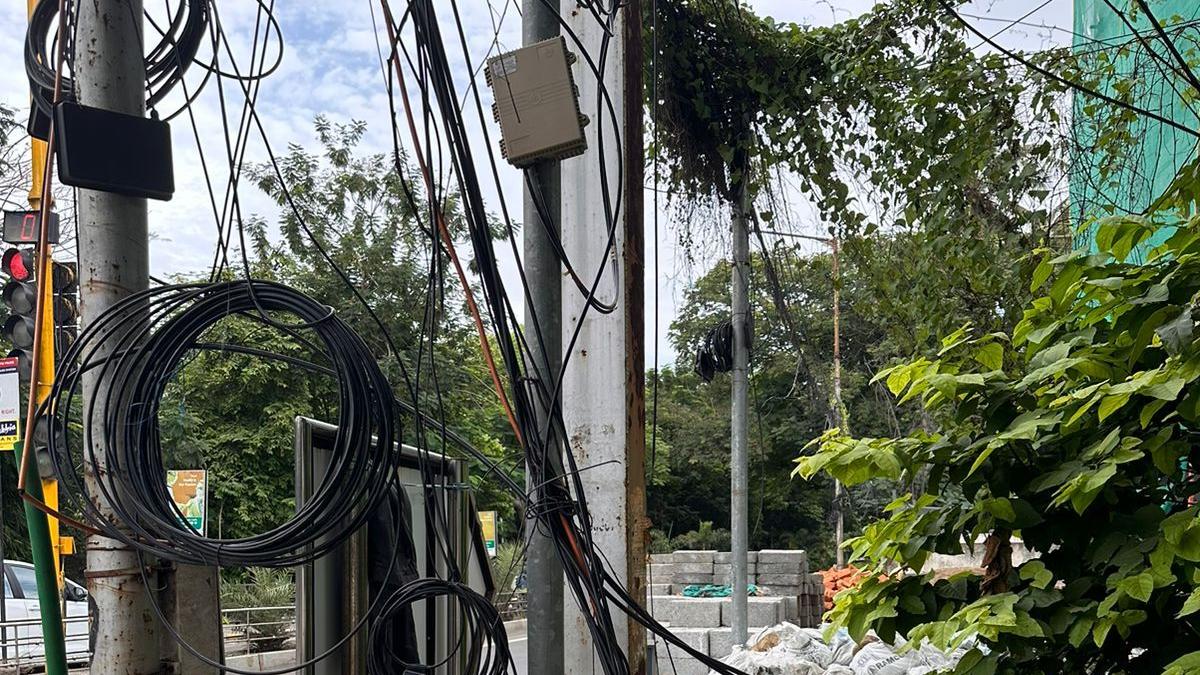
Prolonged temporary electricity repair work in North Chennai’s Vyasarpadi neighbourhood has triggered growing safety concerns among residents, after exposed power cables remained stretched across a residential street for nearly two weeks. The situation has once again highlighted the fragile state of last-mile urban infrastructure management in rapidly densifying Indian cities, particularly in low-income and older settlements where civic upgrades often lag behind demand.
Residents in MKB Nagar said emergency electricity arrangements introduced after a local supply disruption in late April have effectively turned a narrow internal road into a hazard-prone corridor. Long stretches of overhead cable, temporarily routed along the surface of the street, continue to obstruct daily movement for pedestrians, two-wheelers and elderly residents. The issue escalated after recent rainfall led to water accumulation along sections of the lane, raising fears of accidental electrocution and mobility risks for children and senior citizens. Urban safety experts note that such incidents reflect a wider governance challenge in Indian cities, where emergency utility responses are frequently deployed without adequate pedestrian protection measures or climate-resilient planning.
The exposed wiring has also intensified concerns around Chennai’s ageing utility infrastructure at a time when the city is experiencing increasing pressure from heatwaves, erratic rainfall and rising electricity demand. According to urban planners, temporary fixes in dense residential areas often become semi-permanent due to labour shortages, fragmented agency coordination and delayed civic works.Local residents say the problem extends beyond inconvenience. In tightly packed urban neighbourhoods like Vyasarpadi, streets often function simultaneously as mobility corridors, play areas and social spaces. The presence of exposed electrical lines in such environments disproportionately affects women, children and informal workers who rely heavily on walkable public space.
Officials linked to the repair work acknowledged delays in restoring a permanent connection, citing workforce constraints and pending excavation activity. Authorities indicated that underground repair work and reconnection efforts are expected to be completed within the coming days. Infrastructure analysts say the incident underlines the urgent need for Indian cities to modernise local electricity distribution systems with safer underground cabling, improved maintenance protocols and stronger emergency response standards. Chennai, like several major metropolitan regions, has been investing in urban resilience programmes, but implementation gaps remain visible in older working-class neighbourhoods where civic infrastructure has struggled to keep pace with population growth.
The episode also raises broader questions around accountability in public utility operations. Experts argue that climate-adaptive urban infrastructure must prioritise not only uninterrupted services but also public safety during temporary repair periods. As extreme weather events become more frequent, unmanaged roadside utility systems could create additional risks in flood-prone urban zones.For residents of Vyasarpadi, the immediate concern remains straightforward: restoring safe access to neighbourhood streets before another spell of rain exposes deeper vulnerabilities in the city’s civic infrastructure network.