


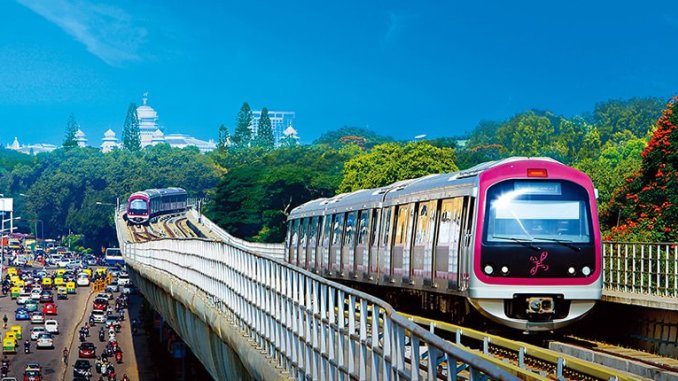
A major procurement order for metro rail coaches linked to Bengaluru is expected to strengthen India’s domestic rail manufacturing ecosystem while supporting the city’s expanding urban transit network. The large-scale contract, placed with a rail production facility in Chennai, reflects growing investment in public transport infrastructure as metropolitan regions seek alternatives to increasingly congested road systems.
The order forms part of Bengaluru’s broader metro expansion strategy aimed at improving commuter capacity, reducing travel times, and extending connectivity across fast-growing residential and commercial corridors. Urban mobility planners say additional rolling stock will be essential as the city’s transit network expands to serve peripheral zones witnessing rapid housing and infrastructure development.Bengaluru has experienced sustained population growth over the past decade, intensifying pressure on roads, public transport systems, and civic infrastructure.Experts argue that large-scale investment in rail-based mobility is critical for maintaining economic productivity and reducing dependence on private vehicles, which remain a major contributor to traffic congestion and urban air pollution.The metro coach manufacturing order also highlights the strategic role of domestic industrial facilities in supporting India’s infrastructure ambitions. Analysts note that strengthening local production capacity can reduce procurement dependency, support supply-chain resilience, and create employment opportunities across engineering, fabrication, electronics, and maintenance sectors.Transport economists say the integration of manufacturing and urban infrastructure development increasingly shapes regional economic growth.
Industrial clusters associated with rail equipment production benefit from rising demand generated by metro projects across Indian cities, creating wider economic spillovers beyond transport alone.At the same time, urban planners emphasise that transit expansion must be accompanied by stronger multimodal integration if cities are to realise the full environmental and economic benefits of metro systems. Bengaluru continues to face challenges linked to last-mile connectivity, pedestrian access, feeder transport availability, and uneven coordination between mobility agencies.Climate and sustainability experts argue that electrified public transport networks will become increasingly important as Indian cities attempt to lower transport-related emissions and improve air quality. Metro systems, when linked effectively with bus services and non-motorised transport infrastructure, can help reduce fuel consumption while supporting more compact and efficient urban growth patterns.The scale of investment also reflects how Indian metropolitan regions are repositioning public transport as a core element of long-term urban planning rather than merely a congestion-management tool. Reliable and accessible transit systems influence labour mobility, housing accessibility, commercial productivity, and overall city liveability.Infrastructure specialists caution, however, that execution timelines and operational efficiency remain critical. Delays in network completion or insufficient integration with existing transit systems can reduce the effectiveness of large infrastructure investments.
For Bengaluru residents, the additional metro coaches are expected to improve carrying capacity and service frequency as new corridors become operational. The broader challenge ahead will involve ensuring that transit growth remains inclusive, environmentally responsive, and aligned with the city’s wider sustainability and mobility goals.
Also Read:Bengaluru Navi Mumbai Flights Strengthen Urban Business Connectivity
