


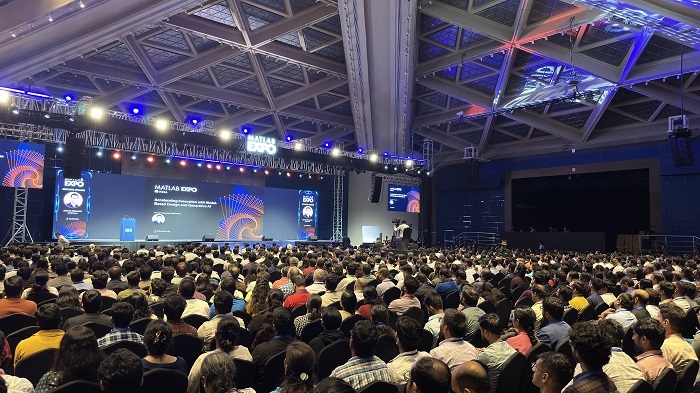
An engineering and computational technology event held in Bengaluru has drawn attention to the growing integration of artificial intelligence into industrial design, mobility systems, and advanced manufacturing processes, reflecting broader shifts underway across India’s technology and engineering sectors. The gathering brought together engineers, researchers, industrial firms, and academic institutions to examine how AI-assisted workflows are reshaping product development, automation, and infrastructure planning.
The discussions come at a time when Indian industries are accelerating investments in digital engineering tools to improve efficiency, reduce operational costs, and support increasingly complex manufacturing ecosystems. Bengaluru, already positioned as a major technology and research hub, has become central to this transition due to its concentration of software talent, engineering institutions, and industrial innovation networks.Industry experts attending the event noted that AI-enabled engineering systems are being used across sectors ranging from automotive manufacturing and energy systems to urban infrastructure and aerospace development.These technologies allow engineers to simulate processes, predict failures, optimise energy consumption, and shorten product development cycles through data-driven modelling and automation.Urban economists say the adoption of intelligent engineering platforms could have significant implications for India’s industrial competitiveness and urban growth patterns.Advanced manufacturing clusters increasingly depend on digital infrastructure, skilled technical labour, and integrated research ecosystems, all of which influence investment decisions and regional economic development.
The Bengaluru engineering ecosystem has benefited from expanding collaboration between educational institutions, software developers, start-ups, and industrial manufacturers. Analysts believe this convergence is helping create specialised knowledge networks that support innovation in sustainable mobility, smart infrastructure, and resource-efficient production systems.At the same time, technology specialists caution that rapid AI adoption may also reshape workforce requirements across engineering and manufacturing sectors. As automation becomes more integrated into industrial workflows, demand is expected to rise for interdisciplinary skills involving software modelling, systems engineering, machine learning, and sustainability-focused design.Experts also highlighted the environmental dimension of AI-assisted engineering. Digital simulation and predictive modelling can help industries reduce material waste, improve energy efficiency, and optimise infrastructure performance before physical deployment.Urban planners argue such approaches may become increasingly important as cities and industries face mounting pressure to reduce emissions and resource consumption.However, analysts warn that unequal access to advanced engineering tools could widen capability gaps between large corporations and smaller enterprises. Ensuring broader accessibility to technical training and digital infrastructure will therefore be essential for inclusive industrial growth.The event further underscored Bengaluru’s evolving role not only as an information technology centre but also as a hub for deep engineering and industrial research.
As India seeks to strengthen domestic manufacturing and climate-responsive infrastructure, AI-enabled engineering systems are expected to become increasingly central to both economic strategy and urban development planning.For policymakers and industry leaders, the challenge ahead will involve balancing technological acceleration with workforce adaptation, ethical oversight, and sustainable industrial practices capable of supporting long-term urban resilience.
Also Read:Bengaluru Lake Restoration Faces Ecological Review Concerns
Bengaluru Engineering Expo Highlights AI Led Industrial Transition
