


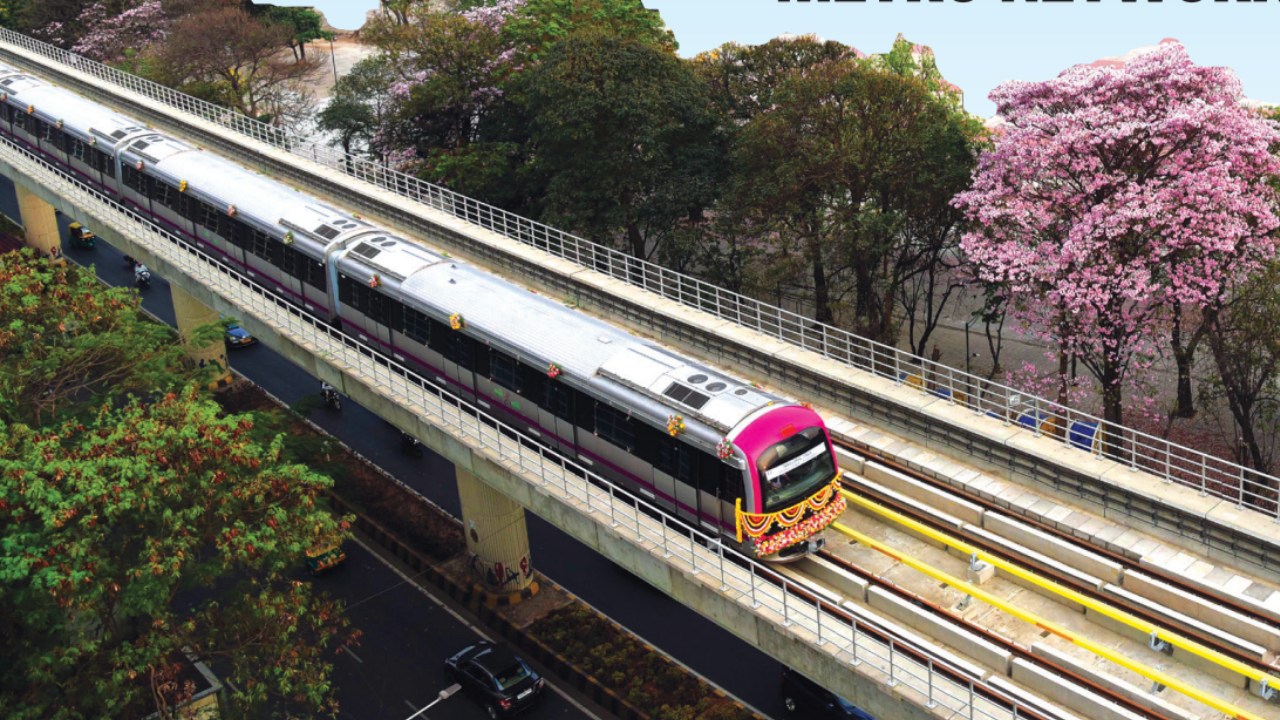
The completion timeline for a key railway capacity expansion project connecting major transit corridors in Bengaluru has been pushed further, highlighting the persistent execution challenges affecting large-scale urban infrastructure development in India’s fast-growing metropolitan regions. The rail quadrupling project, intended to improve suburban and intercity connectivity, is now expected to extend into 2027 following delays linked to land acquisition, engineering constraints, and construction coordination.
The corridor forms an important part of Bengaluru’s broader mobility network, connecting rapidly expanding residential and commercial zones with employment centres and transport hubs. Urban planners say the project is critical for easing pressure on overcrowded rail lines while enabling higher train frequency, faster operations, and improved commuter movement across the metropolitan region.Bengaluru continues to face mounting transportation stress driven by population growth, rising private vehicle ownership, and dispersed urban expansion. Infrastructure experts argue that strengthening rail systems is essential if the city hopes to reduce traffic congestion, lower transport-related emissions, and improve economic productivity. Delays in strategic transit projects therefore carry implications not only for commuters but also for long-term urban sustainability.The rail expansion initiative is expected to support both passenger and freight movement by increasing line capacity along one of the city’s busiest corridors. Analysts note that improved suburban rail infrastructure could eventually encourage greater use of public transport among daily commuters, particularly if integrated effectively with metro systems, buses, and last-mile connectivity services.However, repeated timeline revisions have renewed concerns about the pace of infrastructure delivery in Indian cities.
Urban policy specialists point out that land-related disputes, utility relocation issues, fragmented institutional coordination, and funding bottlenecks continue to slow critical mobility projects despite rising public demand.The delay also reflects the growing complexity of infrastructure construction in densely populated urban environments where transportation upgrades often intersect with residential settlements, commercial districts, and environmental constraints. Experts say future projects may require more integrated planning frameworks to minimise disruption and accelerate execution.Transport economists emphasise that efficient rail networks are increasingly central to economic resilience in expanding metropolitan regions. Reliable suburban transit systems can influence labour mobility, reduce commuting costs, and support more balanced urban growth by improving access between peripheral areas and employment clusters.Environmental planners additionally note that investment in rail infrastructure plays a significant role in climate-responsive urban development. Expanding electrified public transport networks can help cities reduce dependence on private vehicles, thereby lowering fuel consumption and urban air pollution levels over time.For Bengaluru residents, the extended deadline means continued pressure on existing transport systems that are already struggling to accommodate rising commuter volumes.
The long-term value of the project remains substantial, but infrastructure analysts argue that execution efficiency will be critical if the city is to meet future mobility demands sustainably.As Bengaluru positions itself as one of India’s leading economic and technology centres, the pace and reliability of public infrastructure delivery may increasingly shape its competitiveness, liveability, and environmental resilience.
Also Read:Bengaluru Groundwater Pressure Raises Sustainability Concerns
