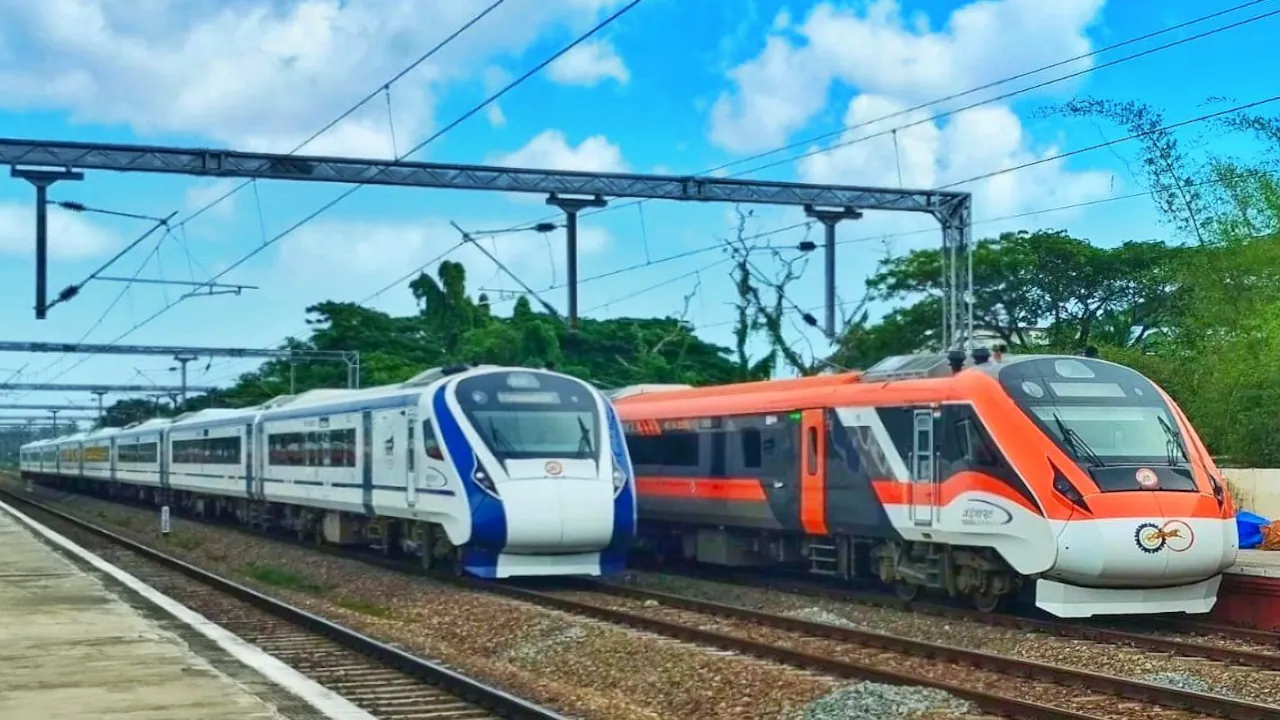
Chennai Vande Bharat Demand Reshapes Rail Priorities
India’s semi-high-speed rail network is beginning to expose a widening gap between high-demand intercity corridors and routes still struggling to build consistent commuter confidence. Fresh railway performance data from southern India shows that Vande Bharat services linking Chennai, Bengaluru and Mysuru are operating beyond seating capacity, while newer connections to Belagavi and Madurai continue to witness weaker occupancy despite significant infrastructure investment.
The strongest demand has emerged on the Chennai–Mysuru corridor via Bengaluru, where passenger bookings crossed 100% occupancy across multiple services during the last financial year. Railway officials indicated that sustained demand has translated into some of the highest earnings among Vande Bharat operations in southern India, prompting the deployment of an additional train on the same route. The trend reflects a broader shift in urban mobility patterns across southern India. Chennai and Bengaluru remain deeply connected through employment, technology, manufacturing and education ecosystems, creating steady business and leisure travel demand. Transport planners say the corridor benefits from predictable travel times, reduced dependence on short-haul flights and improved passenger comfort compared with conventional rail services.
The success of the Chennai-linked Vande Bharat network also underlines how rail infrastructure is increasingly shaping regional economic integration. Faster intercity connectivity allows workers, students and businesses to move more efficiently between major urban clusters while reducing congestion on highways and lowering emissions associated with road transport. Urban development experts argue that high-capacity rail corridors will become increasingly critical as southern India’s metropolitan regions expand outward. The Bengaluru–Hyderabad Vande Bharat service has also maintained strong occupancy after transitioning to longer 16-coach trainsets. Officials noted that although seat availability increased, revenues remained stable due to continued demand between the two technology-driven urban economies.In contrast, railway data suggests that not all routes are benefiting equally from the Vande Bharat rollout. Services connecting Bengaluru with Belagavi and Madurai have reported comparatively lower passenger loads, raising concerns about route planning, timing and regional demand assessment.
Transport analysts point out that semi-high-speed rail performs best on corridors with dense economic activity, daily corporate travel and established urban linkages. Routes without strong business or tourism traffic may require revised schedules, improved last-mile connectivity and better integration with regional transport systems before passenger numbers stabilise. The uneven performance also raises questions about the long-term sustainability of premium rail expansion in smaller markets. Infrastructure specialists believe future investments may increasingly prioritise corridors where rail can reduce aviation dependency and support low-carbon regional mobility goals.Meanwhile, additional Vande Bharat services connecting Bengaluru with Mangaluru, Madgaon and Mumbai are under various stages of approval and planning. Urban mobility observers say the next phase of expansion will test whether India’s premium rail strategy can balance commercial viability with broader regional connectivity ambitions. As cities continue to grow and inter-state travel intensifies, railway planners may need to focus not only on speed and technology, but also on accessibility, affordability and route relevance to ensure the network supports more inclusive and climate-responsive urban development.