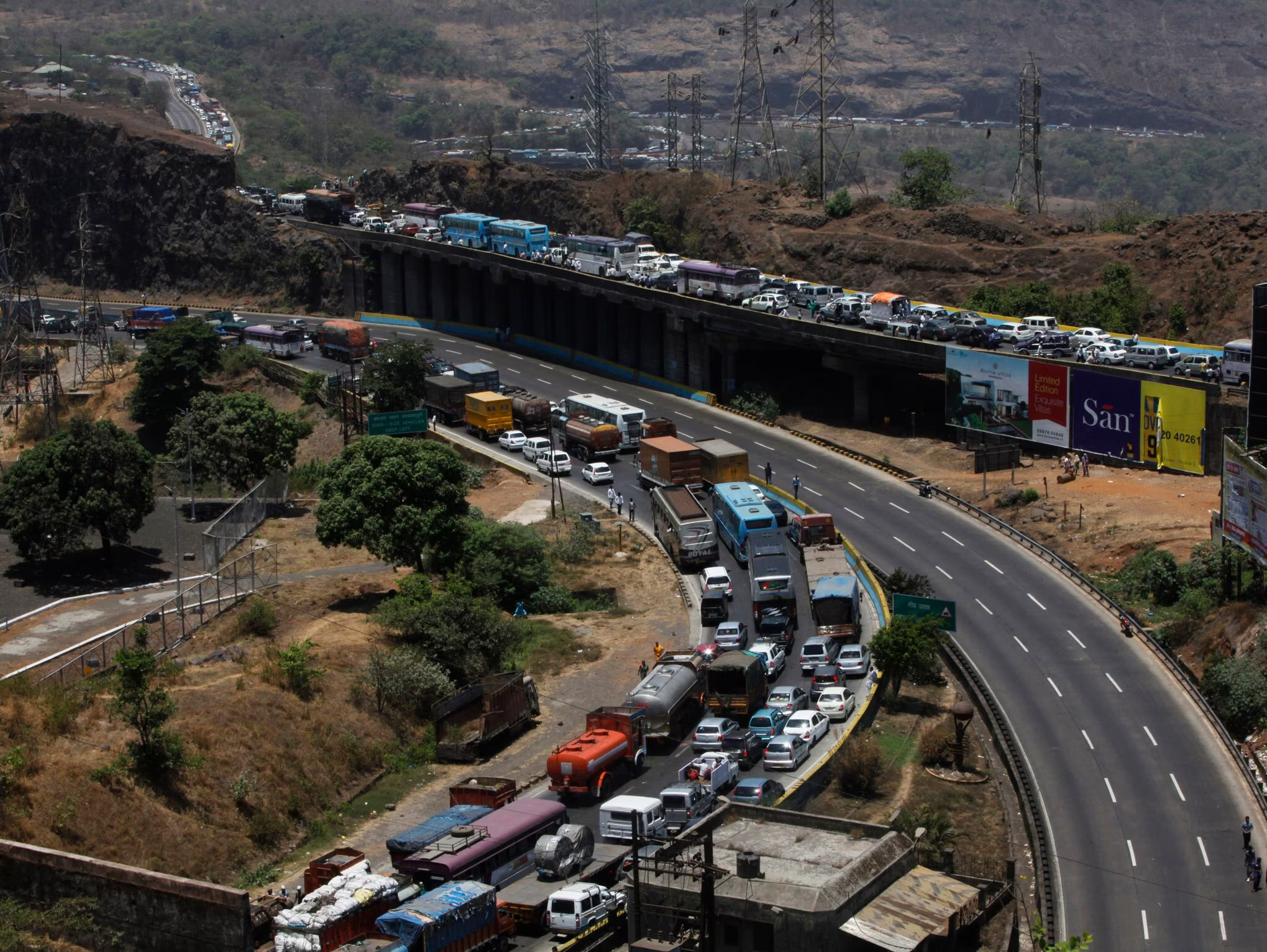
A newly operational connector on the Mumbai–Pune Expressway has rapidly altered traffic movement patterns across one of Maharashtra’s most congested highway stretches, with authorities reporting that a majority of passenger vehicles have shifted away from the accident-prone Borghat section within days of the route opening. The transition is being viewed as a significant development for highway safety, freight efficiency and regional mobility across western India’s busiest economic corridor. The recently commissioned Khopoli-to-Kusgaon connector, stretching nearly 20 kilometres, was introduced to bypass steep gradients and bottlenecks along the older Borghat alignment. Transport officials estimate that nearly 70 per cent of light motor vehicles are now using the new route, leaving the earlier ghat section largely to heavy commercial traffic.
The redistribution of vehicles has reportedly reduced traffic build-up along the hill corridor, particularly during peak intercity movement periods between Mumbai and Pune. Highway monitoring teams have also indicated an absence of major crashes across both the old and new sections in the initial days following the diversion, highlighting the potential safety benefits of separating freight and passenger traffic flows. Urban transport planners say the development reflects a broader infrastructure strategy increasingly being adopted across India’s economic corridors — creating dedicated mobility systems that reduce congestion, improve logistics reliability and lower travel stress for commuters. The Mumbai–Pune route carries substantial passenger and freight movement daily, linking financial, manufacturing and technology centres across Maharashtra. The new expressway connector was designed to eliminate sharp elevations and steep slopes that historically contributed to vehicle slowdowns and mechanical strain, particularly during monsoon conditions. The route also bypasses congestion hotspots near hill stations and tourism zones that frequently experience traffic spillovers during weekends and holiday periods.
Infrastructure experts note that smoother traffic movement can deliver wider environmental and economic gains. Reduced idling and stop-start congestion may lower fuel consumption and vehicular emissions across the corridor, while shorter journey durations can improve supply-chain efficiency for industries dependent on road-based freight transport. The project additionally reflects the increasing complexity of managing mobility in rapidly urbanising regions surrounding Mumbai and Pune. With vehicle ownership rising and industrial activity expanding along the corridor, authorities have been under growing pressure to improve highway resilience and operational safety. Transport analysts caution, however, that long-term success will depend on sustained maintenance, traffic discipline and stronger integration with future multimodal transport systems, including rail freight and regional transit networks. They also emphasise the need for climate-resilient infrastructure planning as extreme rainfall events continue to expose vulnerabilities in hill and ghat road systems across Maharashtra.
The operational shift on the expressway may now serve as a case study for future corridor redesigns in other high-density transport regions where separating freight and passenger traffic could improve safety, travel reliability and urban economic productivity.