


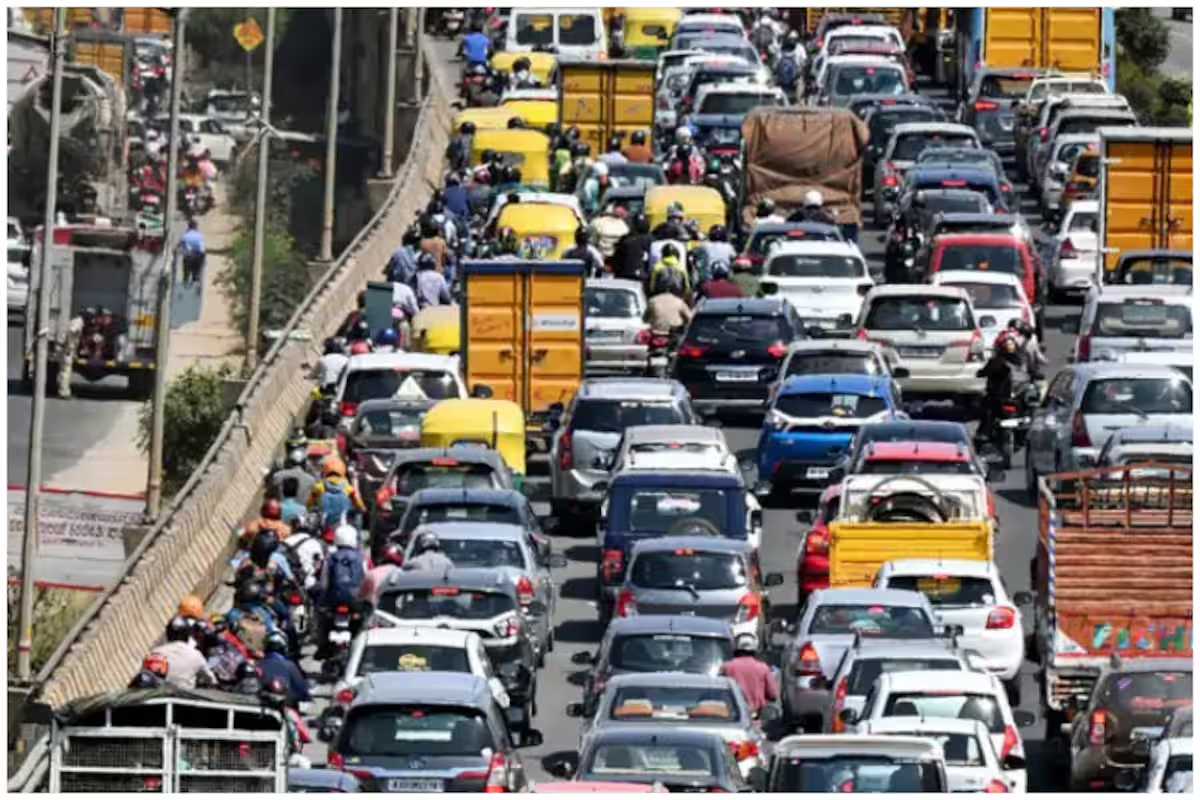
Kolkata is preparing for extensive traffic regulation measures around Brigade Parade Ground ahead of a major public ceremony expected to draw large crowds, senior officials and heightened security deployment. The temporary mobility restrictions are likely to affect commuters across central business districts, transit corridors and key arterial roads, underlining the growing challenge of managing civic events in densely populated urban centres.
Authorities have issued a detailed Kolkata traffic advisory covering diversions, parking controls and restricted access zones near Esplanade, Red Road, Park Street and adjoining stretches. Public transport movement is expected to remain operational with modifications, while emergency services and essential routes are being prioritised to minimise disruption.The scale of the traffic management exercise reflects Kolkata’s increasing dependence on coordinated urban mobility planning during high-footfall events. Brigade Parade Ground, located near administrative and commercial hubs, often becomes a pressure point because of its proximity to railway stations, metro corridors and office districts. Urban planners say such events expose the limitations of road-centric mobility systems in heritage cities where street capacity remains constrained despite rising vehicle ownership.Officials involved in traffic coordination indicated that the advisory aims to reduce bottlenecks and improve pedestrian safety during peak movement periods. Temporary diversions are expected to redistribute vehicles across alternate corridors, though experts warn that without real-time commuter communication and integrated public transport support, congestion could spill into surrounding neighbourhoods.
The Kolkata traffic advisory also highlights the growing role of digital traffic surveillance and adaptive signal systems in managing urban events. Civic authorities have increasingly relied on data-based monitoring to regulate vehicle flow, particularly in zones where mixed traffic, informal parking and pedestrian movement compete for limited road space. Transport analysts note that these systems can improve response times but require long-term investment in smarter infrastructure and public transit integration.Environmental concerns remain central to the discussion. Large-scale vehicle diversions and idling traffic contribute to higher emissions in already congested city zones. Sustainable mobility experts argue that future event management strategies should prioritise metro access, shuttle systems and non-motorised transport connectivity rather than relying primarily on traffic restrictions. They say reducing dependence on private vehicles is essential if Kolkata aims to balance public events with climate-sensitive urban planning.The economic impact of traffic disruptions is also significant. Commercial establishments, delivery services and daily wage workers operating in central Kolkata often experience delays and productivity losses during major city events. At the same time, improved coordination can reduce uncertainty for businesses and commuters alike, especially when advisories are communicated early and supported by clear route management.
Urban governance specialists believe the situation offers a wider lesson for rapidly growing Indian cities. As public gatherings, political events and ceremonial functions continue to expand in scale, municipalities may need dedicated event mobility frameworks that integrate policing, public transport, emergency response and environmental safeguards into a unified operational system.For residents and commuters, the coming days will test how effectively Kolkata can manage public movement without paralysing everyday urban life. The success of the advisory may ultimately depend not only on enforcement, but on how seamlessly the city balances security, accessibility and mobility in one of its busiest civic zones.
Read More : Mumbai Drain Works Trigger Major Rail Disruptions
Kolkata Traffic Curbs Reshape Central City Movement
