


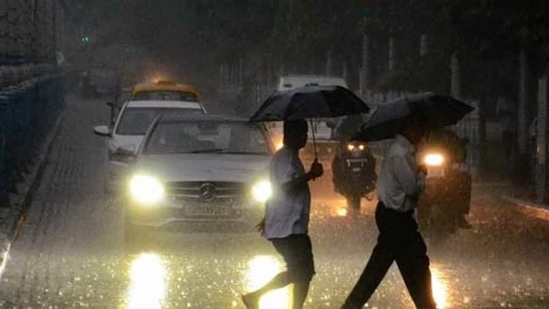
A fresh Kalbaisakhi alert issued for Kolkata and surrounding districts has once again drawn attention to the growing vulnerability of Indian cities to extreme weather disruptions. Forecasts indicating heavy rainfall, thunderstorms and gusty winds over the coming days have prompted civic agencies to monitor drainage systems, traffic movement and emergency response networks across the metropolitan region.
The latest weather warning arrives at a time when Kolkata is already navigating rising summer temperatures, high humidity and mounting pressure on ageing urban infrastructure. While pre-monsoon storms are common in eastern India, urban planners say the increasing intensity and unpredictability of these weather events are exposing deeper gaps in climate resilience planning.The Kalbaisakhi alert has triggered preparedness measures in low-lying neighbourhoods that routinely experience waterlogging during intense rain spells. Transport corridors, roadside markets and older residential zones remain especially vulnerable due to inadequate drainage capacity and rapid concretisation across expanding urban pockets. Officials involved in civic management said departments responsible for pumping stations, waste clearance and emergency services have been placed on heightened alert.Experts note that Kolkata’s challenge is no longer limited to seasonal rainfall, but to the interaction between climate events and dense urban growth. Encroachment on wetlands, shrinking open spaces and pressure on natural water channels have reduced the city’s ability to absorb excess rainwater efficiently. As a result, even short-duration storms can disrupt mobility, business activity and public services.
The Kalbaisakhi alert also carries economic implications for one of eastern India’s largest commercial centres. Frequent weather-related disruptions affect daily wage earners, street vendors, logistics operators and small businesses that rely on uninterrupted urban movement. Traffic congestion during heavy rain events often slows supply chains and increases commuting times across the city’s core employment hubs.Urban climate specialists argue that weather preparedness must increasingly become part of long-term infrastructure planning rather than a reactive seasonal exercise. Investments in stormwater management, permeable streets, blue-green infrastructure and decentralised flood mitigation systems are being viewed as essential for future-ready cities. They also emphasise the importance of integrating weather forecasting with public transport advisories and neighbourhood-level emergency communication systems.Environmental observers say the Kalbaisakhi alert highlights a broader pattern affecting rapidly urbanising Indian metros, where climate-linked events are becoming more frequent and financially costly. Cities that fail to strengthen adaptive infrastructure may face recurring disruptions that impact public health, productivity and housing security.
For residents, immediate concerns remain centred on safe mobility, electricity disruptions and waterlogging risks during peak travel hours. However, the larger conversation is shifting towards how Kolkata can modernise its civic infrastructure while protecting ecological buffers that naturally regulate urban flooding.As eastern India enters a more volatile weather cycle, the Kalbaisakhi alert serves as another reminder that climate resilience is increasingly tied to how cities are planned, governed and expanded in the years ahead.
Read More : Mumbai Vasai Bridge Plan Gains Fresh Momentum
Kolkata Storm Warning Raises Urban Flood Concerns
