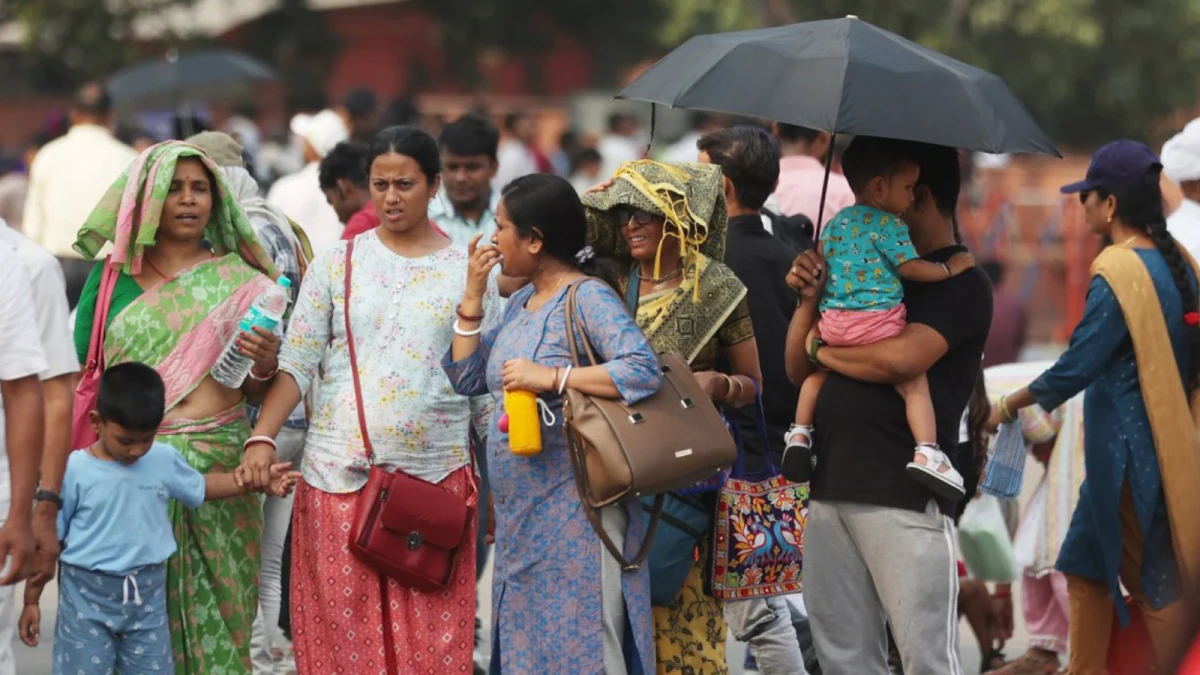
Mumbai Heatwave Conditions Raise Urban Health Concerns
Mumbai and its neighbouring urban regions continued to experience severe heat stress on Sunday as temperatures and humidity levels climbed sharply across the metropolitan belt, intensifying concerns around public health, urban infrastructure and climate resilience ahead of the monsoon season. Weather agencies have forecast continued hot and humid conditions across Mumbai, Thane, Palghar and Raigad through the beginning of the week, with several eastern suburbs and adjoining districts nearing the 40-degree Celsius mark. The prolonged spell of elevated temperatures has once again exposed the vulnerability of densely built urban regions where concrete-heavy development, shrinking green cover and rising humidity amplify thermal discomfort.
Data recorded across multiple monitoring stations on Saturday indicated unusually high daytime temperatures in parts of the Mumbai Metropolitan Region. Several suburban pockets witnessed temperatures well above seasonal averages, while humidity levels remained exceptionally high along the coastal belt, worsening heat stress for residents dependent on outdoor work, public transport and informal labour. The Mumbai heatwave conditions are increasingly being viewed by planners and environmental experts as a structural urban challenge rather than an isolated weather event. Heat retention caused by asphalt roads, glass-fronted buildings, reduced tree density and limited shaded public spaces has intensified the urban heat island effect across many neighbourhoods. Public health specialists warn that humid heat can place added strain on vulnerable populations, particularly senior citizens, children, construction workers, street vendors and commuters travelling in overcrowded transit corridors. High overnight temperatures also reduce recovery time for the human body, increasing risks associated with dehydration, exhaustion and heatstroke. Urban climate researchers note that cities like Mumbai are facing a growing overlap of environmental stresses, including heatwaves, flooding risk, poor air circulation and water scarcity.
As temperatures continue to rise globally, Indian coastal cities may increasingly require dedicated heat adaptation strategies similar to flood mitigation plans. Municipal authorities and emergency response agencies have urged citizens to limit outdoor exposure during peak afternoon hours and remain alert to signs of heat-related illness. Hospitals and local health centres are also monitoring weather-linked cases more closely as pre-monsoon heat intensifies across Maharashtra. Experts argue that long-term mitigation will require more than short-term advisories. Urban planners have called for increased investment in heat-resilient infrastructure such as shaded pedestrian networks, reflective roofing materials, expanded urban forests, water-sensitive design and climate-responsive housing development. The Mumbai heatwave conditions also carry economic implications. Productivity losses in construction, logistics and outdoor services sectors tend to increase during prolonged heat periods, while higher electricity demand from cooling systems places additional pressure on energy infrastructure.
Meteorologists expect dry weather conditions to persist after the current humid spell eases, although uncertainty around monsoon onset continues to shape civic preparedness across the region. With climate volatility becoming more frequent, experts believe heat resilience will need to become a central part of future urban planning in the Mumbai Metropolitan Region.