


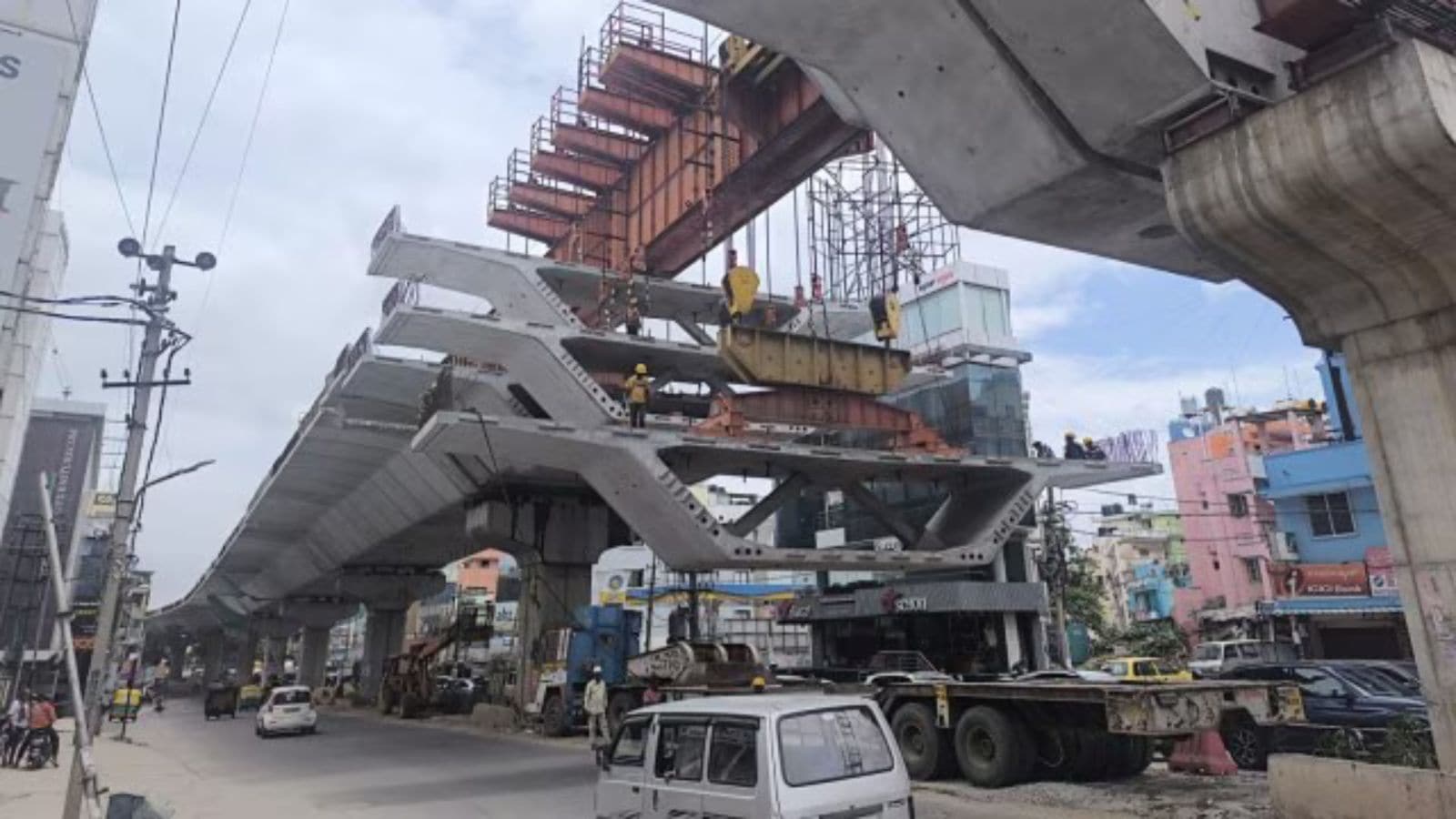
Authorities overseeing urban infrastructure in Bengaluru have set an October completion target for the long-delayed Ejipura Flyover project, renewing hopes of partial traffic relief along one of the city’s most congested mobility corridors.The flyover, which has faced repeated construction setbacks over several years, is considered a critical link connecting densely populated residential neighbourhoods with major commercial and technology districts in southeastern Bengaluru.
Civic officials say efforts are now focused on accelerating pending structural and road integration works ahead of the revised deadline.The prolonged delay has increasingly come to symbolise the broader infrastructure governance challenges confronting Bengaluru, where rapid urban expansion has often outpaced project execution and transport planning capacity. Daily commuters navigating the Ejipura corridor continue to face severe congestion, fragmented diversions, and longer travel times, particularly during peak office hours and monsoon-related disruptions.Urban mobility experts argue that while the completion of the flyover may ease traffic bottlenecks temporarily, Bengaluru’s long-term transport problems cannot be resolved through elevated road infrastructure alone.The city’s dependence on private vehicles, combined with dispersed urban growth and inadequate public transport integration, continues to place sustained pressure on road networks.The Ejipura Flyover project also highlights how delayed infrastructure delivery can generate wider economic and environmental costs.
Congestion-related fuel consumption, lost productivity, increased emissions, and declining pedestrian safety have become recurring concerns in fast-growing metropolitan regions across India.Transport planners note that flyovers often provide short-term improvements in vehicle movement but can also encourage higher traffic volumes if not accompanied by stronger public transit systems. In Bengaluru, experts increasingly advocate for multimodal mobility strategies that combine metro expansion, bus network upgrades, walkability improvements, and transit-oriented development.The corridor surrounding Ejipura has experienced substantial commercial and residential growth over the past decade, intensifying demand for efficient mobility infrastructure. However, civic groups argue that project delays have disrupted local businesses, reduced pedestrian accessibility, and weakened public confidence in large-scale urban works.Environmental researchers further stress that infrastructure projects in dense urban areas must incorporate climate-responsive design principles, including improved stormwater drainage, pedestrian access, and reduced surface heat impacts. Bengaluru’s recurring flooding and traffic paralysis during heavy rainfall events have heightened attention on resilient transport planning.
For residents and businesses across southeastern Bengaluru, the revised October target represents another test of the city’s ability to deliver critical infrastructure within realistic timelines. Beyond the flyover itself, the project’s eventual completion may influence how future urban mobility initiatives are planned, coordinated, and executed in one of India’s fastest-growing metropolitan economies.
Also Read:Bengaluru Business Corridor Project Advances Planning Stage
