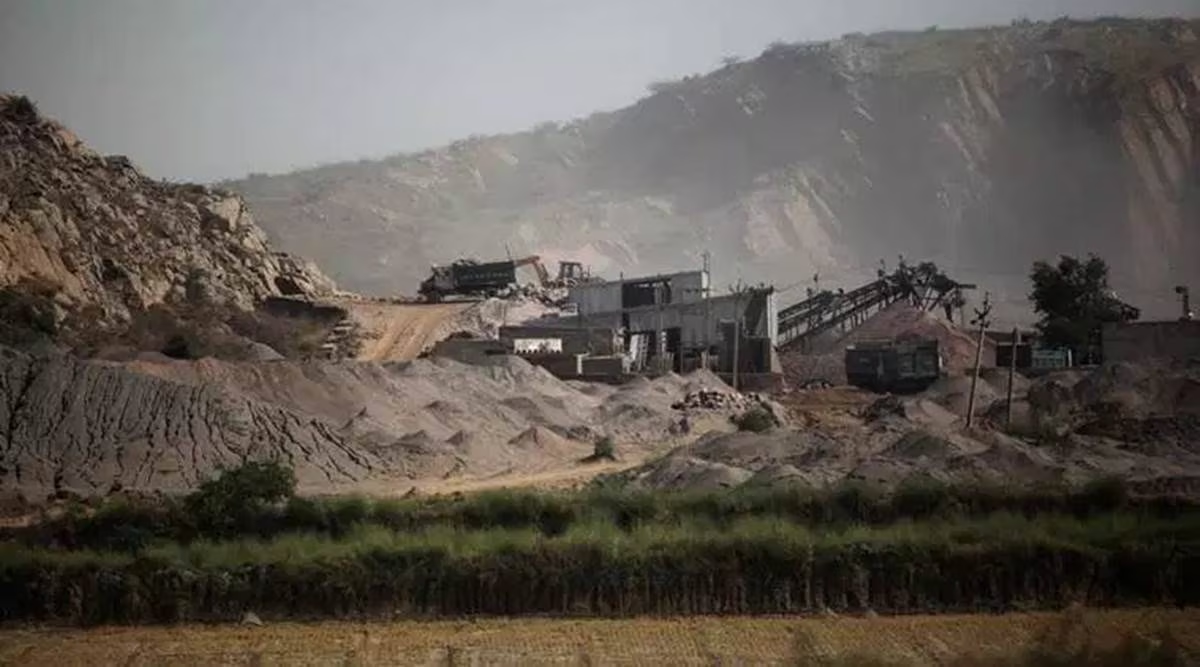
A late-night enforcement operation against illegal earth extraction in Maharashtra’s Nagpur district has drawn attention to the growing risks faced by frontline officials attempting to curb unregulated mining activity in rapidly changing rural landscapes. The incident, which unfolded in Kuhi taluka, has also renewed debate around weak monitoring systems, ecological degradation and the mounting pressure on district administrations to contain informal resource extraction.
According to district authorities, a revenue team conducting a raid in Bori Naik village intercepted machinery allegedly involved in unauthorised murrum excavation. During the operation, one excavator operator reportedly attempted to flee the site while officials tried to stop the movement of vehicles linked to the activity. A senior revenue officer sustained injuries during the pursuit before police units intercepted the machine several kilometres away, officials said. Authorities later seized an excavator and two tractors suspected to have been used for the mining operation. Police have initiated criminal proceedings against those allegedly involved, including charges related to endangering public servants during duty. While the dramatic nature of the incident has captured public attention, urban planners and environmental observers say the larger issue lies in the expanding network of informal mining activities feeding construction demand across growing urban regions. Murrum and other minor minerals are widely used in road building, peri-urban housing and land development projects, especially in fast-expanding districts around tier-two cities.Experts note that unchecked extraction often damages local water systems, weakens soil stability and accelerates land degradation in already climate-vulnerable areas.
In many districts, illegal mining sites emerge along agricultural belts and forest-edge settlements where regulatory surveillance remains limited after dark.The Nagpur incident also highlights the operational gap between policy enforcement and on-ground capacity. Revenue and police teams frequently conduct raids with limited personnel, inadequate protective equipment and little technological support. Former administrative officials say district enforcement mechanisms have not kept pace with the speed of rural infrastructure expansion and rising demand for low-cost construction material.Environmental researchers have repeatedly linked illegal mining to increased flood vulnerability, damaged village roads and declining groundwater recharge in semi-arid regions of Maharashtra. In peri-urban zones, the pressure is particularly acute as expanding real estate corridors and transport infrastructure projects continue to increase material consumption.Urban governance specialists argue that sustainable construction practices and transparent mineral tracking systems are now becoming essential for climate-resilient regional planning. Without stronger oversight, they warn, illegal mining could continue to undermine both environmental security and public safety.
For local residents, the incident has become a reminder that enforcement against illegal mining is no longer only a regulatory issue. It increasingly intersects with rural livelihoods, infrastructure demand and the broader challenge of building safer and more accountable growth systems around India’s emerging urban regions.