


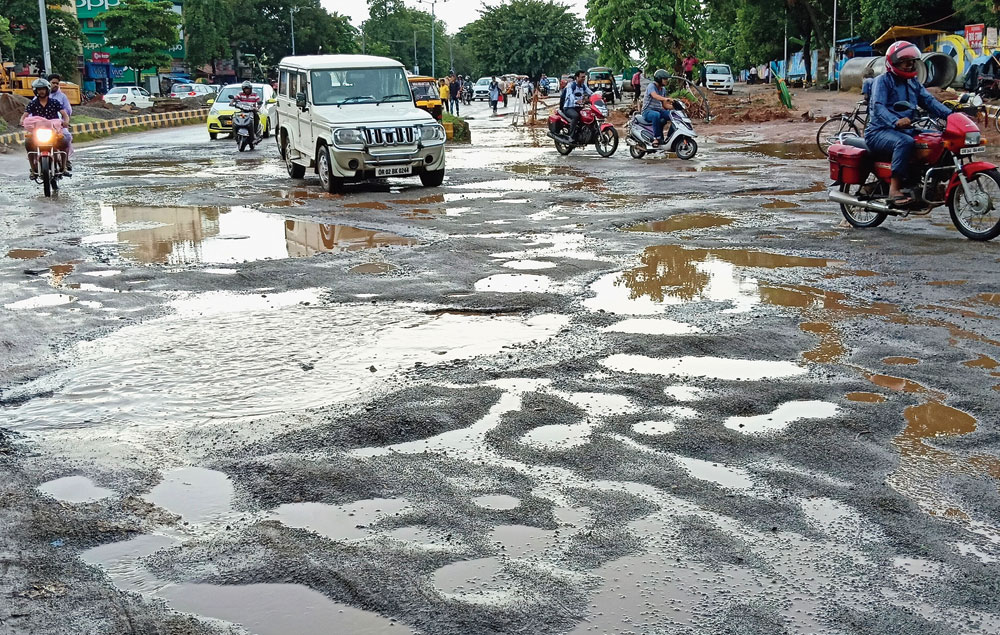
Persistent road deterioration across Hyderabad is raising questions about the city’s ability to sustain its rapid growth ambitions, particularly as policymakers outline plans for a future-ready urban model. The gap between vision and on-ground infrastructure conditions is becoming increasingly visible, with citizens and planners pointing to declining road quality as a critical concern.
Across several neighbourhoods, damaged road surfaces, recurring potholes, and uneven maintenance cycles have disrupted daily mobility. These issues are not confined to peripheral zones but are also evident in key residential and commercial corridors, affecting commute times, vehicle safety, and overall urban efficiency.The Hyderabad road conditions have become a focal point in discussions about infrastructure governance. Experts note that road quality is one of the most immediate indicators of a city’s administrative effectiveness. Frequent repairs, often triggered by seasonal damage or utility work, suggest deeper systemic issues related to planning coordination and construction standards.Urban planners argue that the problem is not merely about maintenance but about lifecycle management of infrastructure. Roads in high-growth cities face heavy stress due to increasing traffic volumes, construction activity, and utility disruptions. Without integrated planning where drainage, underground utilities, and surface infrastructure are designed together road degradation becomes a recurring cycle.The Hyderabad road conditions also have broader environmental and economic implications.
Poorly maintained roads contribute to increased fuel consumption due to stop-start traffic and vehicle damage, adding to both household costs and emissions. In a city positioning itself as a global technology and investment hub, such inefficiencies can influence business perception and investor confidence.From a governance standpoint, coordination between civic bodies, contractors, and utility agencies remains a key challenge. Industry observers highlight that fragmented accountability often leads to repeated excavation and patchwork repairs, undermining durability. Transparent procurement processes and performance-based contracts are increasingly being seen as necessary reforms.There are also implications for equity in urban development. Infrastructure quality often varies significantly across neighbourhoods, with lower-income areas experiencing slower response times and weaker maintenance standards. Ensuring consistent road quality across the city is essential to achieving inclusive growth and equitable access to services.
Urban mobility experts emphasise that improving road conditions should be part of a larger shift towards sustainable transport planning. While better roads can enhance connectivity, long-term solutions lie in reducing dependence on private vehicles through robust public transport systems, walkable streets, and integrated land use planning.As Hyderabad continues to expand, addressing basic infrastructure gaps such as road quality will be critical to sustaining its growth narrative. The effectiveness of future urban strategies will depend not only on large-scale projects but also on consistent delivery of everyday civic services that directly impact residents’ quality of life.
Read More: Hyderabad Junction Upgrades Improve Urban Traffic Management
