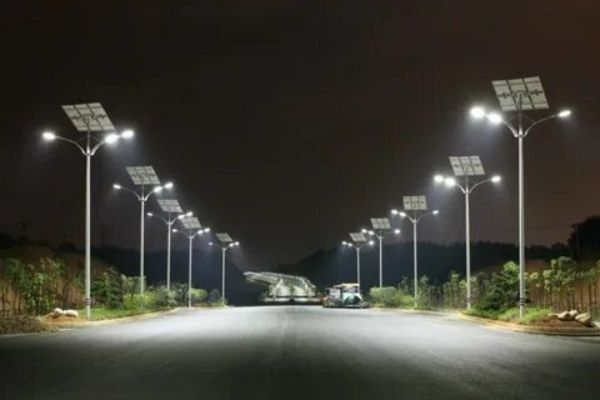
Gurugram Smart Street Lights To Boost Night Safety
Gurugram’s civic body is preparing to roll out a network of smart street lights across key arterial roads, signalling a shift towards data-driven urban infrastructure aimed at improving safety, energy efficiency and public service delivery. The proposal, currently awaiting state-level clearance, reflects growing pressure on fast-expanding cities to modernise basic infrastructure while addressing long-standing gaps in visibility and surveillance. The planned smart street lights are expected to go beyond conventional illumination. Urban officials familiar with the proposal indicate that the new system will include multi-purpose poles equipped with digital features such as surveillance cameras, emergency communication tools and automated monitoring systems. This approach aligns with broader efforts to integrate urban services into centralised command systems, allowing real-time fault detection and quicker maintenance responses.
For a city like Gurugram where rapid real estate growth has often outpaced civic infrastructure the initiative addresses a persistent concern. Large stretches of residential sectors and peripheral zones continue to face uneven lighting, contributing to safety risks, particularly for women, night-time workers and commuters. Urban planners note that improving lighting infrastructure has a direct correlation with perceived and actual public safety, as well as economic activity after dark. At present, the city operates a vast network of street lights, yet inefficiencies remain due to technical failures, delayed repairs and inconsistent coverage. Experts suggest that transitioning to smart street lights could also help reduce energy consumption through adaptive lighting systems that adjust brightness based on usage patterns. This would support broader climate goals by lowering electricity demand and associated emissions, a critical factor as Indian cities grapple with rising energy needs.
However, the proposal also brings attention to governance and execution challenges. Previous attempts to upgrade lighting infrastructure under partnership models faced delays and underperformance, raising questions about project management, accountability and long-term maintenance. Industry observers emphasise that technology deployment alone cannot guarantee outcomes without robust institutional capacity and transparent monitoring mechanisms. The timing of the initiative is significant. With the monsoon approaching and urban expansion continuing at pace, ensuring well-lit, accessible streets becomes essential not just for mobility but also for emergency response and disaster preparedness. Well-designed lighting systems can play a role in climate resilience by supporting safer evacuation routes and reducing accident risks during extreme weather conditions.
Residents, while broadly supportive, remain cautious. Many point to past experiences where infrastructure promises did not translate into consistent on-ground improvements. This underscores the need for phased implementation, community feedback loops and measurable performance benchmarks. If executed effectively, Gurugram’s move could set a precedent for mid-sized Indian cities seeking to blend technology with inclusive urban design. The next phase will depend on regulatory approvals and, more importantly, the ability to translate policy intent into reliable, citizen-focused infrastructure.