


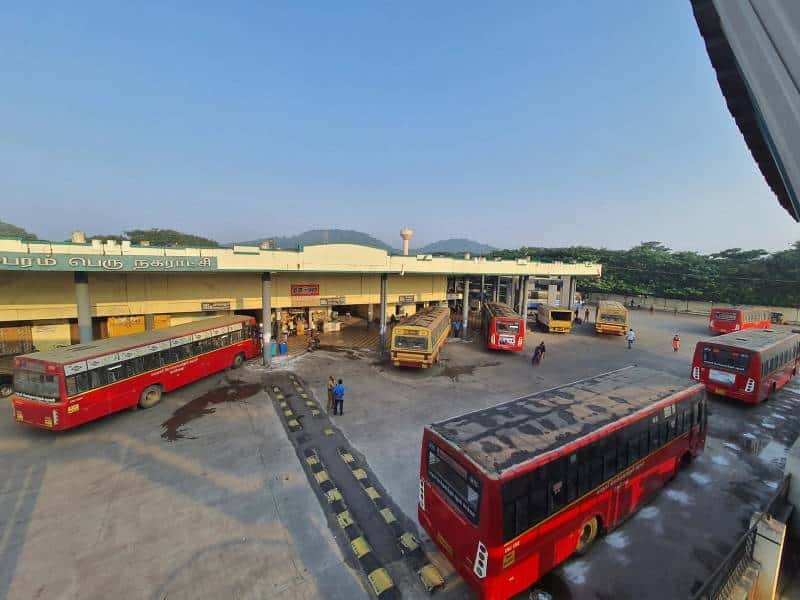
Concerns over safety and inadequate infrastructure at Tambaram Bus Terminus in Chennai are drawing attention to the challenges of maintaining secure and accessible public transport hubs in rapidly expanding urban regions. Reports of poor lighting, limited amenities, and weak surveillance have highlighted gaps that affect commuter confidence, particularly during night hours.
The issues at the terminus reflect a broader concern around Tambaram bus terminus safety, especially for women, elderly passengers, and daily commuters who rely on late-evening services. Inadequate illumination and insufficient security presence can make large transit spaces difficult to navigate after dark, increasing vulnerability and discouraging public transport usage.Urban mobility experts point out that transport infrastructure must go beyond capacity and connectivity to include safety, accessibility, and user comfort. As one of the key suburban nodes, Tambaram handles significant passenger volumes, making it critical for facilities to match demand. The current gaps suggest that infrastructure upgrades have not kept pace with the area’s rapid growth.The situation also underscores the importance of integrated planning. Bus terminals are not standalone entities; they function as part of a larger mobility ecosystem that includes rail, metro, and last-mile connectivity. Weak infrastructure at one node can disrupt the efficiency and reliability of the entire network, affecting commuting patterns across the city.From a governance perspective, addressing Tambaram bus terminus safety will require coordinated action between transport authorities, municipal bodies, and law enforcement agencies.
Measures such as improved lighting, CCTV coverage, regular maintenance, and visible security personnel can significantly enhance commuter confidence.There are also implications for social equity. Public transport hubs are lifelines for those without access to private vehicles, including low-income groups and students. Ensuring safe and functional infrastructure is essential to maintaining inclusivity in urban mobility systems. When safety is compromised, it disproportionately affects those who depend most on these services.Environmental considerations further strengthen the case for improving public transport infrastructure. Safe and reliable transit hubs encourage greater use of buses and other shared modes, reducing reliance on private vehicles and contributing to lower emissions. Conversely, poorly maintained facilities can push commuters towards less sustainable alternatives.Experts also highlight the role of design in enhancing safety. Clear signage, open sightlines, accessible amenities, and well-planned layouts can reduce risks and improve the overall user experience. Incorporating such elements into upgrades can create more resilient and people-friendly transport spaces.As Chennai continues to expand, the challenges at Tambaram serve as a reminder that infrastructure development must prioritise quality alongside scale.
Addressing Tambaram bus terminus safety is not just about fixing immediate issues but about setting standards for future transit hubs.The way forward will depend on timely interventions and sustained investment in public transport infrastructure. Ensuring that key nodes like Tambaram are safe, accessible, and well-maintained will be essential to building a reliable and inclusive urban mobility system for the city.
Also Read:Chennai EV Sales Growth Defies Seasonal Market Slowdown
