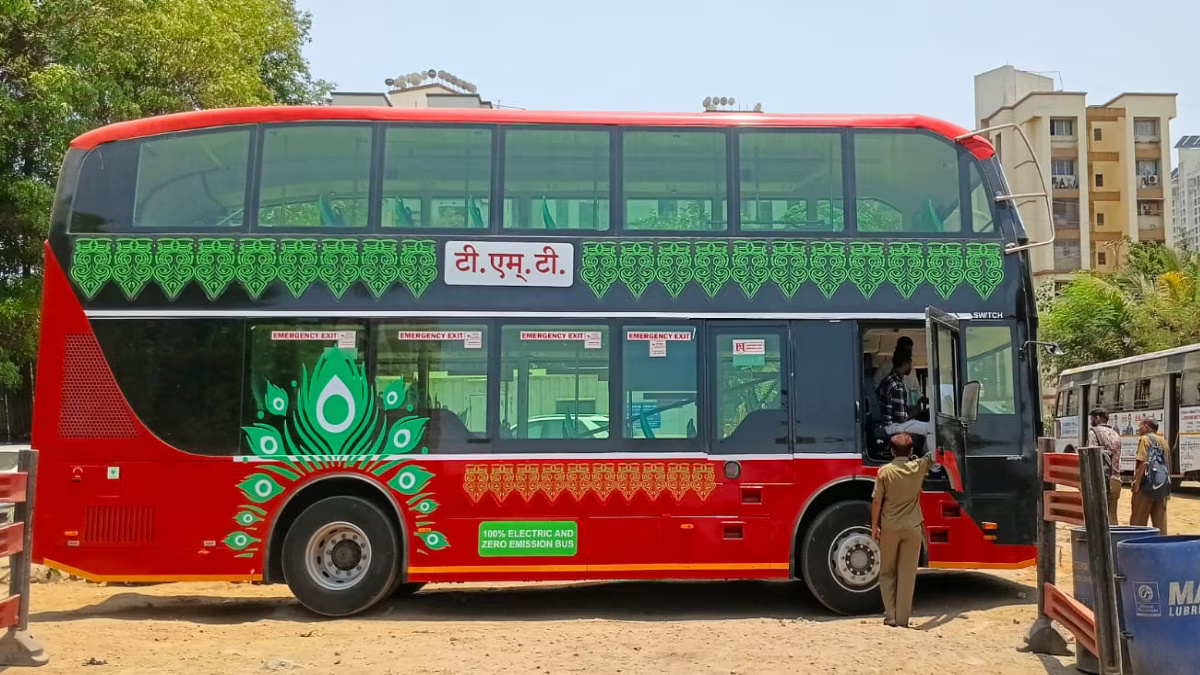
Thane has introduced its first electric double decker bus, marking a notable shift in the city’s approach to public transport as it attempts to balance rising commuter demand with sustainability goals. The deployment on a key intra-city corridor is expected to improve passenger capacity while reducing emissions in one of the Mumbai Metropolitan Region’s fastest-growing urban centres. The newly inducted vehicle, designed to carry a significantly higher number of passengers than conventional buses, will operate along a high-density route connecting major residential and commercial zones. Transport planners suggest that such high-capacity solutions are increasingly necessary as cities like Thane experience rapid population growth and traffic congestion.
Officials indicate that the electric double decker bus has been introduced under a contract model that separates operational costs from capital expenditure, allowing civic authorities to expand services without placing immediate financial strain on municipal transport budgets. This model is gaining traction across Indian cities as they transition towards cleaner mobility systems while managing fiscal constraints. From a commuter perspective, the addition of a double-decker format is expected to ease overcrowding, particularly during peak hours. By increasing seating and standing capacity within a single vehicle footprint, the system can accommodate more passengers without proportionately adding to road congestion. Urban mobility experts note that such efficiency gains are critical in dense corridors where road expansion is limited. The environmental implications are equally significant. As a fully battery-powered vehicle, the electric double decker bus eliminates tailpipe emissions, contributing to improved air quality in urban areas. This aligns with broader efforts to reduce dependence on fossil fuels and transition towards low-carbon transport systems. However, experts caution that the overall sustainability impact will depend on factors such as electricity sourcing and lifecycle management of batteries.
The move also reflects a broader trend of Indian cities experimenting with diversified public transport solutions, combining traditional bus systems with metro networks, suburban rail, and emerging electric mobility options. Integrated planning will be essential to ensure these systems complement rather than compete with each other. Looking ahead, authorities are expected to expand the fleet with additional electric double-decker buses, signalling a long-term commitment to scaling up green mobility. Yet, urban planners emphasise that infrastructure support—such as charging stations, depot upgrades, and route optimisation—will be crucial to sustaining operations efficiently. The introduction of the electric double decker bus also raises questions about inclusivity and accessibility. Ensuring that vehicles are designed for all users, including elderly passengers and those with disabilities, will be important in making public transport more equitable.
As Thane continues to urbanise, the success of such initiatives will depend on how effectively they integrate environmental objectives with commuter needs. If implemented at scale with supporting infrastructure, electric high-capacity buses could play a central role in shaping cleaner, more efficient urban mobility systems across the region.