


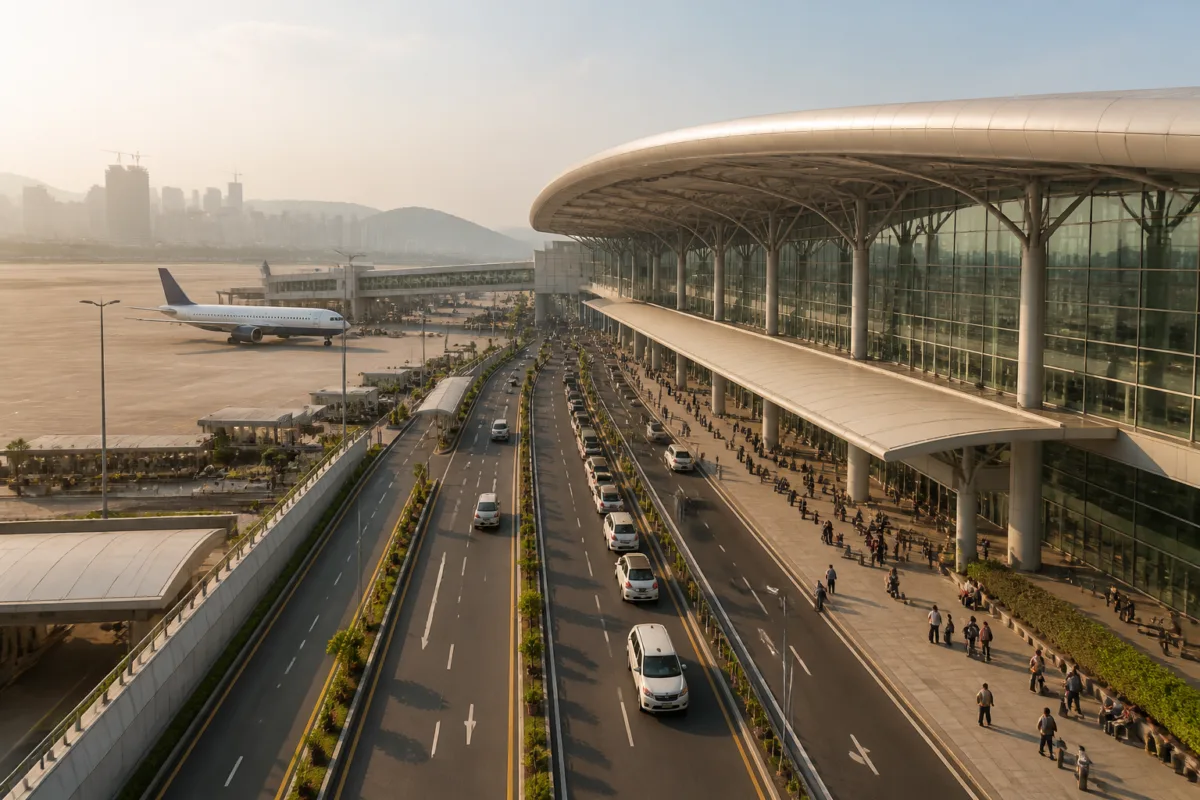
The planned transfer of IndiGo and Air India Express flights to Navi Mumbai International Airport marks a significant step in Mumbai’s shift towards a two-airport operating system. The move is intended to redistribute traffic across the Mumbai Metropolitan Region, create room for the redevelopment of Chhatrapati Shivaji Maharaj International Airport’s Terminal 1 and establish Navi Mumbai as a larger international aviation hub.
IndiGo plans to begin international operations from Navi Mumbai in February 2027 and progressively move 12 daily international departures from Mumbai airport between February and July. The airline will serve Bahrain, Riyadh, Dammam, Jeddah, Madinah, Kuwait, Ras Al Khaimah, Fujairah, Muscat, Dhaka and Jakarta, while adding Kathmandu to its Navi Mumbai network. The airline also plans to shift the domestic connectivity required to support these international flights.
Air India Express will begin with four daily domestic flights from Navi Mumbai in December 2026. It plans to add services to Oman and Kuwait from January 2027, with the Kuwait transition subject to regulatory approvals. The airline group also intends to progressively move Air India Express services to Jeddah, Riyadh, Dammam, Doha, Muscat and Sharjah. The transition is expected to be completed by the IATA Northern Summer 2027 season.
The announcements were made jointly by the airlines and Adani Airport Holdings Ltd on October 25. Final transition dates for IndiGo will be announced after project coordination and the required operating approvals are completed. This detail is important because the shift is not a single relocation event. It is a staged reallocation of flights, routes and supporting domestic connectivity between two airports serving the same metropolitan region.
That distinction defines the operational challenge. Mumbai airport is not being replaced by Navi Mumbai airport. Instead, the region is moving towards a division of airline activity in which both airports will handle scheduled services while the existing airport prepares for a major redevelopment of Terminal 1. IndiGo and the airport operator have said that the phased transfer will support a transparent and proportionate redistribution of capacity, taking into account each airline’s existing presence at Mumbai airport.
The arrangement also shows how airport redevelopment is closely tied to airline scheduling. Terminal 1 redevelopment is expected to require capacity reductions by 2030. IndiGo’s associated movement of domestic operations is intended to contribute to those reductions. If further adjustments are required at Terminal 1, the airline and Adani Airports said they will be accommodated at Mumbai airport’s Terminal 2.
This creates a three-part transition rather than a simple airport expansion. Navi Mumbai must build up passenger and airline activity; Mumbai airport must reduce or redistribute capacity while redevelopment proceeds; and airlines must maintain network connectivity during the change. Each part depends on coordination between airport operators, airlines and regulators. A delay or mismatch in one part could affect the timing of the others, although the supplied announcements do not establish that any such delay has occurred.
For passengers, the most immediate change will be the location from which particular routes operate. IndiGo’s international services to destinations including the Gulf, Southeast Asia and Bangladesh will progressively move to Navi Mumbai, along with domestic flights supporting international connections. Air India Express passengers will also see selected domestic and West Asia services shift there. The announcements indicate that the two-airport arrangement is intended to preserve choice, but passengers will need clear information about which airport serves each route as the transition advances.
The domestic connectivity associated with international flights is particularly important. Moving an international departure without its supporting feeder services could weaken the usefulness of the new operation for passengers originating in other Indian cities. IndiGo’s plan to move the domestic connectivity required for its international services suggests that the airline is treating Navi Mumbai as an operating network rather than only as a point from which selected flights depart.
Air India Express has described its two-airport operation as a way to preserve the historical nature of its existing operating slots at Mumbai airport while continuing to serve the market. Slots are a central part of airport capacity management because they determine when airlines can operate flights at a constrained airport. The airline group’s stated approach therefore combines a new base of operations at Navi Mumbai with continued activity at the existing Mumbai airport.
The institutional logic behind the move is also clear. Adani Airports is working to establish Navi Mumbai as a second aviation hub for the region while Mumbai airport remains capacity-constrained. The airport operator is not only adding another facility to the metropolitan system; it is coordinating a redistribution of traffic between airports with different development timelines and operational roles.
The planned international network gives Navi Mumbai an early role in long-haul and regional connectivity. IndiGo’s proposed destinations include several Gulf cities, Kathmandu, Dhaka and Jakarta. Air India Express is expected to add services to West Asia and the Gulf. These routes are significant to the operating model described by the airlines, but the supplied material does not provide passenger forecasts, route-level frequencies beyond the stated transfers or estimates of how much traffic Navi Mumbai will handle after the transition.
The numbers that are available point to a measured start. IndiGo plans to transfer 12 daily international departures and the domestic connectivity associated with them. Air India Express will begin with four daily domestic flights before adding Oman and Kuwait services. These figures indicate that the initial change will be phased rather than a wholesale movement of operations from Mumbai airport.
The timing of the transition is linked to separate milestones. Air India Express is scheduled to start domestic operations from Navi Mumbai in December 2026, with Oman services and planned Kuwait services following in January 2027. IndiGo’s international operations are planned from February 2027, with the transfer of its identified destinations continuing through July. The wider Air India Express transition is expected to be completed by the Northern Summer 2027 season, while Terminal 1 redevelopment is expected to require capacity reductions by 2030.
This sequence gives airlines and airport authorities time to coordinate, but it also means that the two-airport system will develop gradually. Navi Mumbai’s role will expand as services are added, while Mumbai airport will continue to handle existing operations and prepare for redevelopment. The announcements do not specify the final division of routes between the two airports, nor do they establish whether other airlines will follow the same schedule.
The larger urban question is how a metropolitan region manages critical infrastructure when demand, land constraints and redevelopment requirements collide. Mumbai’s airport system has historically concentrated major aviation activity at a single airport. The planned redistribution introduces a more complex regional model in which connectivity depends not only on aircraft and terminals, but also on the relationship between two airports and the road and transport links connecting them.
The supplied announcements focus on airline operations and airport capacity. They do not provide details on passenger transfer times, surface transport arrangements, parking capacity, terminal access or how airlines will communicate airport changes to travellers. Those issues will be important to the practical experience of the two-airport system, but they remain outside the confirmed information currently available.
What is established is that Navi Mumbai International Airport is being integrated into the Mumbai region’s aviation network through a phased transfer by two major airline groups. The immediate purpose is to expand operations at the new airport while creating room for Terminal 1 redevelopment at Mumbai airport. The next milestones are the start of Air India Express domestic flights in December 2026, the planned addition of Gulf services from January, and IndiGo’s international transfer beginning in February 2027, subject to coordination and approvals.

