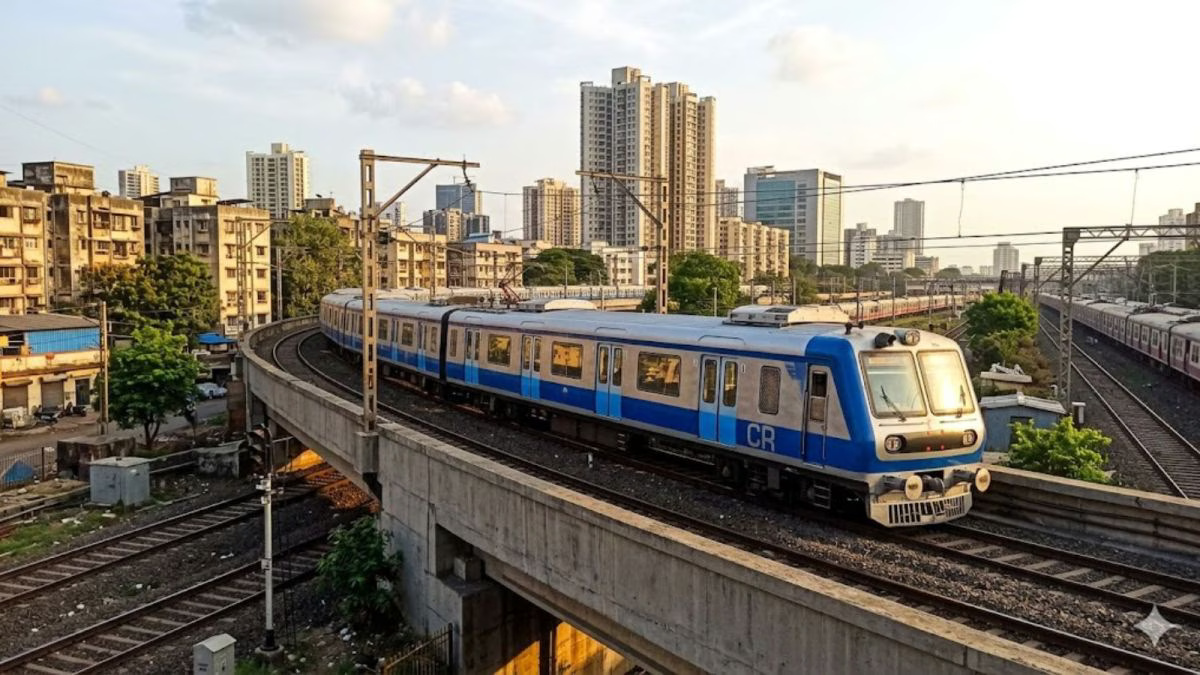
Mumbai’s suburban rail network is undergoing a gradual shift towards more comfortable commuting, with additional air-conditioned services introduced on the Harbour corridor from May 1. The move expands premium travel options on one of the city’s key east–west connectors, reflecting changing commuter expectations and the need to modernise ageing transit systems in a high-density urban region. The latest upgrade converts 14 existing non-air-conditioned suburban services into AC local trains, increasing the total number of such services under the Central Railway network. The Harbour Line, which links the city’s core business districts with rapidly growing nodes such as Navi Mumbai, is expected to benefit from this enhanced capacity, particularly during peak travel hours.
Urban mobility experts view the expansion of AC local trains as part of a broader transition in Mumbai’s public transport ecosystem. As incomes rise and commuting distances increase, passengers are increasingly prioritising comfort, safety, and reliability alongside affordability. The addition of AC services aims to ease overcrowding in conventional coaches while offering a differentiated travel experience for daily commuters. However, the shift also raises questions around accessibility and inclusivity. While AC local trains provide improved conditions, fare structures remain higher compared to standard services, potentially limiting uptake among lower-income passengers who form a significant share of Mumbai’s rail users. Transport planners suggest that balancing comfort upgrades with equitable pricing will be crucial to ensuring that modernisation does not widen mobility gaps. The scheduling of these AC local trains during peak hours indicates a targeted approach to congestion management.
By redistributing passenger loads across different service categories, railway authorities aim to improve overall system efficiency. At the same time, minor timetable revisions accompanying the rollout highlight the operational adjustments required when integrating new service formats into an already saturated network. From a sustainability perspective, the transition towards AC local trains presents both opportunities and challenges. While newer rolling stock is generally more energy-efficient and better designed, increased energy consumption from air-conditioning systems must be offset through cleaner power sources and operational efficiencies. Integrating renewable energy into railway infrastructure could become a key consideration as such services expand. The Harbour Line’s growing importance in connecting residential and employment hubs further underscores the need for resilient and future-ready transit systems. As Mumbai continues to expand towards its peripheries, strengthening suburban rail capacity will remain central to reducing road congestion and limiting transport-related emissions.
Looking ahead, the success of AC local trains will depend on commuter adoption, pricing strategies, and the ability of authorities to maintain service reliability. As cities worldwide reimagine public transport to meet evolving urban demands, Mumbai’s incremental upgrades signal a cautious but necessary step towards a more efficient and commuter-focused rail network.