


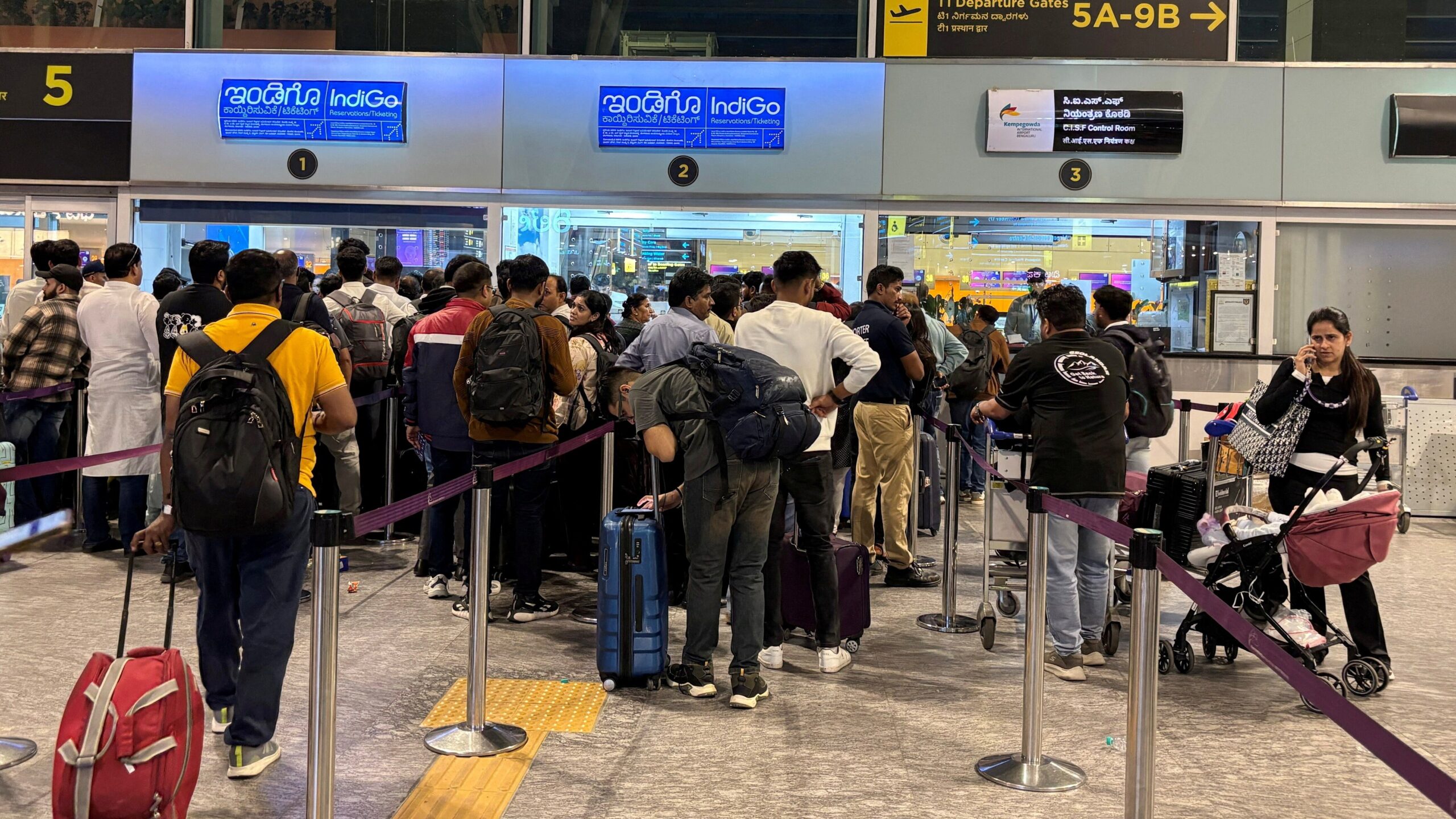
Passenger movement at Kempegowda International Airport has reached a new high, with annual footfall touching nearly 44.5 million in 2025–26. The surge, driven largely by increased international travel, reflects shifting mobility patterns in one of India’s fastest-growing metropolitan regions and signals deeper integration with global economic networks.
The rise in Bengaluru airport passenger traffic underscores the city’s expanding role as a hub for technology, business services, and high-value industries that depend on frequent international connectivity. Industry observers note that outbound and inbound global travel has rebounded strongly, supported by corporate mobility, education flows, and tourism revival, contributing significantly to overall growth.While domestic travel continues to form a substantial share, the sharper uptick in international passengers suggests a structural shift in demand.Aviation analysts point out that cities like Bengaluru are increasingly competing with traditional gateways such as Mumbai and Delhi for long-haul connectivity.This transition is prompting airport operators to expand capacity, upgrade terminals, and improve passenger handling systems.However, the growth in Bengaluru airport passenger traffic also raises questions about infrastructure readiness beyond airport boundaries. Urban mobility experts highlight that last-mile connectivity, road congestion, and public transport integration remain critical challenges. As passenger volumes increase, ensuring seamless access to the airport through metro links, bus networks, and sustainable transport options will be essential to prevent bottlenecks.
Environmental considerations are becoming increasingly relevant in the aviation sector. While higher passenger numbers indicate economic vitality, they also contribute to increased carbon emissions. Sustainability specialists emphasise the need for airports to adopt greener practices, including energy-efficient terminal operations, use of renewable energy, and promotion of low-emission ground transport. Balancing aviation growth with climate commitments will be a key test for rapidly expanding urban centres.The surge in traffic also has broader economic implications. Increased connectivity can attract investment, boost tourism, and create employment opportunities across sectors such as hospitality, logistics, and retail. For Bengaluru, this reinforces its position as a global city while supporting ancillary industries that benefit from improved accessibility.At the same time, planners caution against over-reliance on aviation-led growth.Diversifying transport infrastructure and strengthening rail and road networks can help distribute demand more evenly and reduce environmental pressure. Integrated planning will be crucial to ensure that rising passenger volumes translate into sustainable urban development rather than strain existing systems.
As Bengaluru airport passenger traffic continues to grow, the focus will shift towards managing capacity, improving commuter experience, and aligning expansion with long-term sustainability goals. The trajectory highlights both the opportunities and the complexities of urban growth in an increasingly connected world.
Also Read:Kolkata Rainfall Surge Signals Rising Climate Risks

