


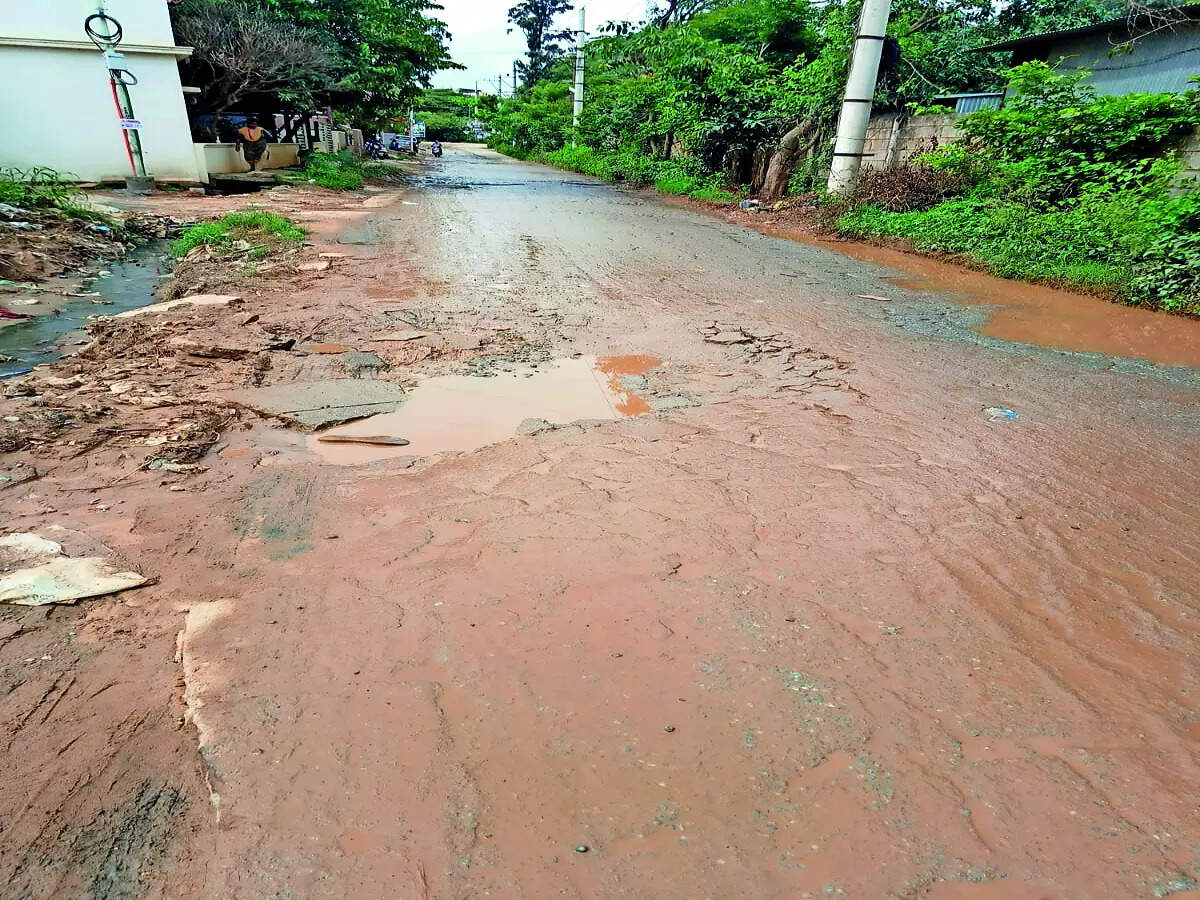
For many schoolchildren in Bengaluru, navigating damaged roads has become a routine part of the daily commute, raising concerns over safety, accessibility, and the broader quality of urban infrastructure. The issue highlights how uneven road conditions are directly affecting young residents in a city already grappling with rapid growth and mobility challenges
Across several neighbourhoods, parents and school transport operators report that potholes, broken surfaces, and poorly maintained stretches are extending travel times and increasing risks for students.School buses and vans are often forced to slow down or take detours, while those walking or cycling face even greater exposure to unsafe conditions.In a city like Bengaluru, where traffic congestion is already a major concern, poor road quality compounds existing mobility pressures. For students, this translates into longer commutes, physical discomfort, and in some cases, reduced punctuality or attendance. The situation is particularly challenging during monsoon periods, when waterlogging can obscure road damage and heighten accident risks.Urban planners note that the issue reflects deeper systemic gaps in infrastructure maintenance and planning. Roads designed for lower traffic volumes are now under strain due to rapid urban expansion, increased vehicle ownership, and ongoing construction activity.
Without regular upkeep and durable design standards, deterioration becomes inevitable.The impact on children brings a critical human dimension to what is often seen as a technical issue. Safe and reliable access to education depends not only on school infrastructure but also on the quality of surrounding urban systems. Poor road conditions can disproportionately affect younger commuters, who are more vulnerable to accidents and physical strain.Experts argue that addressing such challenges requires a shift towards more resilient road construction practices. This includes better drainage systems, use of durable materials, and stricter quality control during construction and repair. Regular audits and timely maintenance are also essential to prevent minor issues from escalating into larger hazards.From a governance perspective, the situation underscores the need for coordinated action between municipal authorities, transport departments, and local communities. Citizen reporting mechanisms and data-driven maintenance planning could help prioritise high-risk areas, particularly those near schools and other sensitive zones.Environmental factors also play a role. Increased rainfall intensity linked to climate variability can accelerate road damage, especially in areas with inadequate drainage.
Integrating climate resilience into infrastructure planning is therefore becoming increasingly important for cities like Bengaluru.As concerns grow, the focus is likely to remain on ensuring safer commutes for children. Improving road conditions around schools and residential areas could not only enhance safety but also contribute to a more inclusive and liveable urban environment.
Also Read:Bengaluru Power Connection Transfer Goes Digital
