


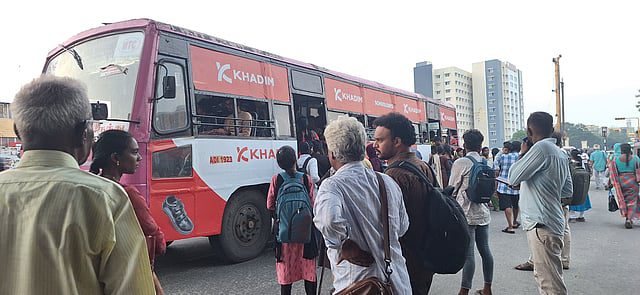
Chennai has announced a significant increase in bus services following widespread overcrowding and commuter disruption at key transport hubs, highlighting persistent gaps in the city’s public mobility system. The move comes after recent incidents of congestion at major terminuses exposed the strain on existing infrastructure during peak travel periods.
Transport authorities have introduced thousands of additional bus trips to stabilise passenger flow and reduce pressure on high-traffic routes. The expansion is aimed at improving frequency and coverage, particularly in corridors that witnessed severe overcrowding. For daily commuters, the measure is expected to provide immediate relief by shortening wait times and easing congestion at boarding points.Urban mobility experts view the development as a reactive but necessary intervention in a city where demand for public transport continues to outpace supply. Chennai’s bus network remains a primary mode of travel for a large section of the population, especially those dependent on affordable transit options.When service gaps emerge, the impact is felt quickly and widely, affecting access to work, education and essential services.The recent disruptions have also drawn attention to the need for better demand forecasting and operational planning. Sudden spikes in passenger numbers—whether due to seasonal travel, service changes or external factors—can overwhelm systems that lack flexibility. Experts suggest that data-driven planning and real-time monitoring could help authorities anticipate and manage such situations more effectively.From a broader urban perspective, the incident underscores the importance of resilient public transport systems in rapidly growing cities. Overcrowding not only affects commuter comfort but also raises safety concerns, particularly at busy interchange points.
Ensuring adequate capacity is therefore critical to maintaining both efficiency and public trust.The expansion of bus services also has implications for sustainability. Strengthening public transport can encourage a shift away from private vehicles, reducing congestion and lowering emissions. However, experts emphasise that capacity increases must be complemented by improvements in service quality, reliability and integration with other modes such as metro and suburban rail.Infrastructure at bus terminuses remains another area of concern. Many hubs are operating beyond their designed capacity, with limited space for passenger movement and inadequate amenities. Upgrading these facilities, along with better crowd management systems, will be essential to prevent similar disruptions in the future.For commuters, the immediate focus is on whether the additional services translate into consistent on-ground improvements. While increased frequency can ease short-term pressure, long-term solutions will require sustained investment and coordinated planning across the transport network.The situation also highlights the interconnected nature of urban mobility.Efficient transport systems are not just about moving people but enabling economic activity and ensuring equitable access to the city. Any disruption can have cascading effects on productivity and quality of life.
As Chennai moves to stabilise its bus network, the challenge will be to convert this reactive response into a proactive strategy. Building a more adaptive, integrated and commuter-focused transport system will be key to meeting the demands of a growing urban population while supporting sustainable city development.
Also Read:Bengaluru students lead climate action in schools
