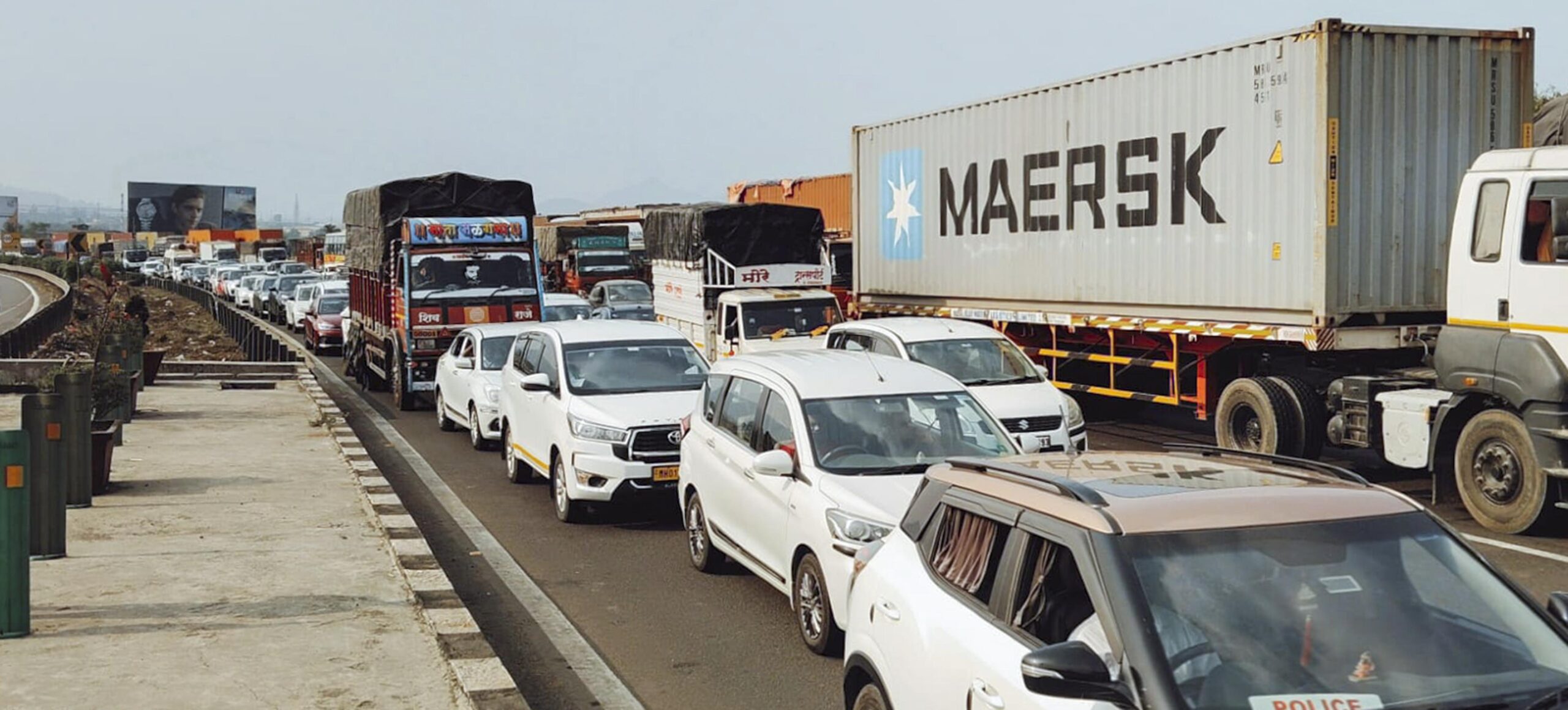
Mumbai Pune Expressway Block Disrupts Daily Travel
A planned traffic suspension on the Mumbai Pune Expressway has disrupted travel between Mumbai and Pune, exposing the fragility of one of India’s busiest intercity corridors. Authorities halted vehicular movement for several hours to facilitate infrastructure work, triggering congestion and forcing diversions that affected thousands of commuters and freight operators. The temporary closure, implemented along a key stretch of the expressway, required vehicles to be rerouted via the older highway network. While such maintenance is essential for long-term safety and durability, the timing of the block—during peak daytime hours—has intensified travel delays and logistical disruptions across the region.
For daily commuters, the Mumbai Pune Expressway block translated into extended travel times and uncertainty. Transport operators and office-goers, many of whom rely on predictable schedules, faced cascading delays as traffic built up along diversion routes. Urban mobility experts note that even short-duration closures on high-capacity corridors can have disproportionate ripple effects, especially when alternative routes lack equivalent capacity. The expressway serves not only as a commuter link but also as a critical economic artery connecting two of Maharashtra’s largest urban economies. Any disruption impacts goods movement, industrial supply chains, and service sector efficiency. Logistics firms, in particular, depend on time-sensitive deliveries, and unplanned congestion can increase fuel consumption and operational costs—factors that ultimately feed into broader economic inefficiencies. Urban planners argue that the recurring need for such blocks highlights deeper structural challenges in infrastructure management. While maintenance is unavoidable, the absence of redundancy in transport networks limits flexibility.
The Mumbai Pune Expressway block underscores the need for parallel high-capacity corridors, improved rail freight utilisation, and better scheduling strategies to minimise disruption. There is also a growing conversation around the environmental cost of traffic diversions. Prolonged idling and slower movement on congested alternate routes contribute to higher emissions, undermining efforts to build low-carbon urban systems. Experts suggest that infrastructure agencies should integrate climate considerations into maintenance planning, including off-peak scheduling and real-time traffic management systems. Authorities have indicated that such closures are necessary to ensure long-term road safety and structural integrity. However, commuter feedback points to the need for clearer communication, advance planning, and possibly night-time execution of major works to reduce daytime impact.
As urban regions expand and intercity travel demand continues to rise, the Mumbai Pune Expressway block serves as a reminder that infrastructure resilience is not just about building assets but managing them efficiently. Future planning will need to prioritise multimodal alternatives, smarter traffic coordination, and commuter-centric policies to ensure that essential upgrades do not come at the cost of daily mobility and economic productivity.