


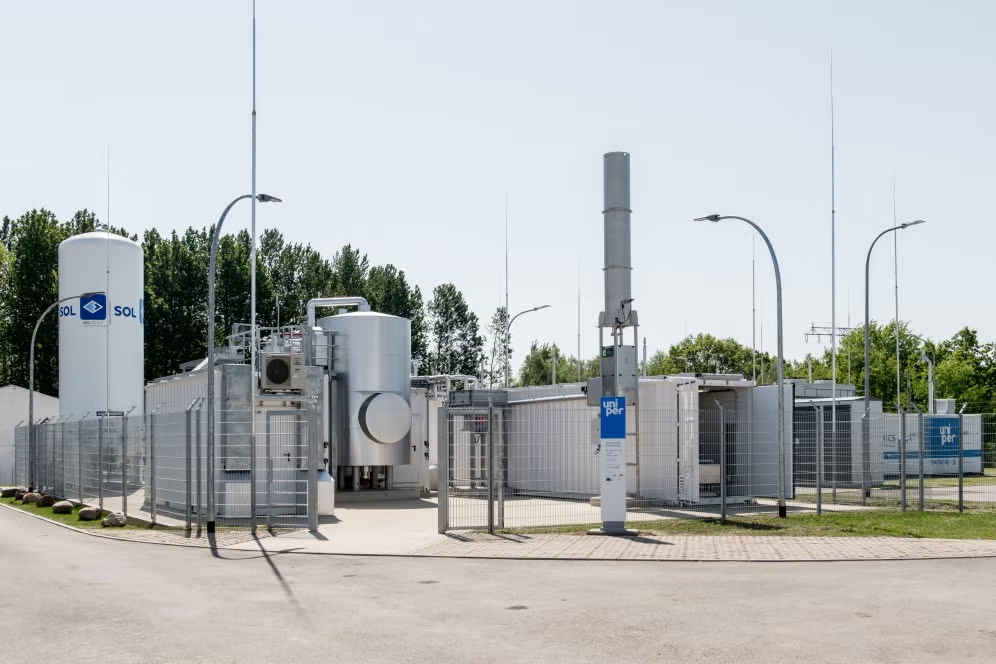
Nagpur is witnessing renewed momentum in efforts to position itself as the headquarters for a proposed synthetic natural gas (SNG) project, a move that could significantly reshape the city’s industrial and energy landscape. The development reflects a broader push to align central India’s growth trajectory with emerging energy infrastructure and cleaner fuel alternatives. The proposed SNG project, which involves converting coal into gas for industrial and domestic use, is being viewed as a strategic investment in energy diversification.
Stakeholders advocating for Nagpur argue that the city’s central location, existing logistics network, and proximity to coal reserves make it a suitable candidate for hosting the project’s administrative and operational base. From an urban development perspective, the initiative could have far-reaching implications. If established in Nagpur, the project is expected to attract ancillary industries, create employment opportunities, and stimulate demand for commercial and residential real estate. Industrial experts suggest that energy-linked infrastructure often acts as a catalyst for regional economic clusters, particularly in tier-two cities seeking to expand beyond traditional sectors. However, the push for the SNG project also raises critical questions around sustainability and long-term energy planning. While synthetic natural gas is often positioned as a cleaner alternative to conventional fossil fuels, its production process remains resource-intensive and carbon-emitting. Urban planners and environmental analysts caution that such projects must be evaluated within the broader context of India’s transition towards low-carbon energy systems. The debate highlights a key tension in urban policy—balancing industrial growth with climate commitments. For cities like Nagpur, which are striving to enhance their economic profile, large-scale energy projects offer immediate economic benefits but may also lock in carbon-intensive infrastructure for decades. Experts emphasise the importance of integrating carbon capture technologies, efficient resource management, and renewable energy offsets to mitigate environmental impact. Infrastructure readiness will also play a decisive role. Hosting the SNG project headquarters would require robust urban systems, including reliable power supply, water availability, transport connectivity, and skilled workforce access. City planners note that such developments should be accompanied by investments in public services and housing to ensure that growth remains inclusive and does not strain existing urban resources. At a regional level, the proposal reflects increasing competition among cities to attract high-value infrastructure projects. Securing the SNG headquarters could elevate Nagpur’s status as an energy and logistics hub, strengthening its position within India’s industrial network.
As discussions progress, the outcome will likely hinge on how effectively economic ambitions are aligned with environmental safeguards and urban resilience strategies. For Nagpur, the SNG project represents both an opportunity and a test—of whether future growth can be shaped in a way that supports industry while remaining responsive to the evolving demands of sustainable urban development.
ALSO READ – Indore Agri Tech Workshop Explores Market Reforms
Nagpur Eyes Energy Hub Status With SNG Plan
