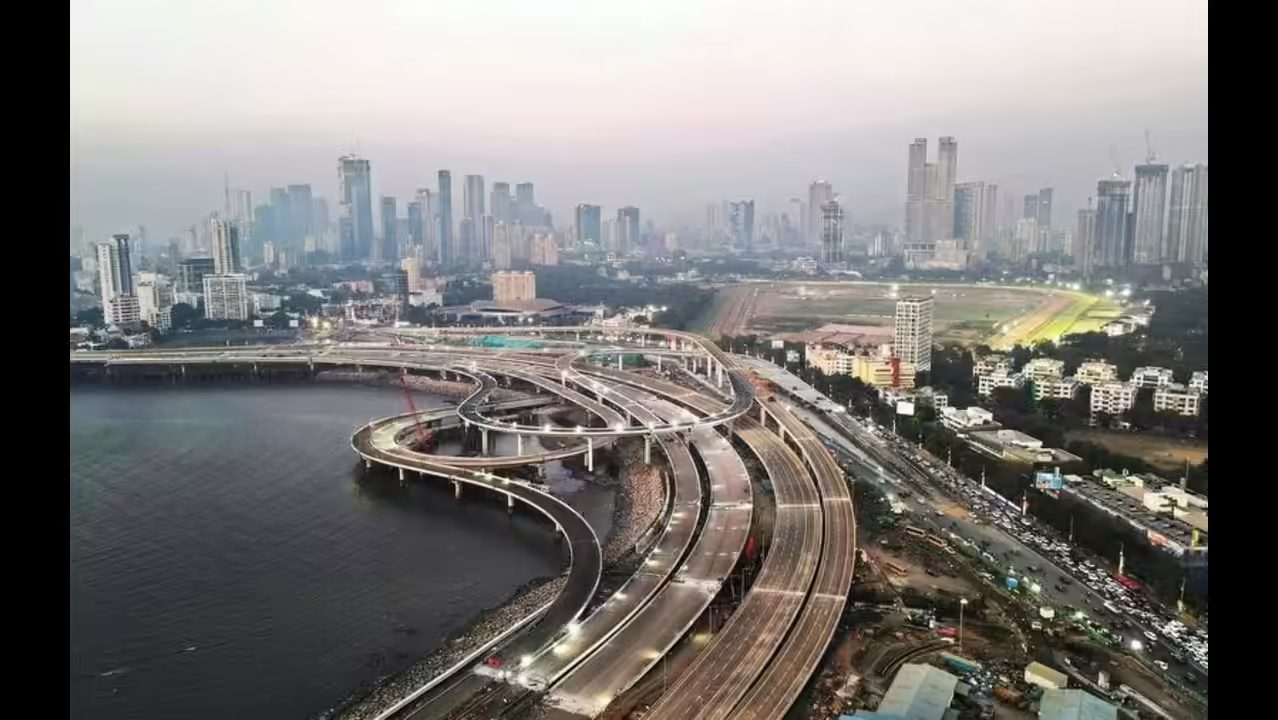
Mumbai’s most ambitious seafront infrastructure initiative is facing another upward revision in expenditure, with the Mumbai Coastal Road cost now approaching ₹15,000 crore following a fresh proposal for additional works. The escalation underscores the financial and planning complexities of large-scale coastal development in a dense, climate-vulnerable city. Civic authorities have proposed an incremental outlay of nearly ₹60 crore, pushing the overall project cost significantly beyond its original estimate approved in 2018. The increase reflects a combination of design refinements, expanded public amenities, and structural adjustments made during execution. While portions of the corridor are already operational, the continued revisions highlight the evolving nature of the project’s scope.
Stretching over 10 kilometres along Mumbai’s western shoreline, the multi-lane corridor is intended to ease congestion on existing arterial roads and improve north–south mobility. However, urban experts note that the Mumbai Coastal Road cost has steadily risen over multiple revisions, raising questions about long-term financial sustainability and cost forecasting in mega infrastructure projects. A significant share of the latest cost increase is linked to enhancements in the project’s second phase, where planning adjustments have required additional engineering interventions. These include modifications to road alignment, expansion of carriageways in certain sections, and reinforcement of coastal protection systems. The integration of new urban features such as a centralised command facility and extended public promenades also contributes to the rising expenditure. From a design perspective, the project has attempted to balance transport efficiency with public space creation. The addition of seafront walkways and seating areas reflects a broader shift towards reclaiming waterfronts for civic use.
Yet, such expansions often entail higher construction and maintenance costs, particularly in marine environments where structures must withstand erosion, tidal forces, and extreme weather events. Environmental planners caution that coastal infrastructure must be evaluated not only on mobility gains but also on ecological impact. Land reclamation, shoreline alteration, and marine habitat disruption remain key concerns in projects of this scale. The Mumbai Coastal Road cost, therefore, becomes part of a larger debate on how cities invest in infrastructure while maintaining ecological balance and climate resilience. The project has also involved heritage-sensitive interventions, including the relocation and restoration of historic architectural elements under expert supervision. While such efforts aim to preserve cultural assets, they add layers of technical complexity and financial commitment. As the revised proposal moves through the approval process, attention is likely to focus on governance and transparency in project execution. Analysts suggest that clearer cost controls, phased evaluations, and public disclosure mechanisms could strengthen accountability in future urban infrastructure investments.
With major sections already in use, the Mumbai Coastal Road cost debate now shifts from construction to long-term value—whether the project can deliver sustained mobility benefits while aligning with the city’s environmental and fiscal priorities in an era of climate uncertainty.