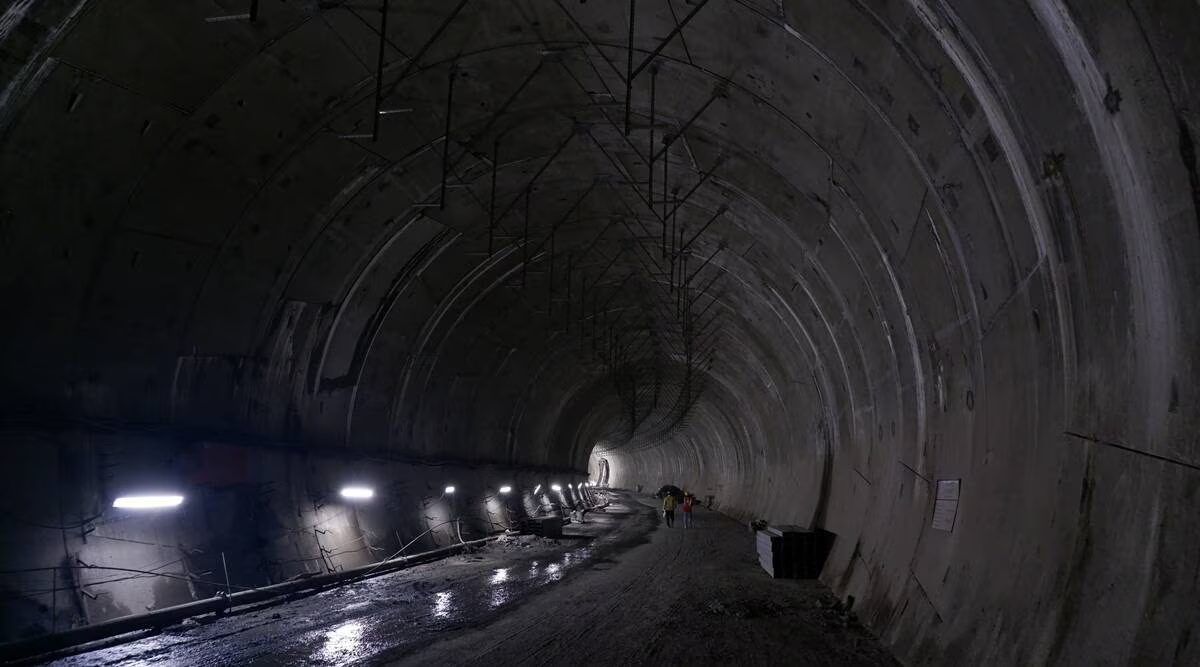
Construction activity has begun on a key road infrastructure upgrade in Navi Mumbai, even as concerns mount over its environmental impact and the scale of tree loss along a prominent urban corridor. The civic body has initiated groundwork for the Navi Mumbai tunnel project beneath Palm Beach Road near Sanpada’s Moraj Circle, a junction that frequently experiences congestion due to high traffic volumes and signal delays. The intervention is intended to streamline vehicular movement by creating an underground passage, reducing surface-level bottlenecks in a rapidly growing urban zone.
While authorities maintain that the project will improve traffic flow and reduce commute times, the environmental implications have triggered sustained opposition from local residents and civic groups. According to approved plans, hundreds of trees fall within the project’s footprint, with a portion slated for transplantation and others marked for removal. Residents argue that the scale of impact appears higher than earlier proposals, raising questions about changes in execution. Urban planners note that the Navi Mumbai tunnel project reflects a familiar challenge in Indian cities—balancing infrastructure expansion with ecological preservation. Tree-lined corridors such as Palm Beach Road play a critical role in moderating urban temperatures, improving air quality, and offering natural shade in high-density environments. Their removal, even partially, can alter local microclimates and reduce environmental resilience. On-site activity has intensified in recent weeks, with barricading and excavation work underway. The project, estimated at over ₹30 crore, is expected to be completed within a year and a half, excluding monsoon interruptions. Its proximity to residential complexes has also led to concerns about construction-related noise, dust, and disruption to daily life.
Environmental advocates have proposed alternative approaches, including redesigning traffic systems, improving signal coordination, or exploring elevated solutions that may reduce ground-level ecological impact. However, officials have indicated that the current design remains unchanged, citing prior approvals from relevant authorities. The debate surrounding the Navi Mumbai tunnel project also highlights broader governance questions. Experts suggest that while statutory clearances are necessary, continuous stakeholder engagement is equally important to address evolving concerns during implementation. Transparent communication and adaptive planning could help mitigate public resistance and improve project outcomes. From a sustainability perspective, the challenge lies in integrating infrastructure development with nature-based solutions. Measures such as compensatory plantation, improved transplantation success rates, and preserving existing green buffers where possible are increasingly seen as essential components of urban projects.
As the project moves into more intensive phases, particularly those involving tree removal and relocation, scrutiny from citizens and environmental groups is likely to intensify. The outcome may set a precedent for how Navi Mumbai approaches future infrastructure development in ecologically sensitive urban corridors.