


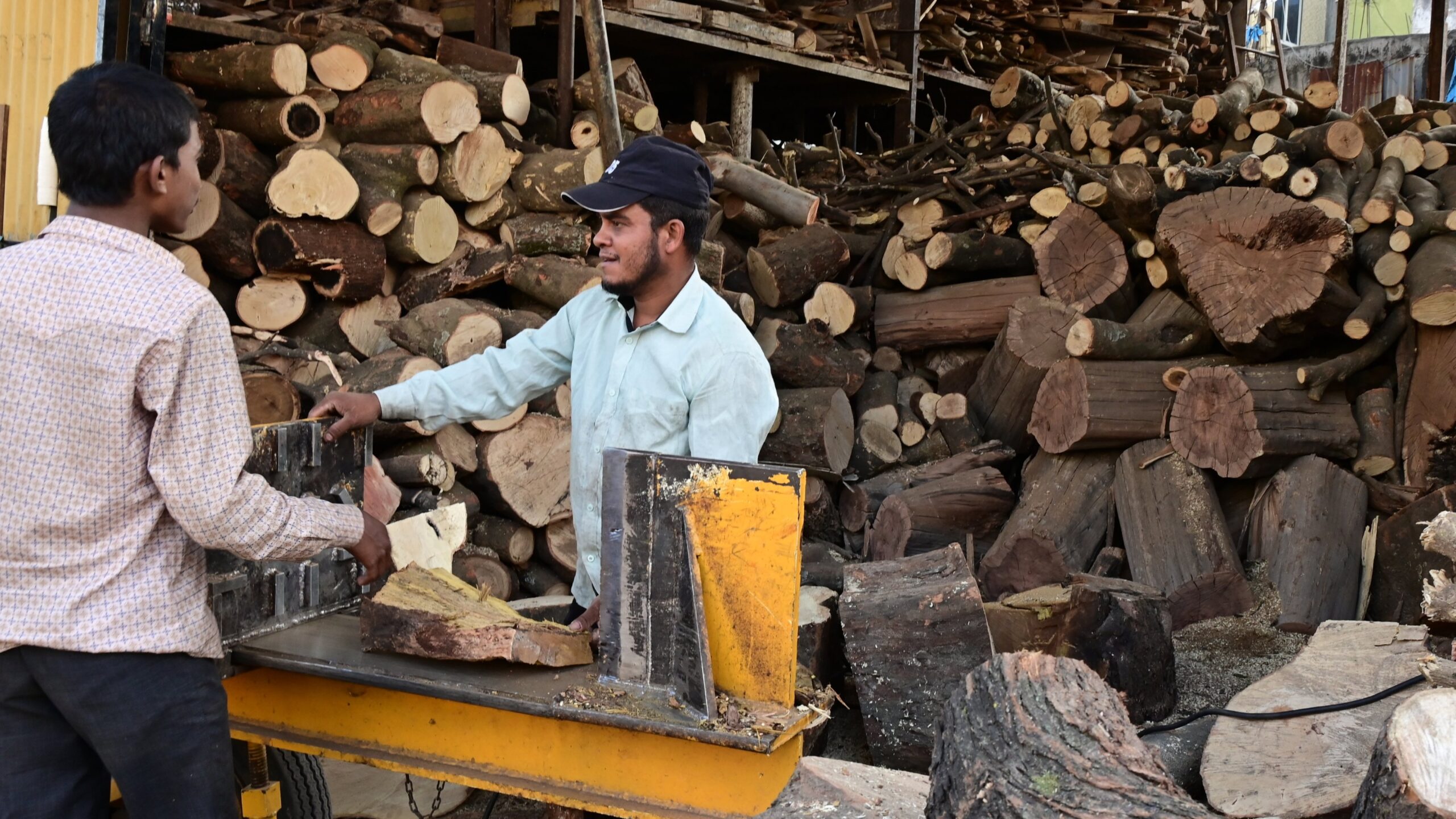
As cooking gas shortages persist in Bengaluru, sections of the city’s population are increasingly turning to roadside trees and wood as alternative fuel sources, highlighting a deepening urban energy crisis with environmental consequences. The shift, driven by prolonged delays in LPG availability, is exposing vulnerabilities in the city’s access to clean and reliable household energy.
Residents in several neighbourhoods report resorting to firewood collection as a stopgap solution to manage daily cooking needs. While such practices were once largely confined to rural settings, their re-emergence in an urban context signals stress within essential supply systems. For many households, especially those with limited financial flexibility, the absence of timely LPG deliveries has left few viable options.The development raises serious environmental concerns. Increased dependence on firewood in a dense city like Bengaluru can accelerate the degradation of urban green cover, particularly when trees and branches in public spaces become informal sources of fuel. Urban ecologists warn that such practices, if sustained, could undermine ongoing efforts to expand tree cover and mitigate heat island effects.Public health implications are equally significant. Burning wood in poorly ventilated spaces can lead to indoor air pollution, increasing the risk of respiratory illnesses.This is particularly concerning for vulnerable groups such as children and the elderly, who are more susceptible to the effects of smoke exposure.The situation also underscores structural challenges within Bengaluru’s urban energy framework.
The recent LPG shortage has revealed a lack of redundancy in supply systems, where disruptions can quickly cascade into broader social and environmental issues. Experts note that reliance on a single dominant cooking fuel, without adequate backup systems, leaves cities exposed to such shocks.From a sustainability perspective, the shift away from cleaner fuels to biomass represents a step backward. While LPG has been promoted as a relatively cleaner alternative to traditional fuels, inconsistent access can reverse progress made in improving urban air quality and household health outcomes. The crisis highlights the need for diversified energy solutions, including electric cooking and decentralised energy systems, supported by reliable infrastructure.There are also equity concerns.Higher-income households are often better equipped to absorb disruptions by switching to alternative appliances or sourcing fuel at higher costs, while lower-income groups bear the brunt of shortages. This disparity reinforces the need for inclusive energy policies that ensure consistent access across socio-economic segments.
As Bengaluru navigates the ongoing shortage, the episode serves as a reminder that urban resilience depends not only on infrastructure expansion but also on reliability and adaptability. Strengthening supply chains, promoting alternative clean energy options, and protecting urban ecosystems will be critical to preventing similar crises in the future.
Also Read:Bengaluru Heat Surge Raises Urban Climate Concerns
