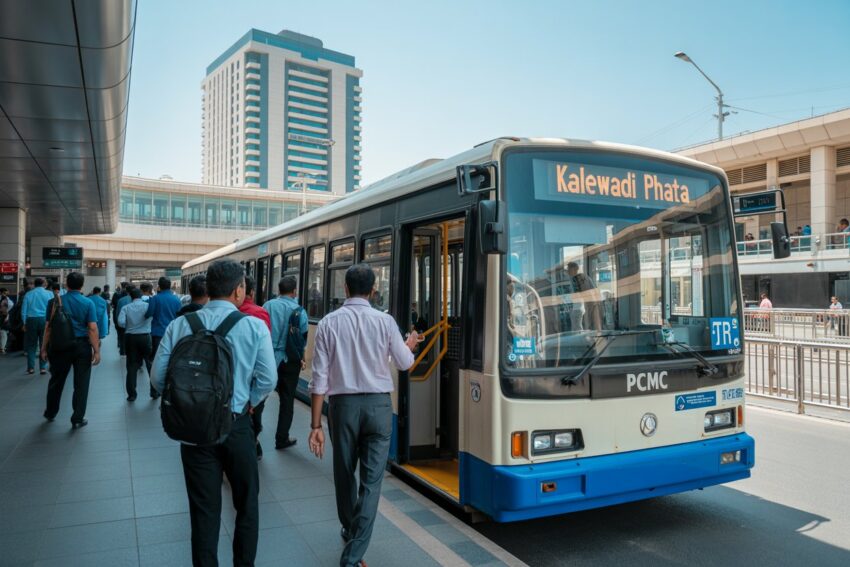
A fifteen-minute promise could change how thousands navigate the city’s western corridor. Pune Metro and the city’s public bus operator have launched a feeder bus service connecting PCMC Metro Station to Kalewadi Phata, with vehicles running every 15 minutes during peak hours. The initiative targets what urban planners call the “last-mile gap”—the frustrating distance between a metro station and a commuter’s actual destination. For years, Pune’s expanding metro network has moved people efficiently across long distances, only to leave them stranded at station exits. Getting from a metro stop to bustling commercial hubs like Kalewadi Phata—home to IT parks, retail clusters, and dense residential catchments—often meant waiting for irregular buses or paying for auto-rickshaws. The new service, operated in coordination between the metro authority and the municipal transport body, attempts to close that loop.
A transport official familiar with the rollout told Urban Acres that the route was chosen based on commuter volume data and demand from local residents. Kalewadi Phata is not just a residential node; it is a transfer point for people heading to multiple destinations across the western suburbs. The feeder buses now offer a predictable, frequency-based alternative to the old model of waiting indefinitely for a bus that may or may not arrive. The implications extend beyond daily office commuters. Students traveling to educational institutions in the area, elderly residents who cannot walk long distances from metro stations, and even visitors exploring Pune’s cultural sites stand to benefit. For tourists unfamiliar with the city’s transport quirks, a reliable bus every 15 minutes removes a significant barrier to independent exploration.
Urban mobility analysts point out that Pune’s feeder experiment is being watched by other Indian cities struggling with similar last-mile challenges. Metro systems in Bengaluru, Delhi, and Chennai have all launched feeder services, but success depends on frequency, route rationalisation, and real-time tracking. Pune’s service currently operates during peak hours; whether it will extend to off-peak and weekend schedules remains to be seen. The environmental case is equally compelling. Every commuter who switches from a private vehicle to a metro-feeder combination reduces carbon emissions and road congestion. But that switch will only happen if the feeder service is reliable, safe, and comfortable. Fifteen-minute intervals during rush hours are a start. The real test is whether the buses actually adhere to that schedule.
For residents of Kalewadi and surrounding areas, the service is a tangible improvement. But the larger lesson for Pune’s public transport planners is that metros alone do not solve urban mobility. Feeder networks are not an afterthought—they are the difference between a metro system that works and one that merely exists.
Pune Launches Feeder Buses Every Fifteen Minutes