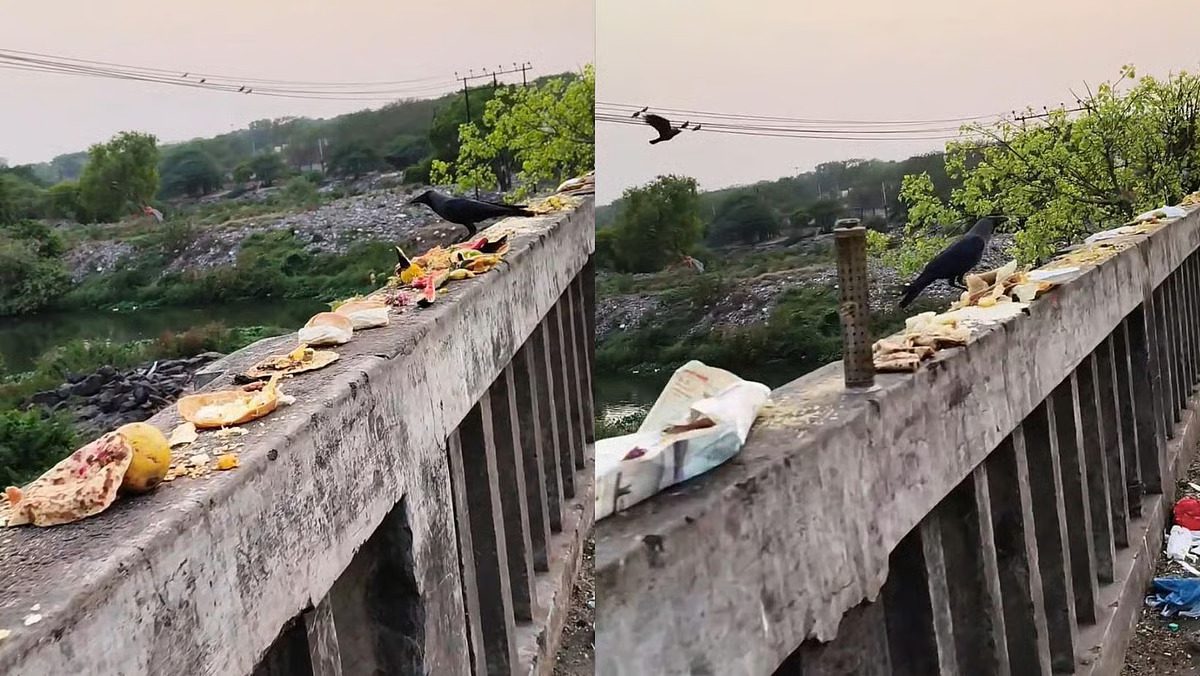
The Mutha River at the Shantinagar-Yerawada bridge is slowly being smothered—not by industrial effluent, but by garlands, incense sticks, deity images, and leftover food. Residents and civic activists have raised an urgent alarm over the regular dumping of religious waste into the water, warning that the practice is poisoning the river, threatening aquatic life, and spreading foul odours through nearby neighbourhoods. Every day, citizens visiting the riverbank directly dispose of floral offerings, chapatis, vegetables, and other ritual materials into the Mutha. A social activist who has been campaigning for river conservation told Urban Acres that despite repeated awareness efforts, public behaviour has not shifted. The absence of visible alternatives—such as designated bins or collection centres—means that even well-intentioned residents have no practical option but to continue the practice.
The environmental toll is becoming impossible to ignore. Decomposing flowers and organic waste consume dissolved oxygen in the water, suffocating fish and other aquatic species. The stench from accumulated waste drifts into residential areas along the Yerawada stretch, making daily life unpleasant for families living within metres of the riverbank. Trees along the edge are also showing signs of stress from contaminated water seeping into their root systems. A local resident who lives near the bridge described the situation as worsening by the month. “This is not just about faith anymore. It is about responsibility,” the resident said, adding that without proper disposal infrastructure, people will continue dumping simply because no alternative exists. Another resident noted that the river has become unhygienic for those living nearby, with the smell making it difficult to keep windows open during warmer months.
Urban sustainability experts point out that Pune is far from alone in facing this challenge. Cities across India struggle with the intersection of religious practice and waste management. But the solutions are well documented: installing Nirmalya collection bins at frequent intervals along riverbanks, setting up composting facilities for floral waste, and running targeted awareness campaigns through local religious institutions and community groups. Some progress has been made elsewhere. In parts of Maharashtra, collected floral waste is being converted into compost and organic colours. But on the Mutha near Yerawada, no such system exists. Citizens have called for stricter monitoring at sensitive locations, eco-friendly alternatives for offerings, and a coordinated push from both the civic administration and community leaders.
The river is the city’s lifeline. But lifelines cannot sustain themselves. Without immediate action—bins, collection points, and public education—the Mutha will continue to be treated as a dumping ground rather than a living ecosystem. Residents have made their demand clear: respect for tradition and respect for the environment must go hand in hand.
Pune River Chokes On Flowers And Religious Waste