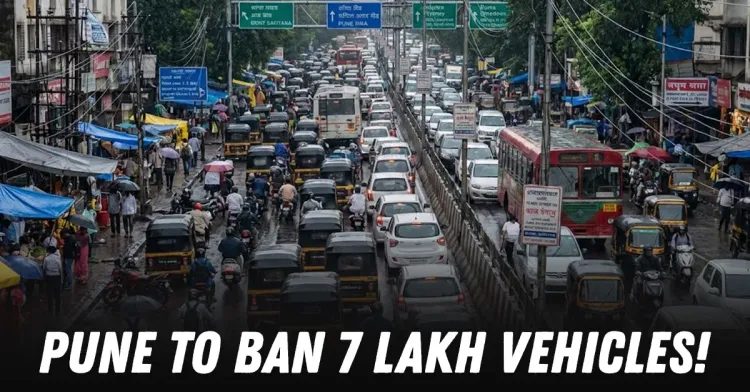
Pune is breathing air thickened by its own inaction. Nearly seven lakh vehicles—roughly one in every six registered in the city—continue to ply illegally, having never renewed registration after completing their 15-year mandated lifespan. The scale of non-compliance is staggering. Out of approximately 44 lakh registered vehicles, over 7.29 lakh have not undergone mandatory re-registration or paid the environmental tax required by law. Only about 44,800 owners have complied, leaving a vast majority of ageing, polluting machines on the road with impunity.
For a city that has consistently ranked among India’s most liveable urban centres, this represents a quiet collapse of enforcement. Transport experts estimate that removing these overage vehicles could slash urban pollution levels by 80 to 90 percent and cut nitrogen oxide emissions by nearly 70 percent—a reduction that no single technology or policy intervention could match overnight. The public health stakes are severe. Older vehicles, many operating under BS-4 emission standards or earlier, release high concentrations of toxic gases. Their mechanical condition—worn brakes, degraded tyres, failing engines—also makes them a rolling safety hazard, increasing accident risks for all road users.
Yet the civic and transport authorities have failed to act. A senior official from the regional transport office acknowledged the low compliance but offered a familiar defence: many such vehicles are not actively used on city roads, and a significant number are located in rural areas. That argument collapses under the weight of Pune’s deteriorating air quality data and visible congestion. Citizens have begun drawing uncomfortable comparisons. CCTV cameras enforce helmet rules with precision and penalties, while lakhs of illegally operating vehicles face no meaningful deterrent. No large-scale seizure, no scrapping drive, no coordinated action has materialised.
Other metropolitan centres have moved decisively. Delhi has banned petrol vehicles older than 15 years and diesel vehicles older than 10 years, with strict enforcement since July 2025. Mumbai has imposed peak-hour restrictions on heavy vehicles to manage congestion. Pune, by contrast, remains stuck in a regulatory vacuum. Urban planners point to a deeper failure: the absence of a functioning vehicle scrappage ecosystem. Even if authorities seized overage vehicles, there is insufficient infrastructure to scrap them responsibly and recycle materials. The policy exists on paper. The execution does not.
What Pune faces is not a technical problem but an administrative one. The solutions are known—fitness certification, environmental tax compliance, phased bans, and scrappage incentives. What is missing is the will to apply them uniformly. Until then, every citizen will continue paying the price, one toxic emission at a time.
Pune Has 7 Lakh Illegal Old Vehicles On Roads