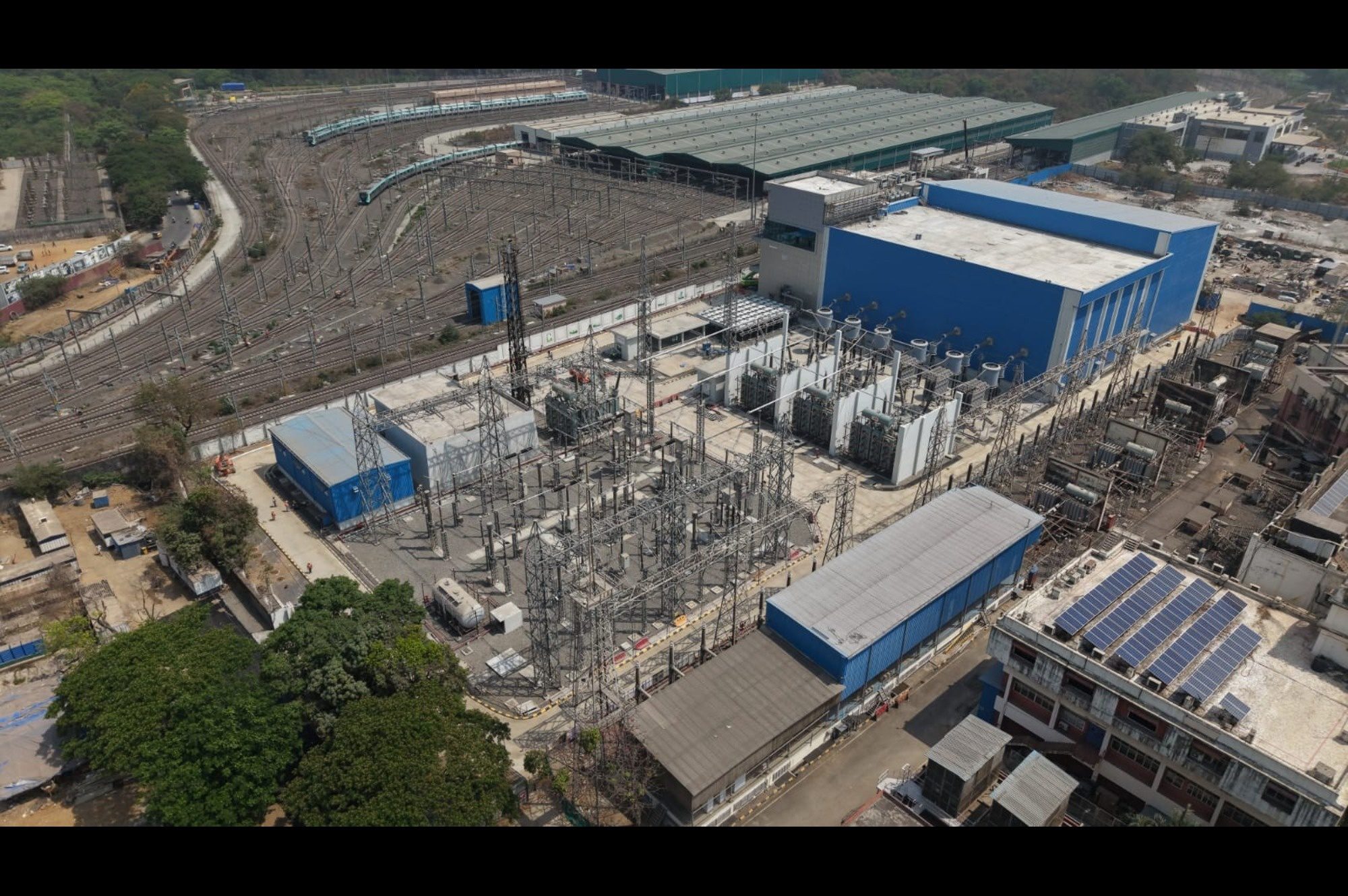
Mumbai’s electricity network has received a significant capacity upgrade with the commissioning of a 1,000 MW high-voltage direct current connection, aimed at strengthening supply reliability and reducing the risk of large-scale outages. The new transmission link connecting the metropolitan region to external power sources reflects a broader shift in how dense cities are redesigning their energy systems to meet rising demand while improving resilience. The project introduces an advanced transmission corridor between Kudus and Aarey, combining overhead and underground infrastructure to deliver high-capacity electricity into the city without intensifying land constraints. Urban planners note that such hybrid systems are increasingly necessary in megacities like Mumbai, where space limitations restrict conventional grid expansion.
The HVDC link—referring to high-voltage direct current technology—allows electricity to travel over long distances with lower transmission losses compared to traditional alternating current systems. More importantly, it offers enhanced control over power flows, helping grid operators stabilise supply during peak demand or network disturbances. This is particularly relevant for Mumbai, where even brief disruptions can have cascading economic and social impacts. The development follows lessons drawn from past grid failures that exposed vulnerabilities in the city’s energy infrastructure. By enabling the import of electricity from outside the urban core, the new system reduces dependence on local generation units and distributes load more evenly across the network. Experts suggest this diversification is critical for building long-term energy resilience in high-density urban clusters. A key advantage of the new link lies in its ability to support cleaner energy integration. As renewable power generation expands across India, transmission infrastructure must evolve to carry electricity from distant solar and wind sites into urban demand centres. The HVDC corridor is expected to facilitate this transition by acting as a conduit for low-carbon energy, aligning with broader climate goals.
Another technical feature of the system is its capability to restore power independently in the event of a grid failure, a function often described as “black-start”. This reduces recovery time after outages and strengthens the overall reliability of urban infrastructure. Industry analysts point out that such capabilities are becoming essential as cities grow more dependent on uninterrupted electricity for transport, healthcare, and digital services. However, the expansion of large-scale transmission systems also raises questions around environmental and urban planning trade-offs. While underground cabling reduces visual and land-use impacts, construction can still disrupt local ecosystems and urban communities if not carefully managed. Experts emphasise the need for transparent planning processes and environmental safeguards to ensure that infrastructure growth remains aligned with sustainability goals. For Mumbai, one of India’s most energy-intensive regions, the additional capacity marks a shift towards a more distributed and resilient power architecture. As electricity demand continues to rise with urbanisation and economic activity, investments in advanced transmission technologies are expected to play a central role in securing reliable and cleaner energy access.
The long-term success of such projects will depend on how effectively they integrate with renewable energy expansion, urban planning frameworks, and equitable access strategies. In a city where infrastructure resilience is closely tied to economic stability, strengthening the power grid is not just a technical upgrade—it is a foundational step towards a more sustainable urban future.