


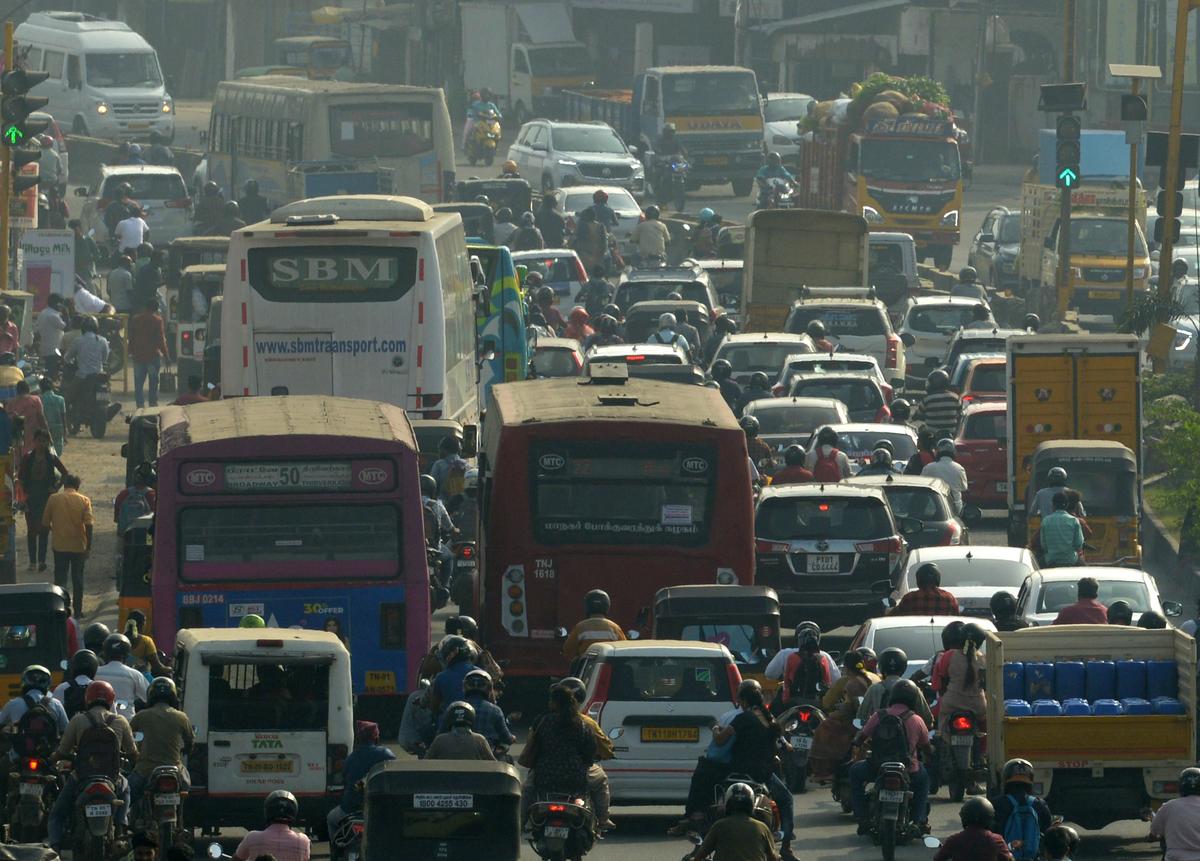
In Chennai, residents of Kotturpuram are raising concerns over persistent traffic congestion and inadequate civic infrastructure, pointing to growing stress in one of the city’s key residential pockets.
The issue reflects wider challenges faced by rapidly urbanising neighbourhoods where infrastructure upgrades have not kept pace with population density and vehicular growth.Local residents report daily bottlenecks on internal roads, exacerbated by narrow carriageways, unregulated parking, and increased traffic inflow from adjoining areas.Urban mobility experts note that such conditions are common in older neighbourhoods that were not originally designed to handle current traffic volumes.Without systematic interventions, these micro-level disruptions can significantly impact commute times and overall urban efficiency.Beyond traffic, concerns extend to drainage systems, pedestrian safety, and maintenance of public spaces. Residents argue that infrastructure gaps are affecting quality of life, particularly during peak hours and adverse weather conditions. Experts highlight that inadequate drainage and poor road conditions can compound flooding risks, a recurring issue in several parts of Chennai.The situation underscores the importance of integrated urban planning that aligns transport, land use, and civic services.
Planners suggest that solutions should go beyond road widening to include traffic management measures, improved public transport access, and safer pedestrian infrastructure. Introducing traffic calming strategies and designated parking zones could help ease congestion without extensive structural changes.From a sustainability perspective, reducing dependence on private vehicles is critical for long-term urban resilience. Enhancing connectivity through public transit and non-motorised transport options can help lower emissions and improve air quality. In neighbourhoods like Kotturpuram, where residential density is high, such measures could significantly improve liveability.There are also governance implications.Residents have called for clearer communication and timely action from civic authorities, emphasising the need for responsive local administration. Experts note that community engagement plays a crucial role in identifying ground-level issues and designing practical solutions.As Chennai continues to expand, addressing neighbourhood-level infrastructure challenges will be key to ensuring balanced urban growth.While large-scale projects often dominate policy focus, the effectiveness of city planning ultimately depends on how well local systems function.
Going forward, targeted investments and coordinated planning efforts will be essential to resolve congestion and infrastructure gaps in Kotturpuram. Strengthening these foundational elements can help create more efficient, inclusive, and resilient urban environments across the city.
Also Read:Chennai AI healthcare platform enables real time monitoring
