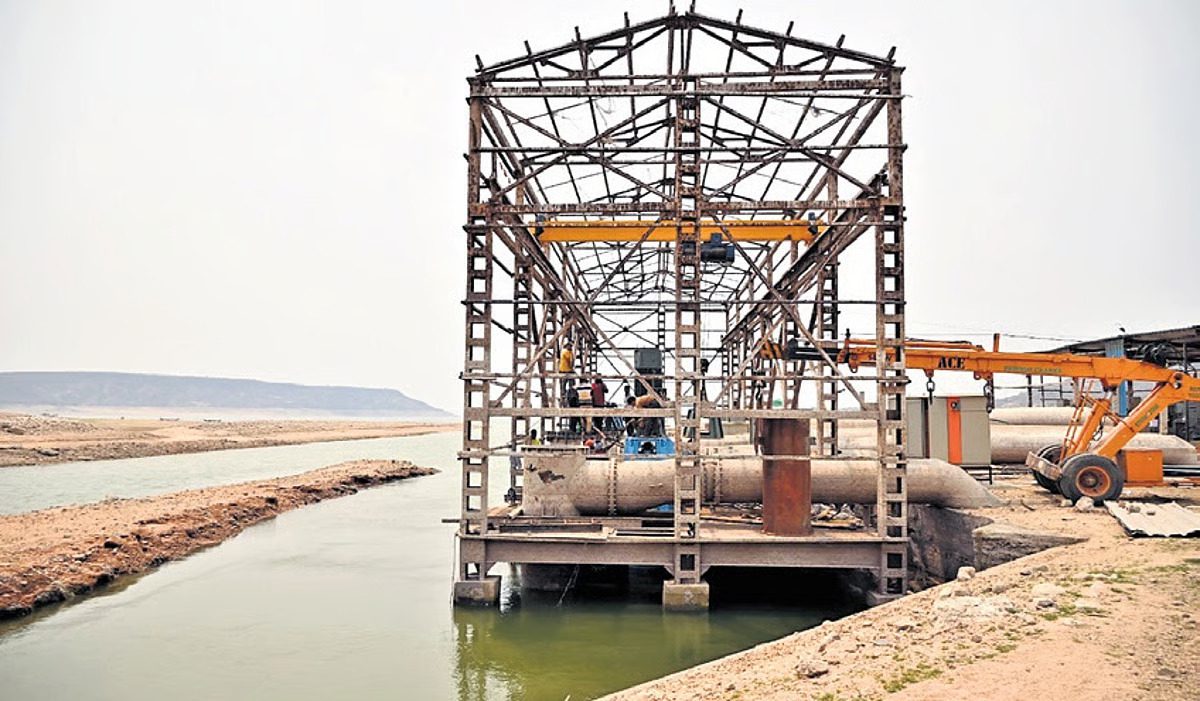
The city’s reservoirs are gasping. Singur, a critical water source for Hyderabad’s western corridor, has seen levels crash from 29 tmc to below 6 tmc. Emergency pumping will begin in the coming days — a measure last used in 2023 when levels hit 5.5 tmc. The situation exposes a uncomfortable truth: Hyderabad’s growth has outpaced its natural water recharge capacity.
A water board official attributed the sharp decline not to weak monsoons this time, but to dam repairs. More than 10 tmc was discharged downstream to fix structural deficiencies. While the board insisted it retained some reserves despite initial plans to release everything, the numbers tell a different story. Singur now sits at emergency pumping threshold. The western corridor — including Madhapur, Kondapur, Kukatpally, Miyapur, and BHEL — depends heavily on Singur. Together with Nagarjunasagar and Manjeera, these reservoirs supply nearly 20 percent of the city’s total water distribution, or approximately 120 million gallons daily out of 576 mgd. Emergency pumping equipment is already stationed at Nagarjunasagar, awaiting levels to drop to 510 feet. Manjeera has fallen to 0.9 tmc against a capacity of 1.5 tmc.
Even the Krishna and Godavari sources are troubling. Sri Pada Yellampally and Akkampally reservoirs have dropped to nearly half their capacity — around 9 tmc against a full level of 20 tmc. A disaster management expert interviewed by Urban Acres was blunt: emergency pumping addresses short-term shortages but is not a sustainable solution for a growing city. Hyderabad once had a dense network of lakes that acted as natural sponges — capturing monsoon runoff, recharging groundwater, and providing distributed water security. Most of those lakes have been encroached, polluted, or disconnected from their feeder channels.
The expert called for desilting, reconnecting channels, and protecting buffer zones. He also noted that the water board must aggressively fix leaks and manage pressure during summers — basic maintenance that is often neglected until crisis hits. Officials maintain that supply will continue at 576 mgd without disruption. Tanker demand remains limited to areas where groundwater has already collapsed. But that is cold comfort for a city where western corridor real estate has boomed without corresponding attention to source sustainability.
What changes next is unclear. Emergency pumping will keep taps flowing through summer. But when the same reservoirs hit dead storage next year — and the year after — Hyderabad will need more than pumps. It will need a rethink.
Hyderabad Reserves Plunge Emergency Pumping Begins