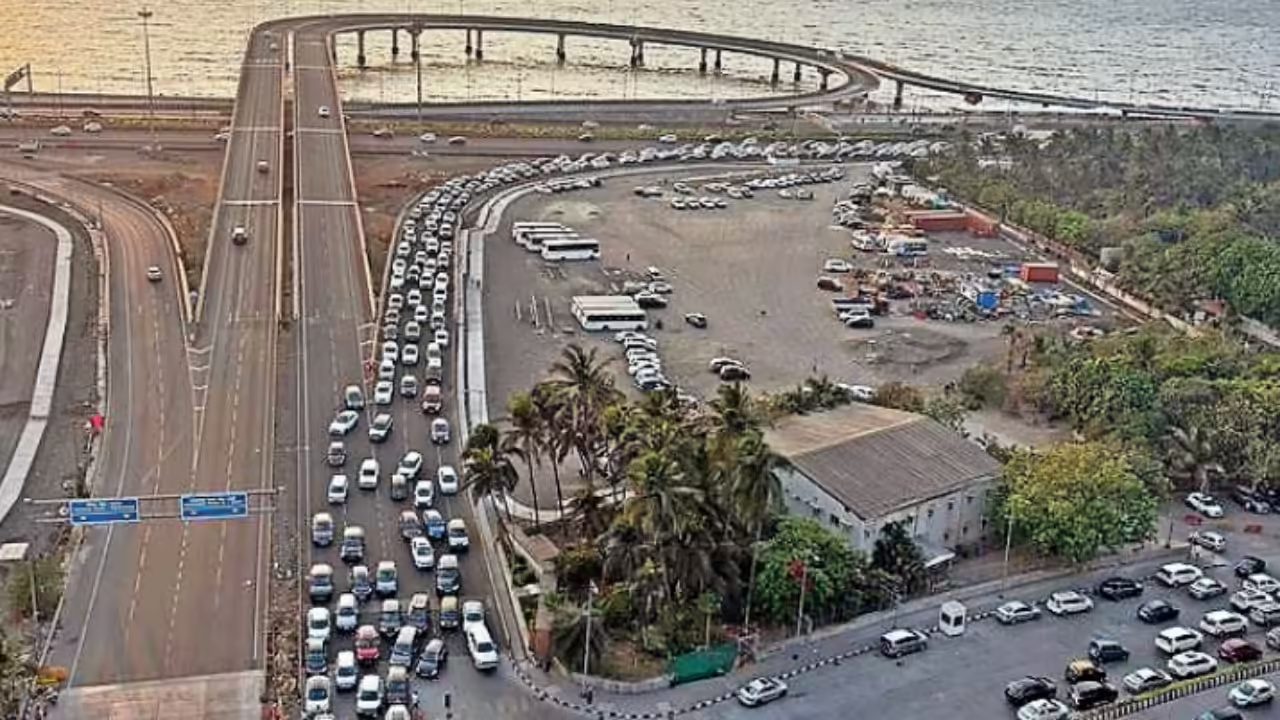
A sharp rise in vehicle movement along Mumbai’s western seafront corridor is reshaping urban mobility patterns, but also raising questions about equitable access and long-term sustainability. Since opening in 2024, the Mumbai Coastal Road has recorded a dramatic surge in usage, with daily traffic volumes increasing nearly sevenfold by early 2026, reflecting both latent demand and the city’s continued reliance on private transport. Official data reviewed by Urban Acres indicates that average daily traffic has climbed from under 10,000 vehicles during the initial rollout phase to more than 60,000 vehicles recently. The corridor, designed to provide a signal-free route between key southern business districts and western suburbs, has significantly cut commute times, offering journeys that now take under ten minutes compared to earlier travel durations of up to 40 minutes.
Urban planners suggest this rapid adoption signals a shift in commuter behaviour, particularly among car users seeking faster, predictable travel. However, the scale of growth appears to have outpaced earlier projections, which assumed more gradual increases over the coming decades. This mismatch raises broader questions about how infrastructure planning accounts for behavioural change in rapidly urbanising regions. While the road has eased pressure on some of Mumbai’s most congested arterial routes, the benefits are not evenly distributed. Experts note that the corridor currently caters largely to private vehicles, with limited integration of public transport systems. This has implications for inclusivity, particularly in a city where a majority of residents depend on buses and suburban rail. Neighbourhood-level impacts are also emerging. Residents near interchanges report rising congestion in local streets, suggesting that while long-distance travel has improved, last-mile connectivity challenges persist.
This pattern reflects a familiar urban trade-off, where high-speed corridors can redistribute congestion rather than eliminate it entirely. From a sustainability perspective, the surge in traffic raises concerns about induced demand — a phenomenon where new road capacity encourages more vehicle use, potentially offsetting environmental gains. In a coastal city already vulnerable to climate risks, infrastructure choices are increasingly being scrutinised for their long-term ecological footprint. Urban policy experts argue that integrating bus rapid transit or dedicated lanes for shared mobility could help balance efficiency with inclusivity. There is also growing emphasis on ensuring that large-scale road projects align with broader goals of reducing emissions and promoting multimodal transport networks.
The Mumbai Coastal Road’s rising traffic volumes underline the city’s urgent need to align infrastructure expansion with climate resilience and equitable access. As usage continues to grow, the next phase of planning may determine whether the corridor evolves into a balanced urban mobility solution or reinforces existing disparities in how the city moves.