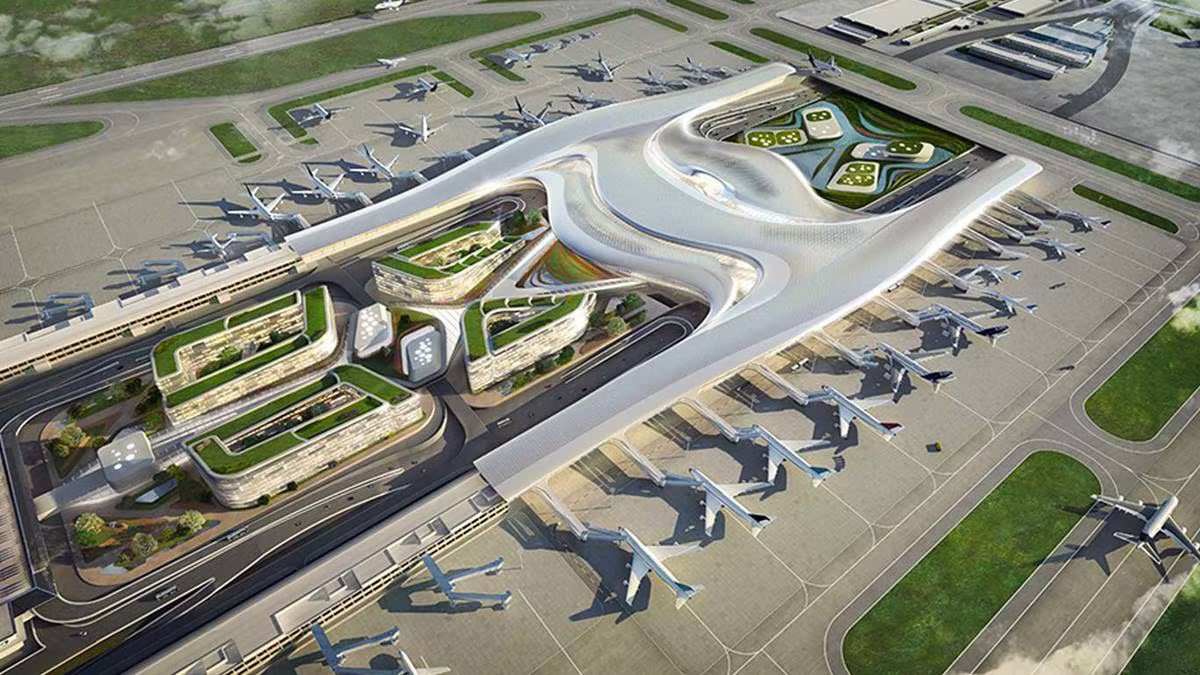
Mumbai Third Mumbai Project Moves Ahead Near Airport
A formal shareholder agreement to develop a new urban growth node in Raigad district signals a decisive push towards expanding the Mumbai Metropolitan Region beyond its saturated core. The proposed Raigad–Pen development, positioned as part of the broader “Third Mumbai” strategy, is expected to reshape regional growth patterns by creating a planned urban ecosystem close to the upcoming Navi Mumbai International Airport. The agreement, executed between the regional planning authority and a dedicated project entity, lays the groundwork for a large-scale township in Pen taluka. Located within close proximity to Panvel and key transport corridors, the site is being framed as a strategic extension zone that could absorb future population and economic growth currently concentrated in Mumbai and Navi Mumbai.
Urban planners view the Third Mumbai concept as an attempt to decentralise development while leveraging infrastructure investments already underway. With the airport, port linkages and highway networks converging in the region, the Raigad–Pen node is expected to evolve as a logistics and services hub. Officials indicate that the project will be structured through a special purpose vehicle, enabling private participation while retaining public oversight in planning and land use. A defining aspect of the plan is its integrated township approach, which aims to combine residential, commercial and institutional spaces within a single development framework. A portion of the housing stock is expected to be allocated for more affordable segments, reflecting an effort to balance high-value real estate growth with broader accessibility. However, urban economists caution that execution will determine whether such commitments translate into inclusive outcomes on the ground. The Third Mumbai initiative also highlights the growing influence of infrastructure-led urbanisation.
As new transport corridors reduce travel time across the metropolitan region, peripheral areas are increasingly being positioned as viable alternatives for businesses and residents. This shift has the potential to ease pressure on central Mumbai, where land constraints and high costs have long limited expansion. At the same time, the scale of development raises environmental and governance questions. Raigad district includes ecologically sensitive zones, and large-scale construction activity could impact local ecosystems if not carefully managed. Experts emphasise the need for climate-responsive planning, including flood-resilient infrastructure, water management systems and preservation of natural buffers. From an economic standpoint, the project is expected to attract investment across sectors such as financial services, technology and logistics. Yet, analysts note that sustained success will depend on aligning infrastructure delivery, regulatory clarity and market demand. Without these, new urban nodes risk underutilisation despite significant upfront investment.
As the Third Mumbai vision moves from concept to implementation, attention is likely to shift towards how effectively it balances growth ambitions with environmental safeguards and social equity. The coming phases will test whether the region can deliver a model of expansion that is not only economically viable but also sustainable and inclusive in the long term.