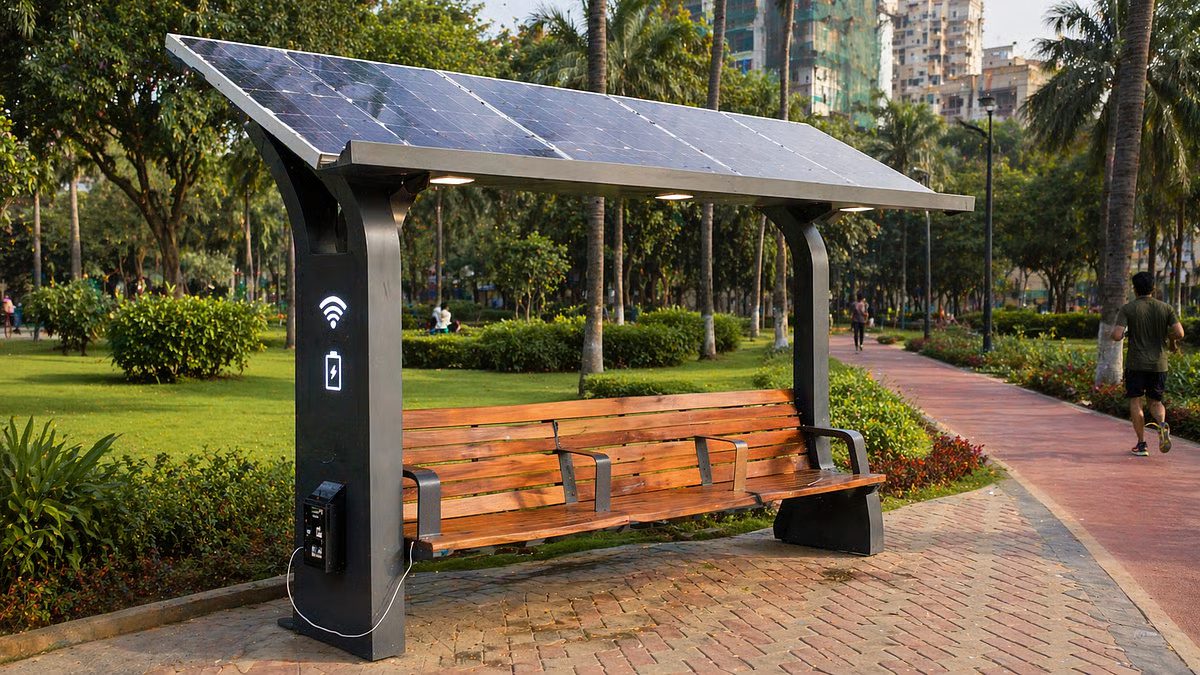
Mumbai’s civic administration has begun testing a new form of public infrastructure that merges renewable energy with everyday urban needs, installing solar powered benches in two prominent public gardens. The pilot, located in Fort and Bandra, reflects a broader shift towards low-carbon, citizen-focused amenities in high-density cities where access to energy and connectivity increasingly shapes how public spaces are used. The solar powered benches are designed to generate electricity independently through photovoltaic panels, allowing visitors to charge mobile devices and access wireless internet without relying on the conventional power grid. For a city where public charging points are scarce and often monetised, this intervention addresses a practical gap while reducing incremental energy demand.
Urban planners point out that such infrastructure, though small in scale, signals a rethinking of how parks and open spaces function in a digital economy. Public gardens are no longer just recreational zones but also informal workspaces, social hubs, and transit pause points. Integrating solar powered benches into these areas aligns with the growing expectation that civic spaces should support both environmental sustainability and digital inclusion. Officials involved in the project indicate that the benches are engineered for durability, using corrosion-resistant materials suited to coastal conditions. This is particularly relevant in Mumbai’s climate, where humidity and saline air often accelerate wear and tear of outdoor installations. A longer lifecycle reduces maintenance cycles and associated costs, making the investment more viable over time. From a sustainability perspective, decentralised solar solutions like these benches contribute incrementally to reducing the carbon footprint of public utilities.
While the energy output is modest, experts note that distributed renewable systems can collectively ease pressure on urban electricity networks, especially during peak demand periods. Such approaches are increasingly being explored in cities aiming to meet climate resilience targets without large-scale infrastructure overhauls. However, the success of the solar powered benches initiative will depend on usage patterns, maintenance protocols, and scalability. Questions remain around how these units will be monitored for performance, protected from vandalism, and expanded to other parts of the city if the pilot proves effective. Accessibility considerations, including equitable distribution across neighbourhoods, will also be critical to ensure benefits are not limited to select urban pockets.
The initiative arrives at a time when Indian cities are experimenting with integrating smart and sustainable features into everyday infrastructure. If implemented thoughtfully, solar powered benches could become a template for combining clean energy with public convenience, offering a glimpse into how smaller design interventions can support broader urban transformation.