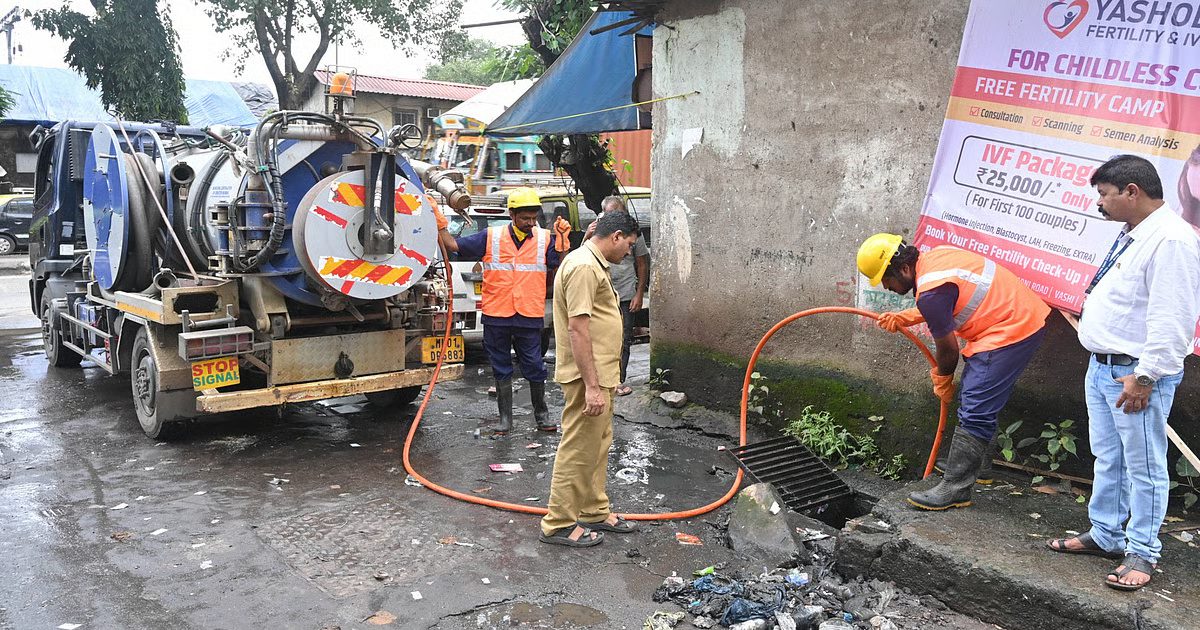
Mumbai’s civic administration has accelerated its annual flood mitigation programme, stepping up inspections and enforcement around drain desilting across western suburbs as the monsoon season approaches. With a narrow window remaining before heavy rainfall begins, the city’s preparedness efforts carry significant implications for urban resilience, especially in low-lying and high-density neighbourhoods prone to recurring waterlogging. Recent field assessments by senior municipal officials indicate that both primary stormwater channels and smaller drainage networks are undergoing intensified cleaning. Key suburban wards have been prioritised, reflecting a targeted approach aimed at historically vulnerable zones where flooding disrupts daily life, mobility, and economic activity.
Urban planners note that Mumbai’s drainage system—spanning thousands of kilometres—faces persistent stress due to rapid urbanisation, encroachments, and inadequate maintenance in previous years. Desilting, the removal of accumulated sediment and waste from drains, is considered a critical intervention to restore water-carrying capacity. However, its effectiveness often hinges on execution quality and timely completion. Officials overseeing the current drive have reportedly emphasised strict adherence to deadlines, with all desilting operations expected to conclude before the onset of peak rainfall. This includes clearing debris from major channels as well as addressing bottlenecks in smaller, often-overlooked drains that contribute disproportionately to localised flooding. Beyond operational timelines, the administration has also underscored the importance of coordination with elected representatives and community stakeholders. Such collaboration is increasingly seen as essential in a city where micro-level urban challenges—ranging from clogged culverts to informal waste disposal—can escalate into city-wide disruptions during extreme weather events.
Experts argue that while pre-monsoon desilting remains a necessary short-term measure, it does not address structural vulnerabilities in Mumbai’s stormwater management system. Climate data suggests that intense rainfall events are becoming more frequent, amplifying the need for long-term solutions such as upgraded drainage infrastructure, sustainable urban planning, and nature-based interventions like wetland restoration. Additionally, ongoing construction activities across the city—particularly infrastructure and transport projects—have introduced new flood-prone pockets. Excavation sites and altered land contours often impede natural water flow, increasing dependence on engineered drainage systems that are already under strain. From a sustainability perspective, the current efforts highlight the tension between rapid urban expansion and ecological balance. Ensuring that drainage systems function effectively requires not only maintenance but also protection of natural water channels and open spaces that absorb excess rainfall.
As Mumbai prepares for another monsoon, the success of these measures will ultimately be measured not just by the volume of silt removed, but by the city’s ability to minimise disruption to its residents. The coming weeks will test whether a combination of administrative oversight, on-ground execution, and community engagement can deliver a more flood-resilient urban environment.