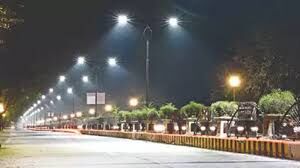
A new streetlighting initiative in Manesar is set to address long-standing concerns around public safety and basic urban infrastructure, with the local civic body initiating tenders to install approximately 5,000 streetlights across its jurisdiction. The move reflects a growing emphasis on improving liveability in rapidly urbanising peripheral zones of Gurugram.
The project, estimated at around ₹7.5 crore, will cover all 20 wards under the Municipal Corporation of Manesar, targeting areas that have historically reported inadequate lighting and safety risks. Tenders have already been floated, with bids expected to open later this month, marking the transition from planning to execution. Beyond installing new lights, the scope includes repairing existing electrical infrastructure such as cables and control panels, along with the installation of poles to support the system. Officials indicate that both new and existing reinforced cement concrete (RCC) poles will be used, suggesting an attempt to optimise existing assets while expanding coverage. For residents, the initiative addresses a persistent civic gap. Poorly lit streets have been a recurring concern, affecting pedestrian safety, increasing accident risks, and limiting mobility after dark. In fast-growing areas like Manesar—where industrial development, residential expansion, and village settlements intersect—such deficiencies can significantly impact quality of life.
Urban development experts view the project as a foundational step rather than a standalone solution. Streetlighting, while basic, plays a critical role in enabling safer public spaces, supporting night-time economic activity, and improving gender-inclusive mobility. In emerging urban clusters, it is often one of the first indicators of functional civic infrastructure. However, the initiative also highlights broader structural challenges. Manesar, like many peri-urban regions in India, has witnessed rapid growth without proportional infrastructure upgrades. The need for large-scale interventions such as this underscores the lag between urban expansion and service delivery. There are also sustainability considerations. While the current plan focuses on installation and repair, experts suggest that integrating energy-efficient lighting systems—such as LEDs with centralised monitoring—could significantly reduce long-term operational costs and carbon emissions. Previous delays in adopting smart lighting systems across Haryana’s municipalities have already drawn attention to missed efficiency gains.
The execution timeline, estimated at around eight months once the contract is awarded, will be critical in determining the project’s impact. Equally important will be the identification of “dark spots” through community engagement, with resident groups expected to play a role in flagging areas requiring priority intervention. As Gurugram’s urban footprint continues to expand beyond its core sectors, infrastructure upgrades in areas like Manesar will increasingly define the region’s development trajectory. Ensuring that such projects are not only completed on time but also aligned with sustainable and smart-city principles will be key to building safer, more inclusive urban environments.