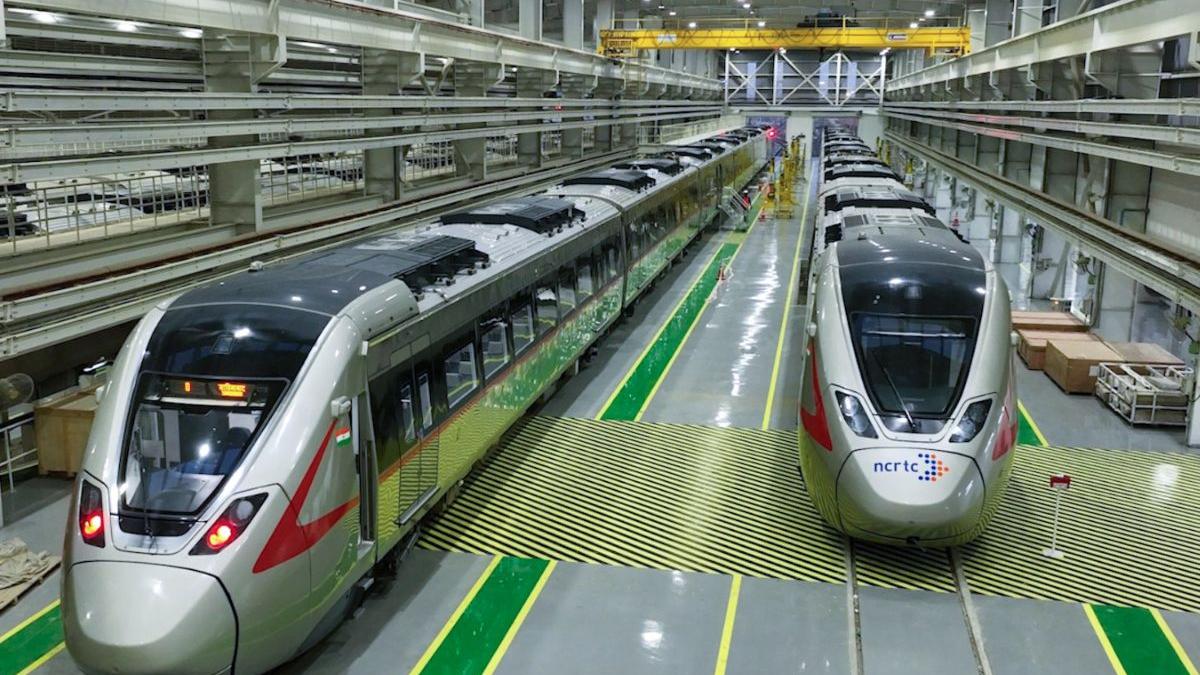
A new regional transit proposal under the Namo Bharat network is set to strengthen east–west connectivity across the National Capital Region, with a multi-crore plan linking Gurugram, Faridabad, and Noida. The corridor is expected to significantly reduce travel time across key urban clusters, signalling a shift towards integrated, high-speed public transport in one of India’s most congested metropolitan regions.
The proposed Delhi NCR rapid rail plan, estimated at around ₹3,700–4,000 crore, will run from Gurugram through Faridabad to Noida Sector 142 and Greater Noida’s Surajpur area, covering key urban nodes such as Sainik Colony, Badkhal Chowk, and Ankhir Chowk. This alignment is designed to connect residential, industrial, and emerging economic zones that currently rely heavily on road-based transport. Urban mobility experts note that the Delhi NCR rapid rail plan addresses a critical gap in NCR’s transport grid—east–west connectivity. While existing metro and rapid rail lines largely follow radial routes into Delhi, lateral movement between satellite cities remains inefficient, often requiring long detours or multiple transfers. The integration of this corridor with the broader Namo Bharat Regional Rapid Transit System (RRTS) is expected to enhance seamless travel across the region. The network is being designed for interoperability, allowing commuters to switch corridors without changing trains at major hubs such as Sarai Kale Khan. This approach reflects a shift towards network-based mobility planning rather than isolated infrastructure projects.
In addition to the rail corridor, supporting infrastructure such as an elevated road link has been proposed to improve intra-city connectivity in Faridabad, linking key junctions to the Delhi-Mumbai Expressway. Together, these interventions indicate a multi-modal strategy aimed at reducing congestion while improving accessibility. From an urban development standpoint, the Delhi NCR rapid rail plan is likely to influence land use patterns along its route. Improved transit access typically drives demand for housing, commercial development, and logistics hubs, particularly in peri-urban areas. However, planners caution that without coordinated zoning and infrastructure provisioning, such growth can lead to unplanned sprawl and pressure on civic services. The project also aligns with broader sustainability goals. High-capacity public transport systems such as RRTS are seen as essential to reducing vehicular emissions and easing traffic congestion in polluted urban regions. With trains capable of high speeds and frequent service, the system offers a viable alternative to private vehicle use, particularly for inter-city commuting.
Yet, the success of the corridor will depend on execution and integration. Land acquisition, inter-agency coordination, and last-mile connectivity remain recurring challenges in NCR infrastructure projects. Ensuring that stations are seamlessly linked with local transport systems—such as buses, metros, and non-motorised transit—will be critical to maximising ridership. As NCR continues to expand beyond traditional urban boundaries, projects like the Delhi NCR rapid rail plan highlight the need for coordinated regional planning. The next phase of growth will not just depend on building faster connections, but on ensuring that these networks support inclusive, low-carbon, and transit-oriented urban development.