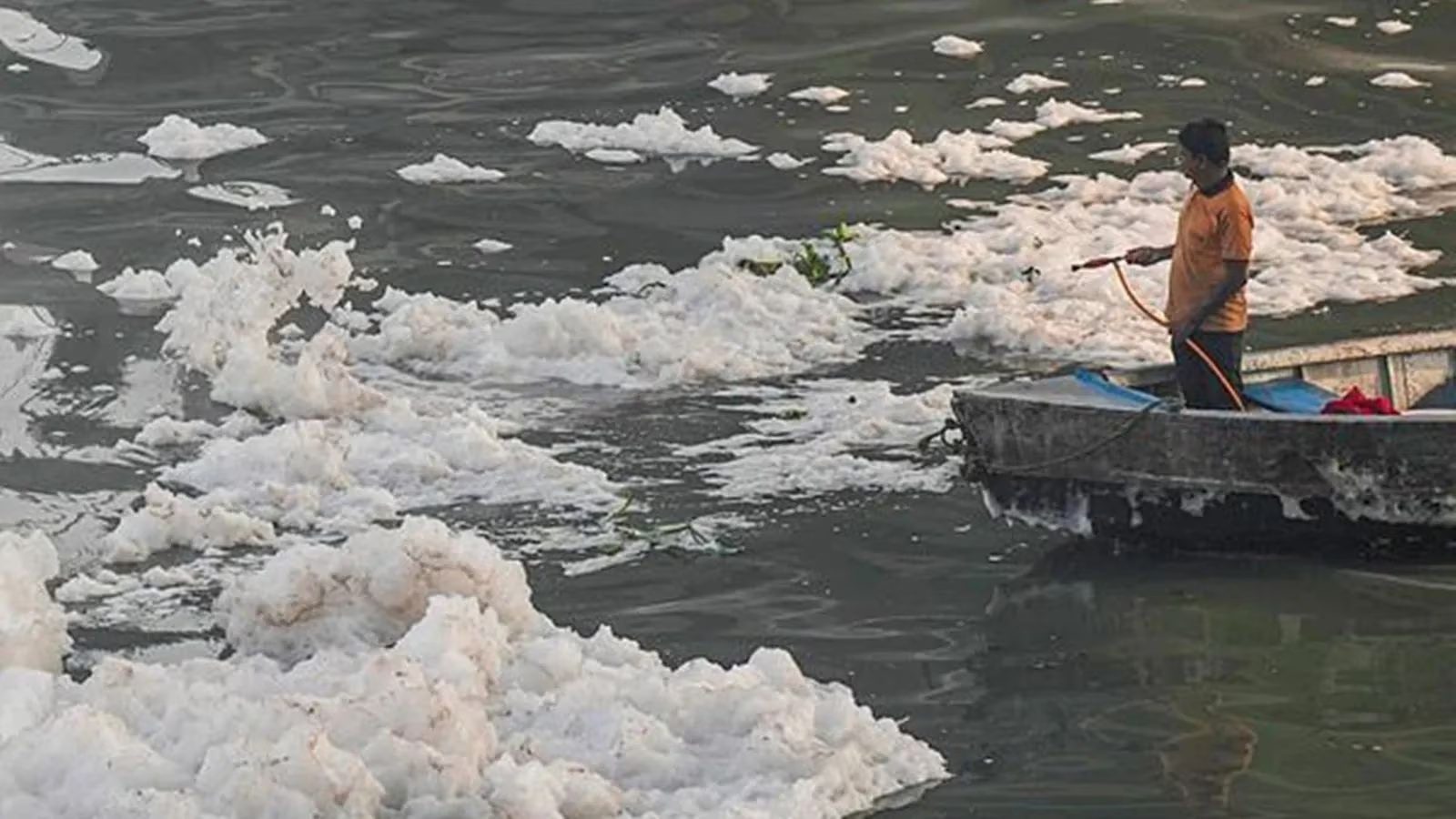
Delhi Yamuna Cleanup Efforts Miss Pollution Targets
A recent inspection of Delhi’s long-running river restoration effort has raised fresh concerns over its effectiveness, revealing that a key sewage interception system is performing significantly below stated targets. The findings cast doubt on the impact of the Yamuna cleanup programme, despite substantial public investment over the past two decades. The interceptor-based approach, introduced to divert untreated wastewater away from the river into treatment facilities, was intended to address one of the largest sources of pollution entering the Yamuna. However, an official review indicates that a considerable portion of sewage continues to flow into the river through drains that were expected to be fully managed under the system.
According to officials familiar with the assessment, only a fraction of the projected sewage diversion capacity is currently being achieved. Several interception points either remain non-functional or fail to capture the intended volume of wastewater, resulting in continued discharge into the river. This shortfall points to gaps not just in infrastructure but also in execution and oversight. The inspection further highlights weaknesses in monitoring mechanisms. Limited installation of flow measurement devices and non-operational surveillance systems have made it difficult to accurately track performance. Without reliable data, experts argue, assessing the true impact of the Yamuna cleanup initiative becomes challenging, raising concerns about accountability in large-scale urban infrastructure projects. Urban water management specialists note that interceptor systems can be effective only when supported by adequate downstream treatment capacity and consistent maintenance. In Delhi’s case, discrepancies between installed and operational pumping capacity suggest that the system may be underperforming due to technical inefficiencies and operational constraints.
The persistence of untreated sewage entering the Yamuna also underscores a broader structural issue—rapid urbanisation outpacing wastewater infrastructure. As population density and water consumption increase, existing systems struggle to manage the growing volume of waste. Without timely upgrades and integrated planning, such gaps are likely to widen. Environmental data over the years has repeatedly shown that water quality in the Yamuna remains far below acceptable standards, with high levels of organic pollution and contamination. Experts emphasise that restoring river health requires not only intercepting sewage but also preventing its generation through decentralised treatment, improved sewer connectivity, and stricter regulation of waste discharge. For residents, the implications extend beyond environmental degradation. A polluted river affects public health, reduces access to clean water resources, and diminishes the ecological value of urban landscapes. It also reflects inefficiencies in public spending, where large investments do not translate into measurable outcomes.
The latest findings place renewed focus on governance and implementation within the Yamuna cleanup framework. Moving forward, analysts suggest that strengthening monitoring systems, ensuring functional infrastructure, and adopting basin-level planning will be critical to reversing the river’s decline. Without these corrective measures, the gap between policy intent and on-ground reality is likely to persist.