


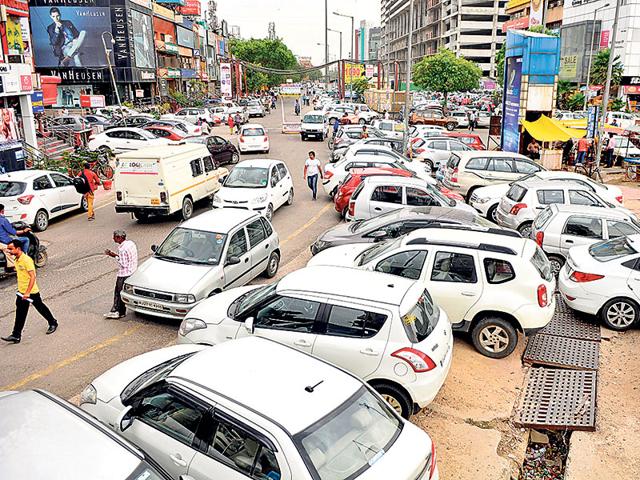
Unregulated roadside parking across Kolkata is steadily reducing usable carriageway space, intensifying congestion and complicating mobility in already crowded corridors.
The issue is emerging as a critical urban challenge, affecting traffic efficiency, public transport reliability, and pedestrian safety in several parts of the city.In many neighbourhoods, vehicles parked along both sides of the road are narrowing available lanes, forcing traffic into bottlenecks. This is particularly visible in mixed-use areas where residential, commercial, and institutional activities overlap, leading to high vehicle density and limited formal parking infrastructure.The growing impact of Kolkata roadside parking issues highlights a structural imbalance between vehicle ownership and urban planning. As private vehicle numbers increase, the availability of designated parking spaces has not kept pace, pushing vehicles onto public roads. This effectively converts carriageways into informal parking zones, reducing their intended capacity for movement.Urban mobility experts point out that the consequences extend beyond slower traffic. Reduced road width can delay emergency services, disrupt bus operations, and increase the risk of accidents.
For pedestrians, especially in areas lacking proper footpaths, encroached roads further limit safe walking space, forcing them into traffic lanes.The persistence of Kolkata roadside parking issues also reflects gaps in enforcement and policy implementation.While regulations exist to control parking in certain zones, inconsistent monitoring and limited alternatives make compliance challenging.Experts suggest that stricter enforcement must be paired with viable solutions, such as multi-level parking facilities and improved public transport options.From a sustainability perspective, the problem contributes to higher emissions. Idling vehicles caught in congestion increase fuel consumption and air pollution, undermining efforts to create cleaner urban environments.Addressing parking management is therefore closely linked to broader climate and air quality goals.There are also economic implications.Congestion can affect productivity by increasing travel time for workers and disrupting logistics for businesses. In commercial areas, inefficient parking arrangements can deter customers and reduce overall accessibility.Urban planners advocate for a more integrated approach to parking management. This could include dynamic pricing, designated parking zones, and the use of technology for real-time monitoring.Encouraging shifts towards public and non-motorised transport is also seen as essential to reducing dependence on private vehicles.
As Kolkata continues to grow, managing road space efficiently will be key to maintaining mobility and livability. Tackling roadside parking challenges will require coordinated action between authorities, communities, and urban planners.The issue underscores a broader need to rethink how public space is allocated in dense cities—balancing the demands of vehicles with the priorities of accessibility, safety, and sustainability.
Also Read:Kolkata Film Festival Revival Strengthens Cultural Exchange
Kolkata parking practices strain city road capacity
