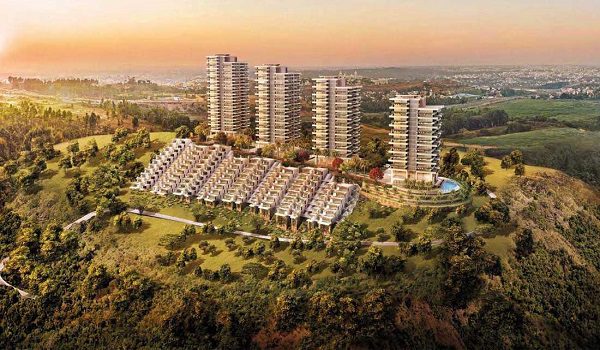
A new large-scale township planned in North Bengaluru is reinforcing the city’s rapid real estate expansion, even as questions grow around infrastructure readiness and sustainable urban growth. The proposed 52-acre integrated development in Devanahalli signals continued investor confidence in Bengaluru’s northern corridor, a region increasingly shaped by airport-led growth and rising housing demand.
The project, structured as a joint venture between a major real estate developer and a local landholding entity, is expected to generate significant revenue over time. Its scale reflects a broader trend of organised developers consolidating land parcels to create self-contained residential ecosystems, often marketed as offering better quality of life through open spaces and amenities. North Bengaluru has, in recent years, emerged as one of the city’s most actively developing zones. Improved connectivity to Kempegowda International Airport, coupled with expanding employment hubs and planned infrastructure upgrades, has positioned Devanahalli as a preferred destination for both end-users and investors. Industry observers note that residential values in the region continue to see steady annual appreciation, reinforcing its attractiveness.
However, urban planners caution that such large-format developments must be assessed against the region’s infrastructure capacity. While integrated townships promise internal sustainability through green spaces and community planning, their cumulative impact on water resources, mobility networks, and public services often extends beyond project boundaries. Without parallel investments in civic infrastructure, the burden on surrounding areas may intensify.The momentum in Bengaluru’s housing market is evident. Recent data indicates that the city accounted for a substantial share of new residential supply among India’s major urban centres, with a noticeable tilt towards premium housing. This shift suggests changing buyer preferences, with households prioritising larger homes, lifestyle amenities, and planned environments following the pandemic years. At the same time, this premiumisation trend raises concerns about inclusivity. As developers focus on higher-value projects, access to affordable housing within well-serviced urban areas may become more constrained.
Experts argue that balanced urban growth requires a mix of housing typologies that cater to diverse income groups, alongside policies that ensure equitable land use and resource distribution.The Devanahalli township also highlights the growing reliance on joint venture models in real estate. Such partnerships allow developers to expand portfolios while minimising upfront land acquisition costs, but they also demand strong regulatory oversight to ensure timely delivery and adherence to environmental norms. As Bengaluru continues to expand outward, developments like this will play a critical role in shaping its urban form. The challenge for policymakers and developers alike will be to align growth with climate resilience, efficient infrastructure, and inclusive planning ensuring that the city’s expansion does not outpace its capacity to sustain it.