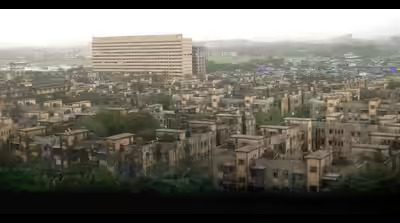
A proposed judicial complex in Bandra East is poised to trigger a significant shift in Mumbai’s urban geography, with planners and market observers anticipating ripple effects across both commercial activity and residential demand. The new facility, planned over a large land parcel in the Bandra East precinct, aims to ease long-standing space constraints at the city’s historic court district while reshaping growth patterns in the eastern corridor.
For over a century, Mumbai’s legal ecosystem has been anchored in the southern business district, where proximity to courts has shaped a dense network of law firms, offices and allied services. The relocation of judicial infrastructure to Bandra East is expected to gradually replicate this clustering effect, potentially decentralising economic activity and reducing pressure on the city’s traditional core. Urban planners suggest that the Bandra East court complex could act as a catalytic anchor for the wider Bandra Kurla Complex (BKC) region, which already hosts major financial and institutional establishments. With thousands of professionals expected to engage with the new facility daily, the surrounding micro-markets may witness increased demand for both office and residential spaces.
This transition aligns with a broader shift in Mumbai’s development model—from a single, congested central business district to a more distributed, multi-nodal urban structure. Improved connectivity through key transport corridors has already begun to unlock new growth zones across the eastern suburbs, making them viable alternatives to traditional high-cost locations. Real estate experts indicate that the Bandra East court complex could accelerate this trend by strengthening the live-work dynamic in the area. Proximity to employment hubs is likely to drive demand for mid- to high-end housing, particularly among professionals seeking reduced commute times. Neighbouring localities such as Sion, Wadala and Chembur are expected to benefit from this spillover, supported by ongoing infrastructure upgrades and redevelopment activity.
However, the project also raises questions around equitable urban growth. While increased investment may enhance infrastructure and property values, it could also intensify affordability pressures in adjacent neighbourhoods. Urban development specialists emphasise the need for balanced planning that integrates affordable housing, public transport access and green spaces alongside high-value real estate. The scale of the proposed development, including potential residential provisions for public sector employees within the campus, highlights the evolving nature of institutional infrastructure in Indian cities. Mixed-use planning, if executed effectively, can reduce travel demand and support more sustainable urban living patterns.
As Mumbai continues to expand eastwards, the success of such projects will depend not only on construction timelines but also on how well they integrate with the city’s larger sustainability and mobility goals. The coming years will reveal whether this shift can ease congestion in legacy districts while creating more inclusive and resilient urban centres.
Mumbai Court Complex In Bandra East To Redefine Property Trends