


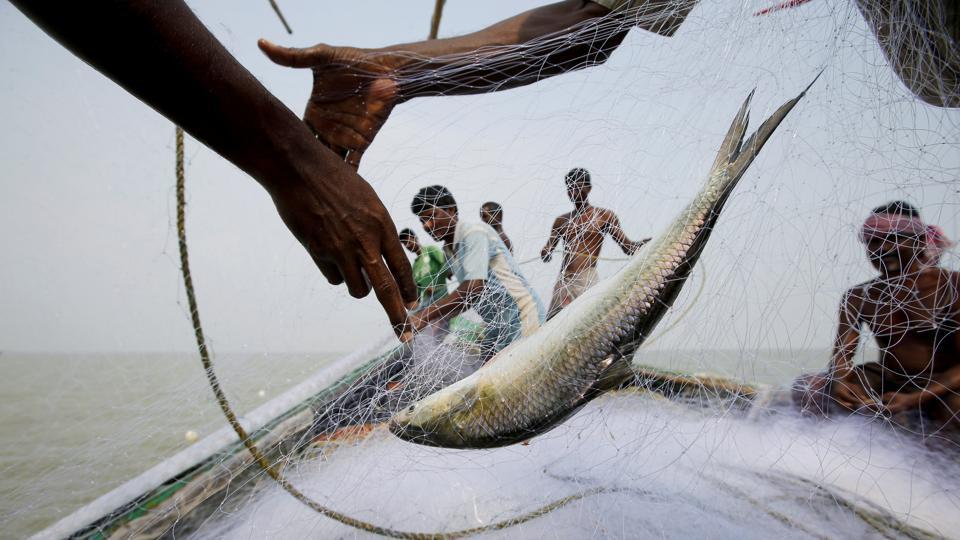
The growing use of artificial intelligence in locating hilsa shoals along eastern river systems is reshaping traditional fishing practices linked to Kolkata, even as it raises concerns about ecological balance and overexploitation.
Smart mapping tools that identify fish-rich zones are improving catch efficiency, but experts warn that such precision may accelerate pressure on already fragile aquatic ecosystems.Fisher communities and operators are increasingly turning to digital platforms that use satellite data, weather inputs, and historical catch patterns to pinpoint optimal fishing locations. While this technological shift promises higher yields and reduced search time, it also risks intensifying extraction in concentrated zones—potentially disrupting breeding cycles and long-term fish availability.The emergence of Kolkata hilsa fishing tech reflects a broader trend where data-driven systems are entering informal and traditional sectors. In urban-linked economies, where fish markets play a crucial role in food supply and livelihoods, such innovations can significantly alter both economic outcomes and environmental dynamics.Marine scientists and urban sustainability experts caution that hilsa, a migratory species sensitive to environmental changes, requires careful management. Overfishing during peak migration periods can reduce population resilience, particularly when combined with existing stressors such as river pollution, changing salinity levels, and climate-induced shifts in water flow.
The use of AI to intensify catch efforts may amplify these risks if not regulated.From an urban perspective, Kolkata’s dependence on riverine ecosystems extends beyond fisheries. The health of these systems influences food security, employment, and cultural identity. As such, the rise of Kolkata hilsa fishing tech introduces a governance challenge—how to balance technological advancement with ecological sustainability.Policy experts suggest that integrating such tools into a regulated framework could help mitigate risks. Controlled access, seasonal restrictions, and real-time monitoring of catch volumes may ensure that technology supports sustainable harvesting rather than unchecked extraction. Additionally, involving local fishing communities in decision-making could improve compliance and preserve traditional knowledge systems.There are also economic considerations. While larger operators may benefit from early adoption of advanced tools, smaller, traditional fishers could be left at a disadvantage, potentially widening income disparities within the sector. Ensuring equitable access to technology and resources will be key to maintaining inclusive growth in the fisheries economy.As digital innovation reaches deeper into natural resource sectors, Kolkata’s experience highlights the need for adaptive governance models. Aligning technological efficiency with conservation goals will be essential to safeguarding both livelihoods and ecosystems.
The challenge ahead lies in ensuring that smarter fishing does not come at the cost of sustainability. With appropriate oversight and planning, emerging tools could support a more resilient and balanced urban-rural interface—one where economic gains do not undermine the ecological foundations they depend on.
Also Read:Kolkata Norwester Storm Before Dry Weather Spell
